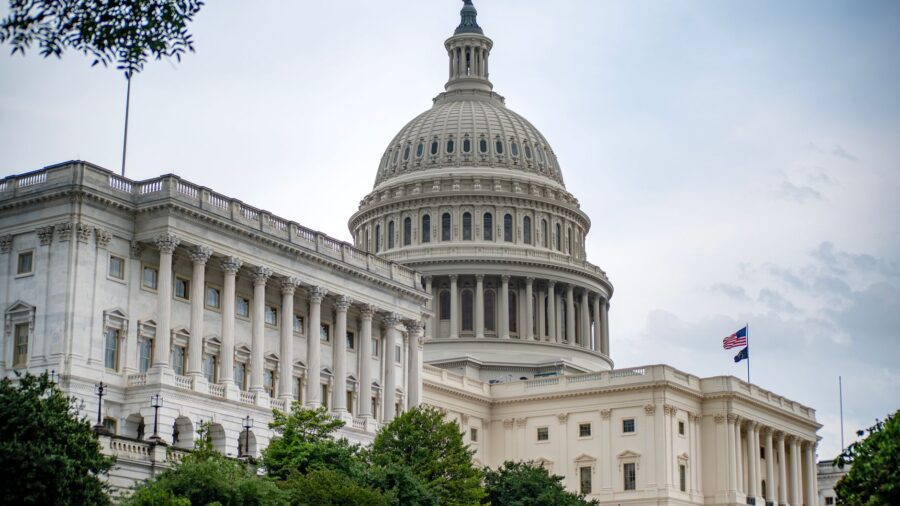
A deepening rift within Washington over the future of U.S. monetary policy is casting fresh uncertainty over financial markets, as the White House and key congressional factions stake out conflicting positions on where interest rates should go from here. The dispute, covered in detail by CNBC Daily Open, underscores how the Federal Reserve’s carefully guarded independence is facing political pressure not seen in decades. With the federal funds rate currently holding in a range that has kept borrowing costs elevated for households and businesses alike, both ends of Pennsylvania Avenue appear unwilling to let the central bank chart its own course unchallenged. For context, higher borrowing costs have already weighed on the housing sector, where riskier mortgage products have grown in popularity among stretched borrowers seeking any path to homeownership.

The political tension follows months of stubborn inflation data and a labor market that has proven more resilient than many forecasters anticipated. Headline consumer price growth has remained above the Fed’s 2 percent target through much of 2026, giving policymakers limited room to pivot toward rate cuts without risking a renewed inflationary surge. At the same time, GDP growth has moderated, with some quarterly estimates pointing to expansion of just 1.4 to 1.8 percent — territory that is leaving legislators in slower-growth districts increasingly anxious about the economic drag from tight monetary conditions.
White House Pushes for Easing While Capitol Hill Remains Split
Senior administration officials have made little secret of their preference for lower rates, arguing that the current policy stance is unnecessarily suppressing business investment and consumer spending. Advisers close to the executive branch have suggested that a reduction of at least 50 basis points before the end of the year would provide meaningful relief to small businesses and first-time homebuyers, groups the administration has positioned as central to its economic agenda. The pressure echoes historical episodes in which presidents sought to influence Fed decision-making, though central bank officials have repeatedly insisted that rate decisions remain entirely data-driven and free from political interference.
Congress, however, is far from unified. A bloc of fiscally conservative legislators has argued that cutting rates prematurely would re-ignite inflationary pressures and erode the purchasing power gains that lower-income households have only recently begun to stabilize. Some members of the Senate Banking Committee have reportedly called for greater congressional oversight of Fed communications, a proposal that has alarmed institutional investors who view central bank autonomy as a cornerstone of U.S. financial credibility. The divergence within the legislative branch effectively neutralizes any coordinated push that might otherwise force the Fed’s hand.
Markets Price In Uncertainty as Fed’s Next Move Remains Unclear
Equity and fixed-income markets have responded to the political noise with a measured but discernible shift in risk appetite. Treasury yields on the 10-year note have fluctuated within a relatively tight band, reflecting investor uncertainty about the Fed’s September and November meeting outcomes. Fed funds futures, as of early September 2026, were pricing in roughly a 40 percent probability of a 25-basis-point cut by year-end, a figure that has oscillated significantly in recent weeks as each new round of economic data and political commentary hits the wires. Currency markets have also registered the instability, with the dollar softening modestly against a basket of major peers on days when rate-cut speculation intensifies.
The broader global dimension of this standoff should not be underestimated. Central banks in Europe and parts of Asia have already begun easing cycles, meaning that a prolonged hold by the Fed could continue to exert upward pressure on the dollar, complicating export conditions for U.S. manufacturers and amplifying capital flow volatility in emerging markets. That dynamic sits uncomfortably alongside ongoing trade tensions, including disputes that have drawn scrutiny from international bodies, as noted in recent coverage of how G20 export policy debates are reshaping global economic alignments. For the Federal Reserve’s leadership, the challenge is not only to read the economic data accurately but to do so while resisting political crossfire that threatens to undermine the very institutional credibility that makes monetary policy effective in the first place.