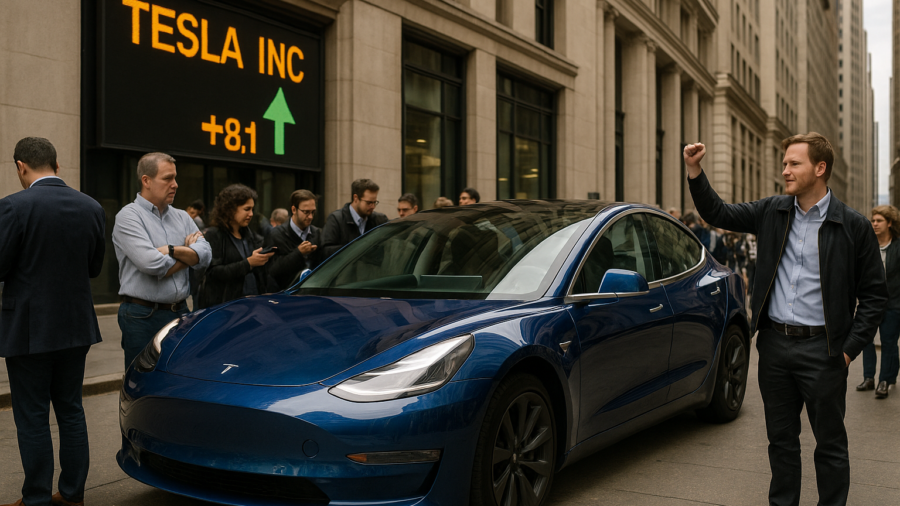
Tesla Inc. shares reported a sharp rally on Monday after the electric vehicle manufacturer released a highly anticipated update to its Full Self-Driving software, a development that investors had been tracking closely for months. The stock climbed more than 5% in intraday trading, recovering a meaningful portion of the ground it had ceded during a prolonged stretch of selling pressure tied to broader concerns about the company’s autonomous driving roadmap and chief executive Elon Musk’s divided attention across multiple business ventures.
The update, which Tesla began rolling out to a wider pool of North American customers, represents one of the most significant revisions to the Full Self-Driving platform in over a year. Analysts noted that the timing is critical: Tesla has faced persistent questions from institutional investors about whether its autonomous driving ambitions remain on track, particularly as rivals including Waymo and a growing roster of Chinese automakers have accelerated their own deployments of advanced driver-assistance systems in competitive markets.
A Software Catalyst in a Difficult Year
Tesla’s stock had fallen roughly 30% from its late-2024 peak entering this week, weighed down by weaker-than-expected delivery figures, margin compression, and a public controversy surrounding Musk’s political activities. The Full Self-Driving update offered a concrete, product-level catalyst that shifted the conversation back to technology and long-term value creation. Trading volume on Monday was approximately 40% above the 30-day average, suggesting broad participation from both retail and institutional players repositioning around the news.
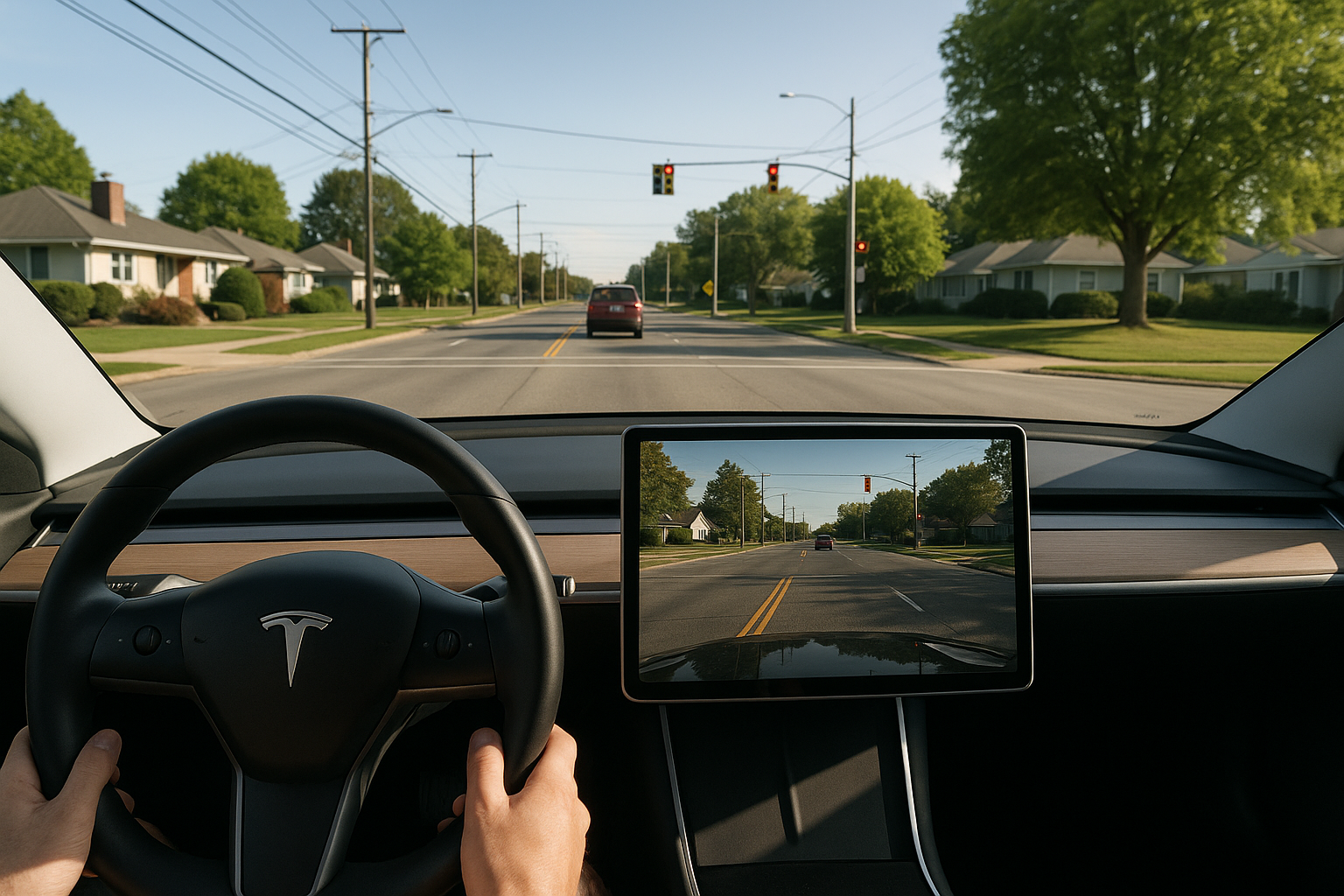
The updated software is reported to include substantial improvements to the system’s ability to handle complex urban driving scenarios, including unprotected left turns, dense pedestrian environments, and construction zones — situations that had previously drawn criticism from early testers and safety researchers. Tesla has historically described Full Self-Driving as a premium feature commanding a one-time purchase price of $8,000 or a monthly subscription of $99, making software quality directly tied to both customer satisfaction and recurring revenue potential.
Several Wall Street analysts responded quickly to the release. At least two firms reiterated bullish ratings on the stock, with price targets in the range of $280 to $315 per share, citing the update as evidence that Tesla’s engineering pipeline remains active despite the turbulent operating environment of recent quarters. One analyst at a major US investment bank described the release as a “credibility moment” for the company’s autonomous platform, noting that consistent software iteration is essential to justifying Tesla’s premium valuation relative to traditional automakers.
Broader Stakes for Tesla’s Autonomous Strategy
Beyond the immediate stock move, the Full Self-Driving update carries implications for Tesla’s longer-term ambitions in the robotaxi market. Musk has repeatedly pointed to a fully autonomous ride-hailing network as a core pillar of the company’s future revenue model, projecting that such a service could eventually dwarf Tesla’s vehicle manufacturing business in terms of profitability. The credibility of that vision depends heavily on demonstrating measurable, verifiable progress in the underlying software — something the company has struggled to communicate clearly to skeptical observers.
Regulatory scrutiny remains a significant variable. The National Highway Traffic Safety Administration has previously opened investigations into Tesla’s driver-assistance systems following reported incidents, and any expanded rollout of Full Self-Driving technology will likely attract renewed attention from federal and state regulators. Tesla has maintained that its data-driven training approach, drawing on billions of miles logged by its global fleet, gives it a structural advantage in developing robust autonomous capabilities — a claim that the latest update will now be subjected to fresh scrutiny by independent testers and researchers.
It is also worth noting that Musk’s broader public profile continues to cast a shadow over Tesla’s corporate narrative. The Fiscalist previously covered Musk’s rare public concession that some of his political commentary had gone too far, an episode that contributed to a period of brand sensitivity for Tesla in key markets including Germany and the United States. Whether the Full Self-Driving update is sufficient to reorient investor and consumer attention back to the product itself remains an open question — but Monday’s trading session offered an encouraging early signal that market participants are willing to reward concrete technological progress when it arrives.