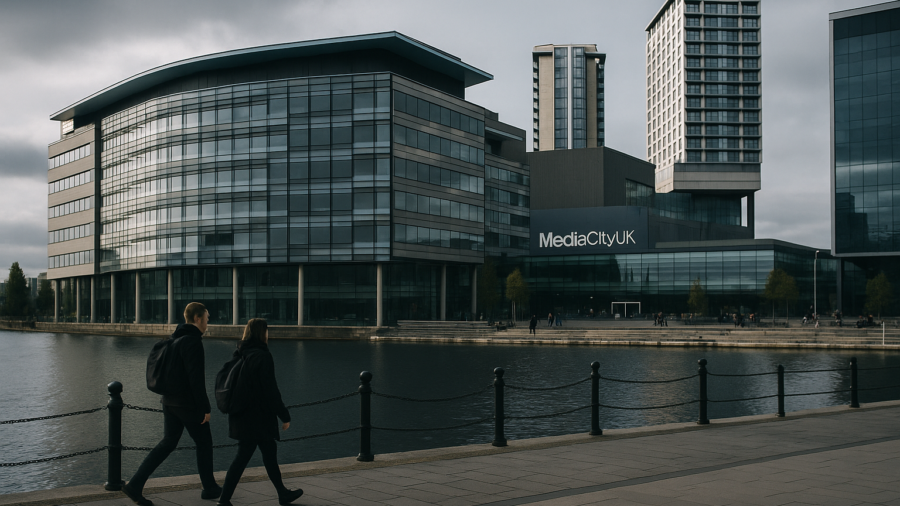
Manchester has quietly emerged as one of the United Kingdom’s most commercially significant hubs for social media content creation, attracting a growing concentration of TikTok influencers, talent agencies, and brand partnerships that are injecting measurable value into the city’s creative and retail sectors. What was once the preserve of London is now being redistributed northward, with Manchester’s relatively lower cost of living, vibrant cultural identity, and strong digital infrastructure drawing creators who might previously have relocated to the capital.
According to reporting by BBC News, TikTok content creators based in Manchester describe the city as an “influencer heaven,” citing a combination of affordable studio space, a photogenic urban landscape, and a tightly networked community of fellow creators as key factors behind the city’s appeal. The convergence of these elements has made Manchester not just a lifestyle choice, but an economically rational base of operations for professional influencers whose income depends on production quality and brand collaboration volume.
The Commercial Architecture Behind Creator Culture
The influencer economy is no longer a fringe phenomenon. Globally, the creator economy is estimated to be worth in excess of 250 billion dollars, with the UK representing one of Europe’s most active markets for branded content partnerships and affiliate-driven commerce. Manchester’s emergence within that ecosystem reflects a broader decentralisation trend, as digital-native businesses seek talent and audiences beyond London’s saturated market.
Local talent agencies and management firms have begun establishing dedicated operations in Manchester, signing creators whose audiences span hundreds of thousands to millions of followers across TikTok, Instagram, and YouTube. These agencies negotiate brand deals in sectors ranging from fashion and food and beverage to financial services and travel, generating revenue streams that feed directly into Manchester’s service economy. Commercial rents for creative studio spaces in districts such as the Northern Quarter and Ancoats have risen as demand from content producers increases, with some operators reporting year-on-year occupancy growth of 20 to 30 percent in facilities catering specifically to video production and live-streaming.

Retail brands have taken particular notice. Manchester’s Trafford Centre and Market Street shopping corridors have become regular backdrops for TikTok product reviews and haul videos, with some national retailers actively courting local creators for in-store content days that double as marketing activations. This symbiosis between physical retail and digital content production represents a novel commercial model that benefits both parties: brands gain authentic reach without the cost of traditional advertising, while creators gain access, product, and payment.
Economic Spillovers and the City’s Broader Digital Ambition
Manchester City Council has increasingly positioned the city as a technology and creative industries hub, with digital and media sectors forming a central pillar of its long-term economic strategy. The Greater Manchester Combined Authority has directed investment toward broadband infrastructure and skills development, moves that have improved the operational conditions for content-led businesses. The city’s two major universities also supply a steady pipeline of digitally literate graduates who are entering the creator economy either as independent influencers or as production, editing, and marketing professionals supporting established creators.

The financial case for Manchester as a creator base is also straightforward from a cost perspective. Average monthly rents in Manchester city centre are approximately 40 to 50 percent lower than comparable accommodation in inner London, a differential that meaningfully improves the economics for early-stage creators who are still building their monetisation base. When combined with lower production costs and a comparably rich visual environment, the city offers a margin advantage that compounds over time for creators treating their output as a business.
The trend also carries implications for regional economic rebalancing, a policy objective that has gained renewed political attention in recent years. If Manchester can sustain and deepen its position within the creator economy, the multiplier effects — spanning hospitality, retail, property, and professional services — could contribute meaningfully to the city’s gross value added figures over the coming decade. For observers of the UK labour market, the rise of creator-led employment in regional cities represents one of the more structurally interesting shifts in how Britons are generating income outside traditional employment frameworks. Broader questions about digital economy infrastructure will ultimately determine how durable this growth proves to be.