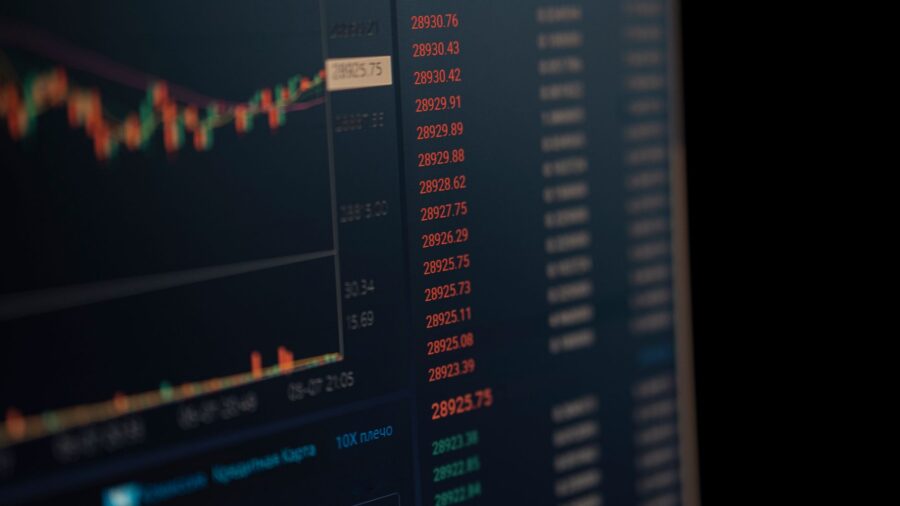
The US dollar strengthened against the Swiss franc on Tuesday, advancing 0.5% to reach 0.8890 francs in active currency trading, according to a MarketWatch report. The move marked a notable intraday shift in the USD/CHF pair, which has long served as a barometer for global risk appetite given the Swiss franc’s enduring status as one of the world’s premier safe-haven currencies. A strengthening dollar against the franc typically signals reduced anxiety among investors, as capital rotates away from defensive positions and into assets perceived as offering greater yield or growth potential.
The franc’s retreat comes at a moment when currency markets are navigating a complex web of macroeconomic signals, including sticky inflation data in parts of the developed world, ongoing uncertainty over the pace of interest rate cuts by major central banks, and persistent geopolitical pressures influencing global capital flows. Traders monitoring oil market tensions and their knock-on effects across risk assets will be watching USD/CHF closely, as commodity-driven volatility has historically spilled over into safe-haven demand cycles. The franc, backed by Switzerland’s low-debt fiscal framework and the Swiss National Bank’s historically interventionist approach, tends to attract inflows whenever global stress indicators rise.
Safe-Haven Retreat Signals Shifting Risk Sentiment
The Swiss franc’s pullback against the dollar is being interpreted by market participants as a signal that near-term risk appetite is recovering, at least modestly. When investors feel more confident about global growth prospects or when US economic data prints above consensus expectations, the demand for traditional defensive currencies such as the franc, the Japanese yen, and gold-linked instruments tends to soften. A 0.5% move in a major currency pair within a single session is considered meaningful in foreign exchange markets, where daily ranges on liquid pairs frequently remain compressed below that threshold.
The Swiss National Bank has kept benchmark interest rates in deeply negative or near-zero territory for extended periods historically, a policy stance that has often served to suppress franc appreciation by making franc-denominated assets comparatively unattractive. More recently, however, the SNB has adjusted its policy framework in response to global inflationary pressures, raising rates and signalling a more conventional approach to monetary management. That recalibration has altered the franc’s yield dynamics and, in turn, the mechanics of its safe-haven premium. A firmer dollar suggests that US interest rate differentials remain a significant driver of USD/CHF direction, with Federal Reserve policy expectations continuing to exert gravitational pull on the pair.
Broader Dollar Dynamics and What Comes Next
The dollar’s gain against the franc did not occur in isolation. The US dollar index, which measures the greenback against a basket of six major currencies, has remained broadly supported in recent sessions amid resilient US labour market data and consumer spending figures that have complicated the Federal Reserve’s path toward rate normalisation. Market pricing for Fed rate cuts has shifted repeatedly throughout the year as incoming data alternately supported and undermined the case for easing, injecting sustained volatility across currency pairs involving the dollar. Against that backdrop, the franc’s 0.5% decline reflects both a dollar-positive impulse and a diminution in the specific geopolitical and financial stress factors that had previously driven safe-haven accumulation.

Analysts caution that the franc should not be written off as a safe-haven vehicle simply on the basis of a single session’s move. Switzerland’s current account surplus, consistently ranked among the largest in the developed world as a share of GDP, provides a structural foundation for franc strength that short-term dollar rallies can erode only temporarily. Any renewed escalation in geopolitical tensions — whether tied to energy markets, trade policy, or regional conflicts — could quickly reverse flows and push USD/CHF back toward or below parity. Investors tracking cross-asset correlations, including those monitoring crypto market sentiment as a proxy for broader risk appetite, may find the franc’s near-term trajectory instructive as a gauge of how confident markets truly are in the current macro environment. For now, the dollar’s half-percent advance tells a story of cautious optimism — though currency markets have a well-earned reputation for revising that narrative without notice.