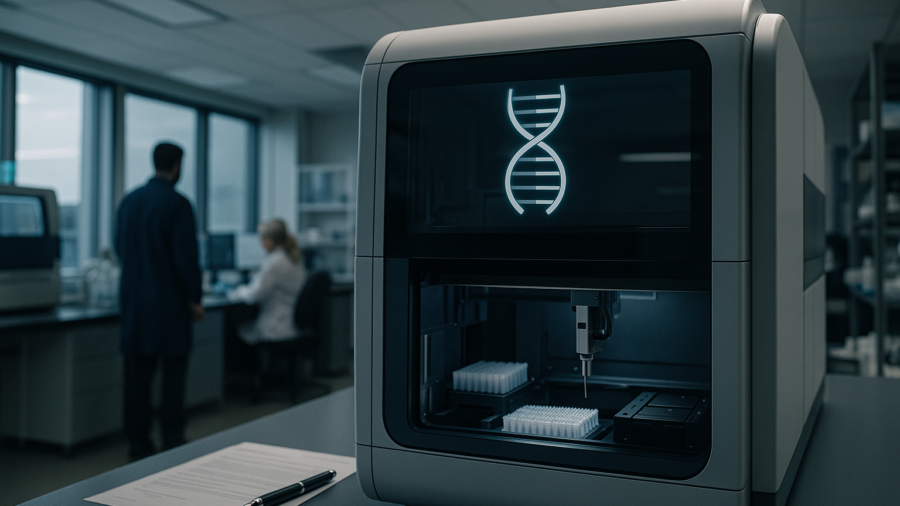
The global DNA diagnostics market is poised for sustained and substantial expansion over the next decade, with new research projecting compound annual growth of approximately 7 percent through 2034. According to DelveInsight analysis published via PR Newswire, the sector is being propelled by a convergence of technological advancement, broadening clinical applications, and a surging global appetite for precision medicine that has fundamentally altered how hereditary and infectious diseases are detected and managed.
The market encompasses a wide range of testing modalities, including polymerase chain reaction assays, next-generation sequencing platforms, microarray technologies, and fluorescence in-situ hybridisation techniques. These tools are now routinely deployed across oncology, infectious disease screening, prenatal diagnostics, and pharmacogenomics — a breadth of application that underpins the sector’s resilient growth trajectory even against a backdrop of macroeconomic uncertainty and uneven healthcare spending across geographies.

Precision Medicine and Rising Disease Burden Fuel Demand
A primary driver identified in the DelveInsight report is the accelerating prevalence of chronic and genetic conditions worldwide. As populations age and the incidence of cancers, rare hereditary disorders, and antimicrobial-resistant infections climbs, healthcare systems are investing heavily in early and accurate diagnostic infrastructure. DNA-based testing offers a critical advantage in this context: the ability to identify disease markers at a molecular level before clinical symptoms emerge, enabling earlier intervention and, in many cases, substantially better patient outcomes.
The oncology segment in particular is drawing significant commercial interest. Liquid biopsy technologies, which analyse circulating tumour DNA from a simple blood draw, are increasingly replacing or supplementing invasive tissue biopsies. This shift is lowering procedural risk for patients while delivering actionable genomic data to oncologists more rapidly than traditional pathology workflows allow. Pharmaceutical companies are also integrating companion diagnostics — DNA-based tests that identify whether a patient’s tumour carries a mutation targeted by a specific drug — into regulatory approval pathways, creating a self-reinforcing demand loop between therapeutics and diagnostics.
Pharmacogenomics, which tailors drug selection and dosing to an individual’s genetic profile, is another high-growth sub-segment. As healthcare providers seek to reduce adverse drug reactions and improve therapeutic efficacy, genetic screening before prescribing is gradually becoming standard of care in leading health systems across North America and Europe. This trend is creating durable, recurring revenue streams for diagnostics firms positioned in the molecular testing space.

Regional Dynamics and Competitive Landscape
North America currently commands the largest share of the global DNA diagnostics market, underpinned by advanced laboratory infrastructure, high per-capita healthcare expenditure, and a regulatory environment at the Food and Drug Administration that, while rigorous, has increasingly accommodated novel genomic assays through expedited review pathways. The United States in particular benefits from a dense ecosystem of academic medical centres, biotech startups, and large diagnostic conglomerates that collectively accelerate innovation cycles.
Asia-Pacific is expected to register among the fastest regional growth rates over the forecast period. Countries including China, India, Japan, and South Korea are expanding their genomics capabilities through a combination of government-backed national genome programmes, private investment in local sequencing infrastructure, and partnerships with multinational diagnostics firms. The sheer scale of patient populations in these markets, combined with rising healthcare awareness and improving insurance coverage, represents a formidable commercial opportunity for companies with established molecular testing portfolios.
Competitive intensity across the sector remains high. Established players such as Illumina, Thermo Fisher Scientific, Abbott Laboratories, Roche Diagnostics, and Bio-Rad Laboratories continue to invest heavily in research and development while pursuing strategic acquisitions to consolidate their positions. At the same time, a new generation of genomics-focused startups is challenging incumbents with faster, cheaper, and increasingly decentralised testing solutions that push diagnostic capabilities closer to the point of care. Investors monitoring broader technology-driven healthcare trends may find parallels with the dynamics explored in our coverage of AI adoption reshaping performance metrics across industries.
Looking further ahead, the integration of artificial intelligence into genomic data interpretation is widely regarded as the next material inflection point for the sector. Machine learning models are already demonstrating superior accuracy in identifying pathogenic variants from large sequencing datasets, and their commercial deployment at scale could meaningfully compress diagnostic turnaround times while reducing the cost per test. For investors assessing portfolio positioning in high-growth technology-adjacent sectors, the DNA diagnostics space offers a compelling combination of structural tailwinds, recurring revenue characteristics, and defensible intellectual property — themes that intersect with the broader AI investment wave currently reshaping capital allocation across global markets.