
The first wave of artificial intelligence investment rewarded early believers in semiconductor designers and hyperscale cloud providers with extraordinary returns. The S&P 500’s technology sector gained roughly 57 percent between early 2023 and mid-2025, driven in large part by AI-related spending commitments from Microsoft, Alphabet, Amazon, and Meta. Yet according to a MarketWatch analysis, the more consequential investment opportunity may still lie ahead, embedded in the physical and enterprise infrastructure required to make AI systems genuinely productive at scale.
Analysts now point to a second-order spending cycle beginning to take shape, one that extends beyond Nvidia graphics processors and into power grids, cooling systems, enterprise software integration, and specialised data storage. Capital expenditure pledges from the five largest technology companies are expected to exceed 300 billion dollars in the 2025 fiscal year alone, a figure that is cascading into supplier chains and sector adjacencies that most retail investors have yet to fully price in.
Infrastructure Buildout Creates Overlooked Entry Points
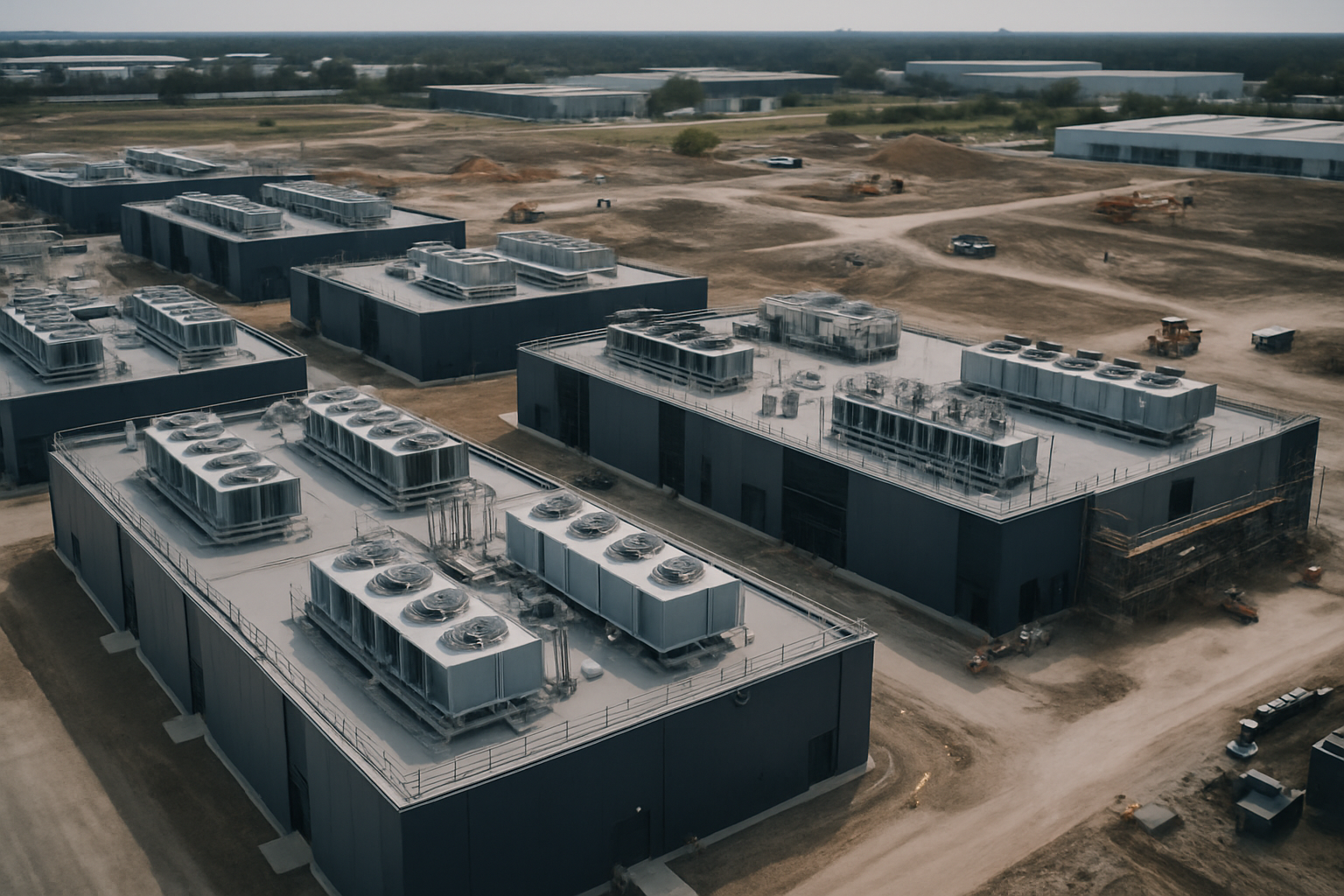
Data centres are the most visible expression of AI infrastructure demand, but the investment implications run considerably deeper. Electrical grid upgrades, liquid cooling systems, and purpose-built fibre networks are all facing capacity constraints that are forcing utilities and industrial companies to accelerate capital programmes. Investor and television personality Kevin O’Leary has been particularly vocal on this point, arguing in commentary covered by Business Insider that data centre demand will remain one of the most durable secular investment themes through the remainder of the decade. O’Leary specifically highlighted 2026 as a pivotal year for infrastructure-adjacent plays, citing the lag between compute commitments and the physical build-out required to support them.
For investors seeking less crowded positioning, power infrastructure stocks, industrial real estate investment trusts specialising in hyperscale campuses, and enterprise software companies integrating AI into workflow automation represent categories where valuations have not yet fully reflected long-term earnings potential. Analysts at several major brokerages have flagged that price-to-earnings multiples in these adjacent sectors remain 20 to 30 percent below those carried by the semiconductor names that led the first AI rally, suggesting a meaningful re-rating opportunity as AI adoption moves from experimental to operational across the corporate sector.
The Enterprise Adoption Curve and What It Signals
Corporate AI adoption is now entering what analysts describe as the deployment phase, the period during which organisations move from pilot programmes to enterprise-wide integration. This transition historically triggers a distinct and sustained wave of capital expenditure in adjacent software, security, and data management. Research cited by MarketWatch suggests that less than 15 percent of Fortune 500 companies have fully integrated AI tooling into core business processes, leaving a wide runway for the software and services layer of the market. This mirrors the dynamic observed during the cloud computing buildout of the early 2010s, when infrastructure spending preceded a multi-year expansion in cloud-native software valuations.
The competitive dimension of this race is also sharpening. The Verge has reported extensively on how figures such as Elon Musk are accelerating AI infrastructure investment at a pace that is reshaping Wall Street expectations for the sector’s capital intensity. The xAI venture alone has drawn comparisons to the early hyperscale expansion of Amazon Web Services in terms of the speed and scale of compute procurement. For investors, such commitments signal that the infrastructure spending cycle is not approaching a plateau but is instead broadening across new entrants and use cases.

Diversification across the AI value chain remains the most prudent approach for investors who have not yet established positions. Concentrating solely in established semiconductor names at current valuations carries meaningful downside risk if earnings growth moderates. Spreading exposure across power infrastructure, enterprise software, and specialised hardware suppliers offers a more balanced risk profile. Readers following the broader technology cost environment may also find context in earlier Fiscalist reporting on AI energy costs and in analysis covering chip stock resilience amid emerging competitive pressures from Chinese AI developers. Those structural dynamics will continue to influence which segments of the AI value chain deliver the most durable returns over the next investment cycle.