
Copper futures fell to their lowest level in six months on Wednesday, with the benchmark three-month contract on the London Metal Exchange dropping to $8,847 per metric ton, a decline of 4.3 percent from its April peak, as investors grew increasingly skeptical about the near-term demand trajectory underpinning the so-called green transition trade.
The sell-off accelerated after a string of disappointing manufacturing data from China, the world’s largest consumer of the red metal, showed factory activity contracting for a second consecutive month. China accounts for roughly 55 percent of global copper demand, and any softness in its industrial output sends an outsized signal to commodity markets. Futures on the Shanghai Futures Exchange reflected the same anxiety, with the most active contract losing 3.8 percent over the past five trading sessions.
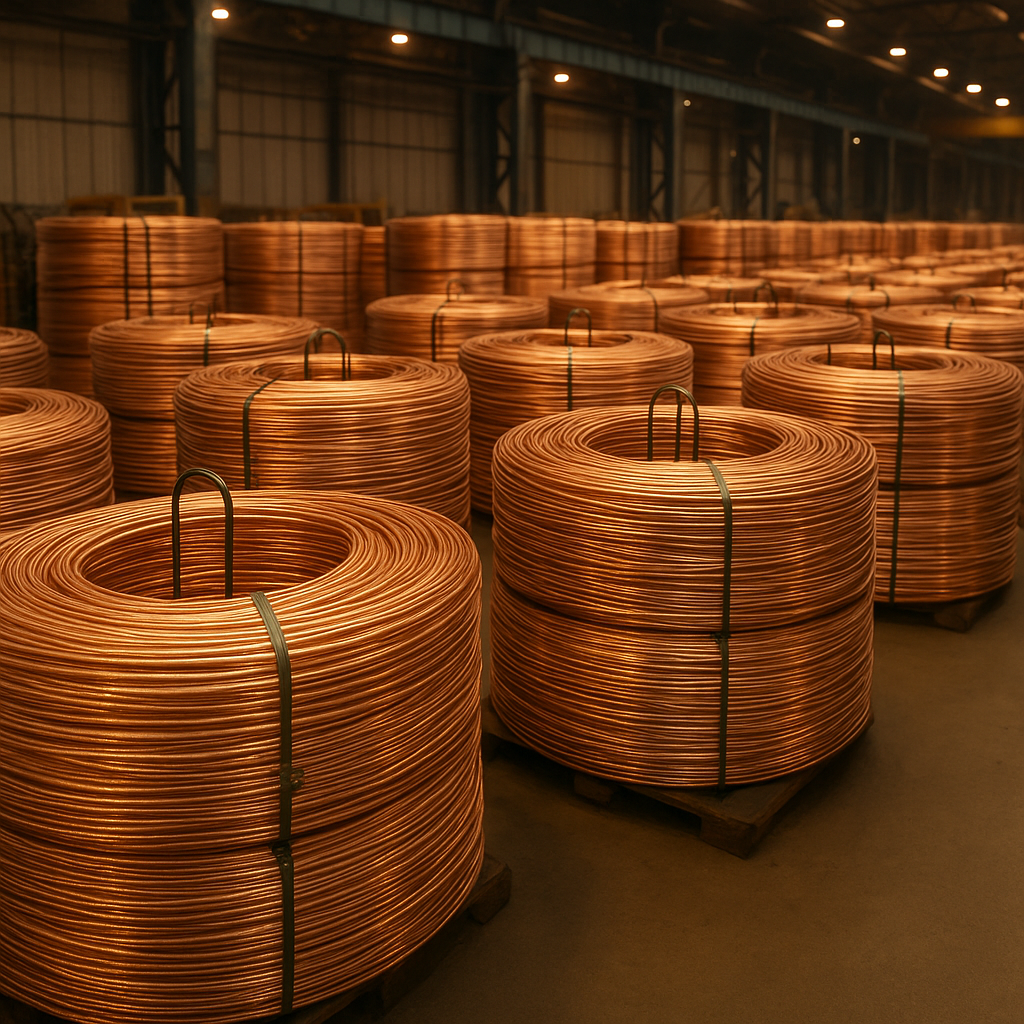
The broader narrative driving the selloff centers on a reassessment of how quickly the green energy buildout will translate into hard metal demand. Copper is essential to electric vehicles, wind turbines, and grid infrastructure, and bullish forecasts from investment banks had pushed the metal above $10,000 per ton as recently as February. Goldman Sachs had projected a structural deficit of 500,000 metric tons by 2026, but traders are now questioning those assumptions as EV adoption rates in Europe and the United States show signs of plateauing. European EV registrations fell 6 percent year-on-year in the first quarter of 2025, a figure that has rattled commodity desks across London and New York.
Policy uncertainty has compounded the technical weakness. The ongoing tariff dispute between Washington and Beijing has clouded the outlook for clean energy supply chains, and analysts note that delays in grid permitting in the United States have pushed back several large copper-intensive infrastructure projects by one to three years. Walmart and Target warned earlier this month that disrupted shipment schedules were already distorting industrial procurement timelines, adding another layer of demand uncertainty to the picture.

Mining equities have tracked the futures market lower. Freeport-McMoRan shares shed 5.1 percent over the week, while Glencore and Antofagasta both posted losses exceeding 4 percent on the London Stock Exchange. Short interest in copper-linked ETFs rose to its highest level since October 2024, according to data from S&P Global Market Intelligence.
Not all analysts are bearish. A number of commodity strategists argue the pullback is a healthy correction within a longer structural bull market, pointing to mine supply constraints in Peru and the Democratic Republic of Congo as factors that will reassert themselves once macro conditions stabilize. Capital expenditure among the top five copper producers declined by an estimated 12 percent in 2024, a supply-side headwind that proponents say the market is temporarily ignoring.
For now, however, sentiment is driving prices. With the Federal Reserve keeping rates elevated and Minneapolis Fed President Neel Kashkari having signaled a rate hike remains possible in 2026, the strong dollar environment continues to weigh on dollar-denominated commodities. Traders will be watching Friday’s U.S. jobs report and next week’s Chinese industrial output figures for any signal that the selloff has run its course.