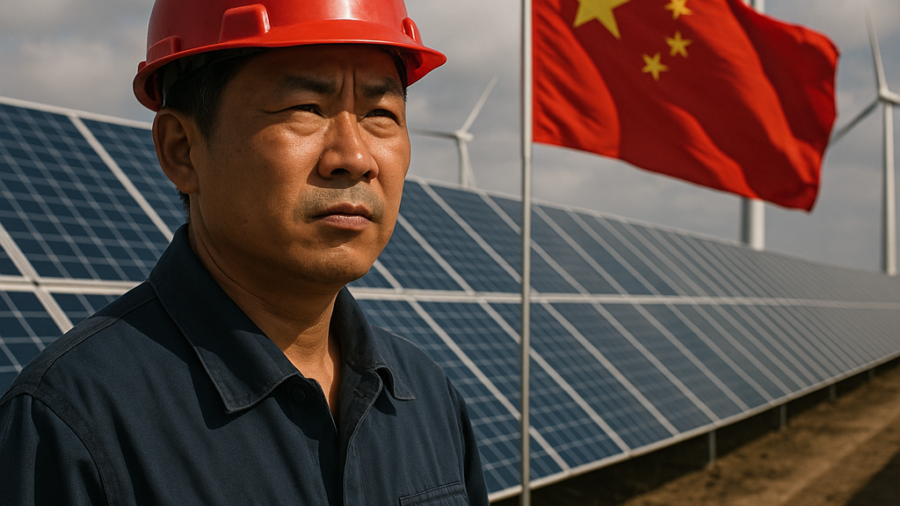
Despite an escalating barrage of Western tariffs and trade restrictions, China is consolidating its dominance over the global clean energy supply chain at a pace that is leaving policymakers in Washington and Brussels scrambling for a coherent response. As OilPrice.com reported, the country’s manufacturers have not only absorbed the shock of punitive duties but have used them as a catalyst to accelerate production efficiency, cut costs further, and redirect export flows toward faster-growing emerging markets.
China now accounts for roughly 80 percent of global solar panel manufacturing capacity, more than 70 percent of lithium-ion battery cell production, and controls the processing of several critical minerals essential to the energy transition. These figures have remained stubbornly resistant to Western industrial policy efforts, including the United States’ Inflation Reduction Act and the European Union’s Net-Zero Industry Act, both of which were designed in part to erode Beijing’s stranglehold on clean technology supply chains.
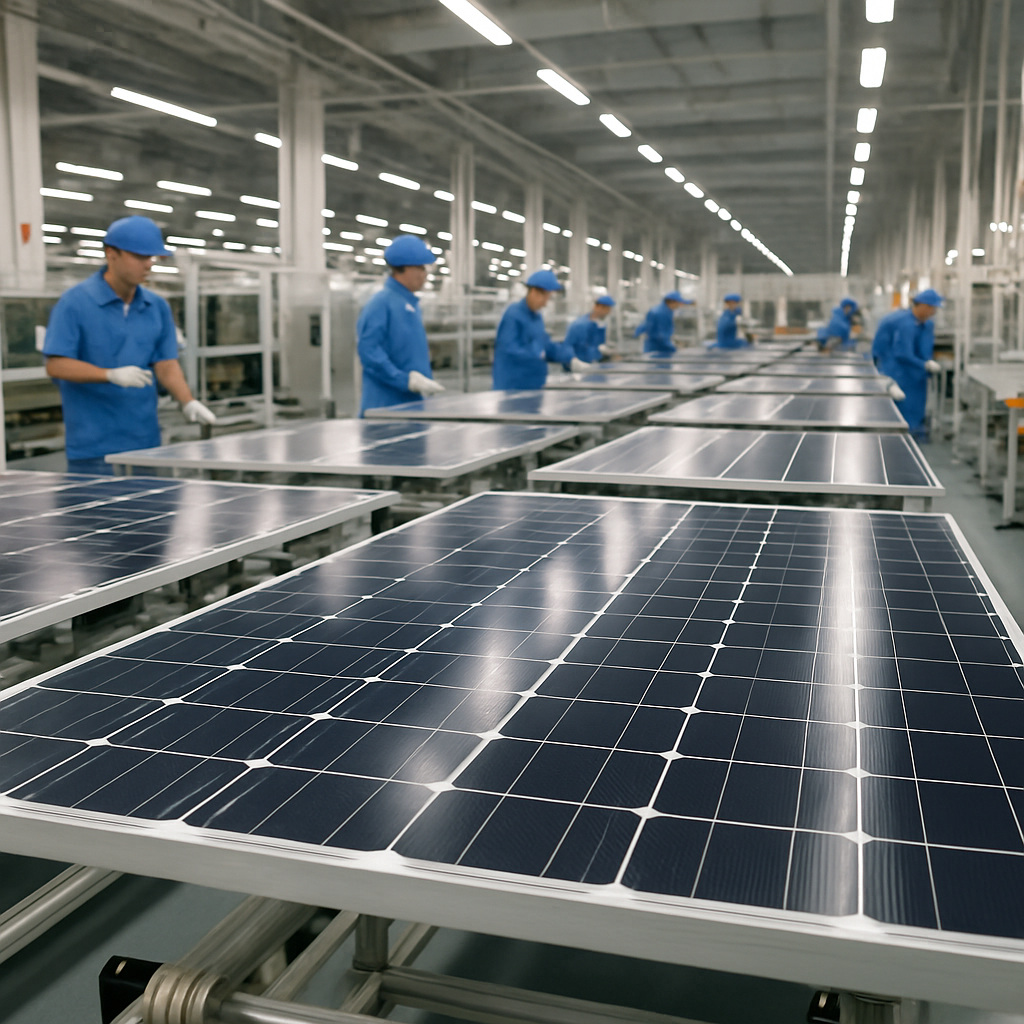
The strategic picture has grown sharper over the past 18 months. Chinese electric vehicle exports surged by more than 30 percent in 2024, with markets across Southeast Asia, Latin America, and the Middle East absorbing volumes that European and American buyers have turned away. Chinese battery maker CATL and solar giant LONGi have both reported record revenues, even as their access to the United States market has narrowed under successive rounds of tariff escalation. The trade war, in effect, has pushed Chinese clean energy producers to diversify — and they have done so with remarkable speed.
The financial consequences for Western manufacturers are becoming difficult to ignore. Domestic solar producers in the United States continue to struggle against Chinese-made panels that, even with tariffs applied, often undercut local rivals on price. Analysts at several investment banks have noted that the cost gap between Chinese and American battery production remains in the range of 30 to 40 percent, a differential that subsidy programmes alone are unlikely to close in the near term. Investors tracking these dynamics have already begun rotating exposure toward non-U.S. fixed income and equity markets, a trend The Fiscalist has previously examined in the context of broader portfolio reallocation away from American assets.

The supply chain dimension is also intersecting with broader trade tensions. As The Fiscalist earlier warned, disruptions to Chinese export flows are rippling across multiple consumer sectors, underscoring how deeply integrated global supply chains remain with Chinese production regardless of policy intent. For clean energy specifically, the risk of decoupling without viable alternatives is increasingly seen as a threat to the West’s own climate targets. The quiet winners of this trade war may ultimately determine the pace and shape of the global energy transition itself.