
A prominent fact-check has taken direct aim at Bloomberg’s editorial line on climate change and global food security, arguing that the financial news giant has materially misrepresented decades of agricultural data. Watts Up With That reported that the empirical record shows climate change has broadly boosted food production and suppressed prices, not driven scarcity and inflation as Bloomberg has repeatedly suggested.
The analysis draws on data from the United Nations Food and Agriculture Organization, which shows global cereal production has risen by approximately 60 percent over the past four decades, a period that coincides with measurable warming and elevated atmospheric carbon dioxide levels now exceeding 420 parts per million. Far from triggering crop failures at scale, the evidence points to CO2 functioning as a fertiliser, accelerating plant growth and improving water-use efficiency across major staple crops including wheat, rice, and maize.
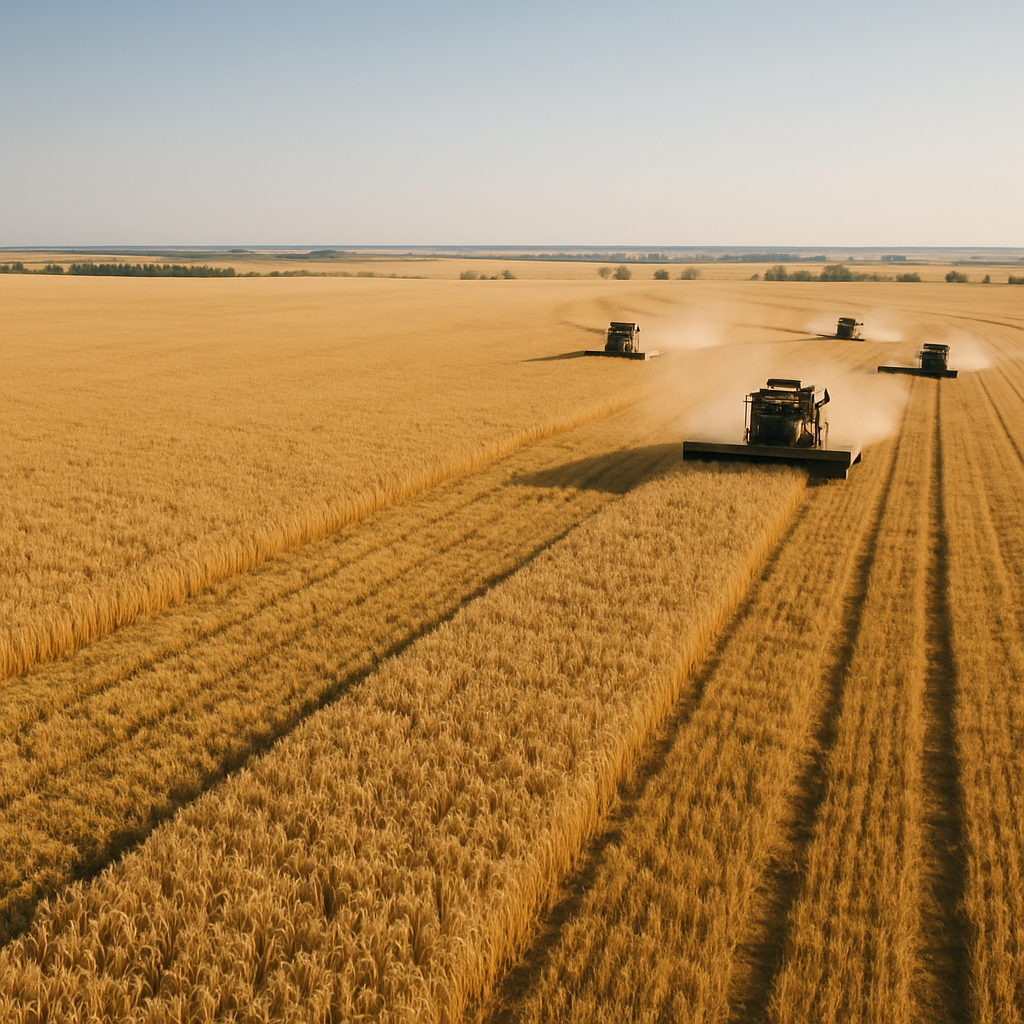
Real food prices, adjusted for inflation, have fallen substantially over the same period. The World Bank’s food price index, when stripped of the commodity spikes attributable to energy shocks, supply chain disruptions, and currency dislocations, reflects a long-run downward trend. Critics of the Bloomberg narrative argue that conflating short-term price volatility driven by geopolitical factors, such as the war in Ukraine, with structural climate damage is both analytically misleading and economically consequential for policy decisions worth trillions of dollars annually.
The implications extend beyond agricultural markets. Climate-related investment mandates have directed significant capital flows into so-called climate-resilient food infrastructure on the premise that warming poses an existential threat to yields. If that foundational assumption is flawed, the capital allocation decisions of sovereign wealth funds, development banks, and ESG-oriented asset managers may rest on contested empirical ground. Investors who have been warned about overvalued equity markets may find that thematic climate narratives embedded in pricing models deserve equally rigorous scrutiny.

The Watts Up With That piece also challenges the media framing around extreme weather events and harvests, noting that global crop loss data does not show a statistically significant upward trend when controlling for the vastly larger land area under modern cultivation and improved seed technology. Agricultural productivity per hectare has risen in nearly every major producing nation over the past thirty years, a fact that sits uncomfortably alongside persistent media assertions of climate-driven food insecurity.
None of this is to suggest that localised disruptions do not occur or that adaptation spending is without merit. However, analysts caution that policy prescriptions built on systematically overstated risks carry their own costs. Argentina, which has navigated severe food price pressures largely through domestic fiscal and monetary dysfunction, offers a case study in how inflation cratered once structural distortions were addressed rather than blamed on external climate forces. Accurate diagnosis, the argument goes, remains the prerequisite for effective economic medicine.