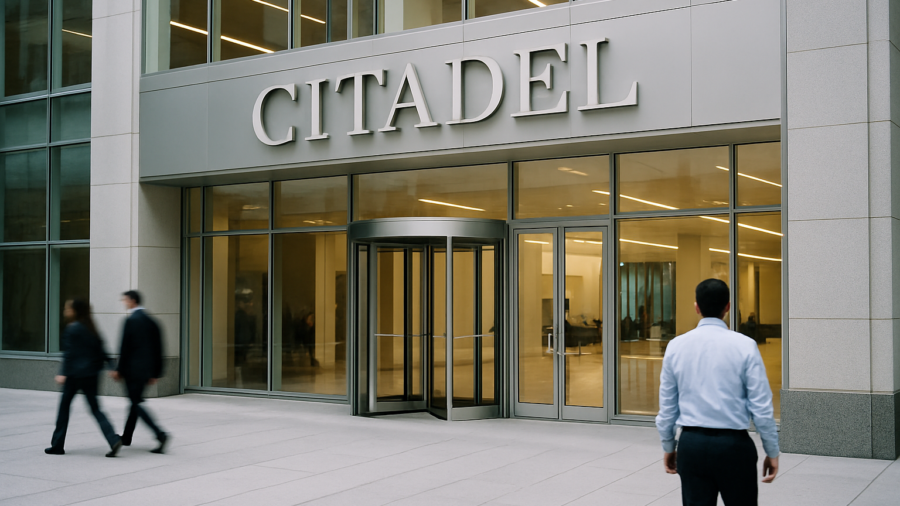
Ken Griffin’s Citadel posted positive returns across its suite of hedge funds in the first half of 2026, with the firm’s flagship Wellington fund leading the charge even as a sharp selloff in quantitative strategies rattled peers across the industry. The results, reported by CNBC, underscore Citadel’s continued ability to generate alpha in an environment defined by macroeconomic uncertainty, elevated interest rates, and episodic bouts of market volatility.
The first half of 2026 proved to be a testing period for hedge funds broadly, as geopolitical tensions, shifting Federal Reserve expectations, and a brief but severe selloff in quantitative equity strategies created a difficult landscape for active managers. Against that backdrop, Citadel’s diversified, multi-strategy architecture appeared to offer meaningful insulation, with gains spread across its global fixed income, commodities, equities, and credit portfolios.

Wellington Fund Leads While Quant Peers Struggle
Citadel’s Wellington fund, its largest and most closely watched vehicle, posted a gain of approximately 8 percent through the first six months of the year, according to the CNBC report. That figure placed it comfortably ahead of the average multi-strategy hedge fund return for the period and well clear of the losses sustained by several prominent quantitative managers during a mid-quarter factor rotation that punished momentum and low-volatility exposures simultaneously.
The quant selloff, which unfolded over several trading sessions in late spring, caught a number of algorithmic funds heavily positioned in technology and growth names on the wrong side of a rapid style rotation. Citadel’s ability to sidestep the worst of those losses was attributed in part to its risk management framework, which has historically emphasised rapid position adjustment and strict drawdown controls across its roughly 600-plus investment teams. The firm’s tactical strategies and its global macro book contributed positively during the period of stress, effectively hedging exposure that might otherwise have dragged on overall performance.
Macro Backdrop Shapes Strategy Returns
The broader environment in which Citadel’s results were achieved deserves careful consideration. The Federal Reserve held rates steady for much of the first half of the year amid conflicting signals on inflation and employment, a dynamic that The Fiscalist has tracked in detail through analysis of Fed policy signals. That uncertainty created fertile ground for relative-value and fixed income arbitrage strategies, both of which Citadel operates at scale. The firm’s fixed income and macro book is understood to have been among its top contributors in the period, benefiting from yield curve dislocations and spread movements in sovereign debt markets.

Commodity markets also provided tailwinds for parts of Citadel’s portfolio. Energy price swings tied to supply disruptions and shifting demand forecasts from major consuming nations created trading opportunities that systematic and discretionary commodity desks were positioned to exploit. Meanwhile, the firm’s credit strategies benefited from elevated all-in yields and selective spread tightening in investment-grade corporate bonds, even as high-yield markets experienced pockets of volatility. The combination of these diverse return streams illustrates the structural advantage of Citadel’s multi-strategy model, which is designed to limit reliance on any single market regime.
Industry Context and the Road Ahead
Citadel’s first-half showing places it among a select group of large multi-strategy platforms that have managed to grow assets and sustain performance simultaneously, even as the hedge fund industry at large grapples with questions about fee compression and the growing influence of passive capital. The firm currently manages approximately 65 billion dollars in assets, making it one of the largest hedge funds in the world by assets under management. Rivals including Millennium Management and Point72 Asset Management also operate similar multi-pod structures, and the competitive dynamics among these firms have intensified as each seeks to recruit top investment talent.
Looking at the second half, market participants will be watching closely for any shift in the Federal Reserve’s posture, continued developments in artificial intelligence-linked equity valuations, and the trajectory of global growth. For investors weighing exposure to alternative strategies, the AI portfolio positioning debate remains particularly live, given how heavily technology sector movements have influenced factor returns across quantitative and discretionary strategies alike. Whether Citadel’s first-half momentum can be sustained will depend in large part on how these macro crosscurrents evolve through the remainder of 2026.