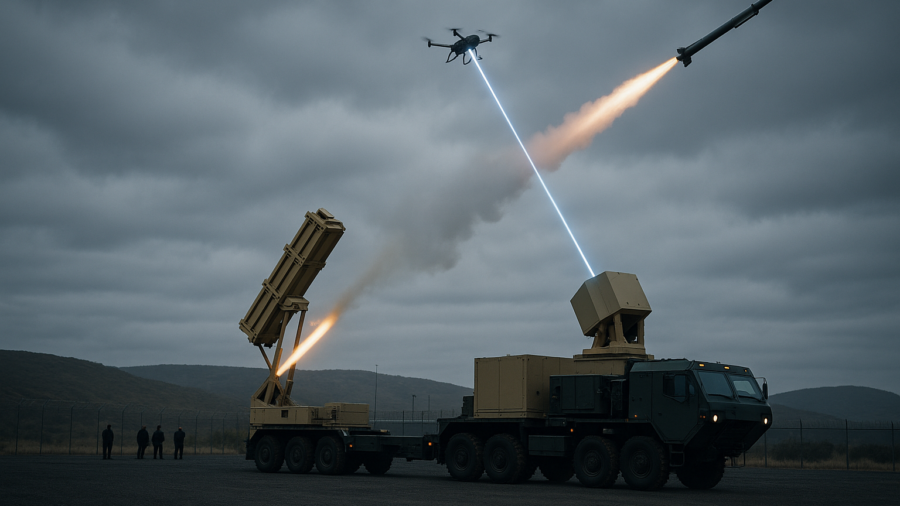
Israel Aerospace Industries (IAI), the state-owned defense conglomerate best known for co-developing the Arrow ballistic missile defense system, has unveiled a new multi-layered capability designed to intercept and destroy coordinated drone swarms — one of the fastest-growing threat categories facing modern militaries and critical infrastructure operators worldwide.
The system, disclosed publicly this week, integrates directed-energy laser weapons with interceptor missiles to create overlapping defensive envelopes capable of engaging dozens of unmanned aerial vehicles simultaneously, according to Calcalist Tech reporting. The announcement reflects a broader strategic pivot within the Israeli defense industry toward counter-unmanned systems technology, a segment that analysts estimate is expanding at a double-digit annual rate as drone proliferation accelerates across conflict zones from Eastern Europe to the Middle East.

Layered Architecture Targets Mass Saturation Attacks
The core challenge posed by drone swarms is one of economics and volume: a defending force must expend costly interceptors against cheap, commercially available or improvised aircraft, often fielded in numbers deliberately designed to overwhelm point-defense systems. IAI’s announced solution addresses this asymmetry by pairing high-energy laser systems — which carry a near-zero marginal cost per engagement once deployed — with kinetic interceptors reserved for higher-value or harder-to-burn targets within the swarm.
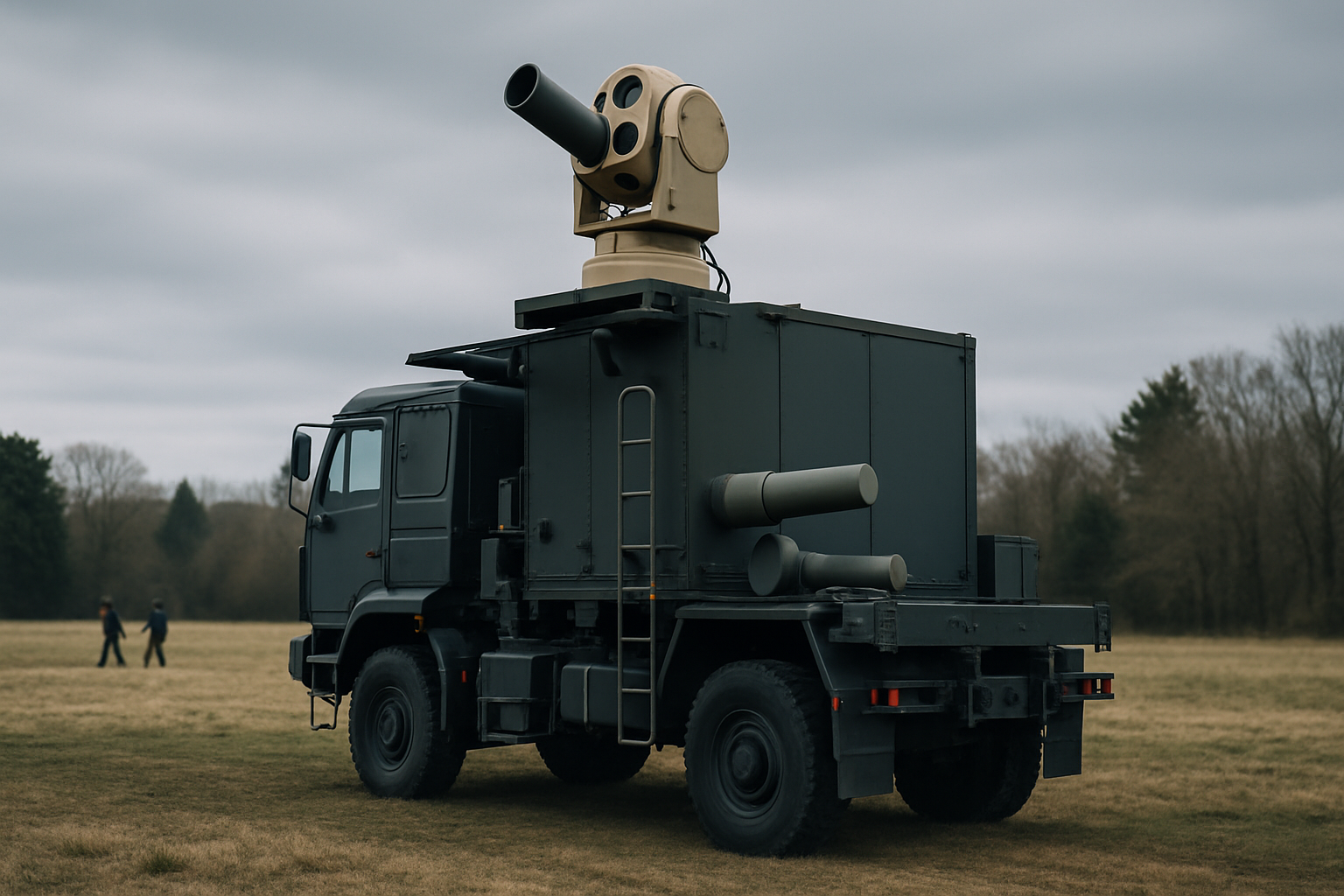
The laser component is capable of tracking and destroying multiple targets in rapid sequence, while the interceptor layer handles threats that require a more robust kinetic response, such as larger armed drones or those equipped with countermeasures. IAI has not disclosed specific range figures or energy output ratings publicly, but the company indicated the system is designed to be deployable on both fixed-site and mobile platforms, broadening its potential customer base beyond static installations to field army units requiring on-the-move air defense.
The development follows a period of intense operational learning. Drone swarm tactics have been used with increasing sophistication across multiple active conflicts, and defense procurement agencies in Europe, Asia, and the Gulf Cooperation Council have accelerated requests for counter-UAS capabilities. IAI, which reported revenues of approximately $4.9 billion in its most recently disclosed annual figures, has identified counter-drone technology as a growth segment alongside its established missile defense and surveillance portfolios.
Commercial and Export Implications for IAI
For IAI, the commercial stakes are substantial. The global counter-drone market is projected by multiple defense research firms to surpass $10 billion annually within the next several years, driven by demand from both military and civilian customers protecting airports, energy facilities, and government installations. IAI’s ability to offer a system that bridges directed energy and kinetic intercept — rather than relying on either technology alone — positions it competitively against European and American rivals investing heavily in similar architectures.
The Arrow program’s legacy gives IAI particular credibility in the layered-defense market. Arrow, developed jointly with Boeing and funded in large part by the United States Missile Defense Agency, has demonstrated operational effectiveness against ballistic threats and serves as the top tier of Israel’s multi-layer air defense network. Translating that systems-integration expertise into the lower-altitude, high-volume drone threat environment represents a logical, if technically demanding, extension of the company’s core competencies.
IAI has not announced specific export contracts in connection with the new system, but industry observers expect the platform to be marketed aggressively at upcoming international defense exhibitions, particularly to NATO member states that have identified counter-UAS gaps in their force structures following operational lessons from the war in Ukraine. The company’s defense electronics division, Elta Systems, is expected to supply the radar and targeting components integral to the system’s engagement architecture.
The unveiling also underscores the breadth of innovation emerging from Israel’s defense technology sector. As covered previously on The Fiscalist, Rafael simulation technology has similarly pushed into new operational domains, reflecting an industry-wide pattern of Israeli defense firms translating battlefield experience into exportable, scalable products. Investors tracking dual-use technology and defense electronics may find IAI’s counter-drone program a meaningful signal of where procurement budgets across allied nations are heading in the near term.