
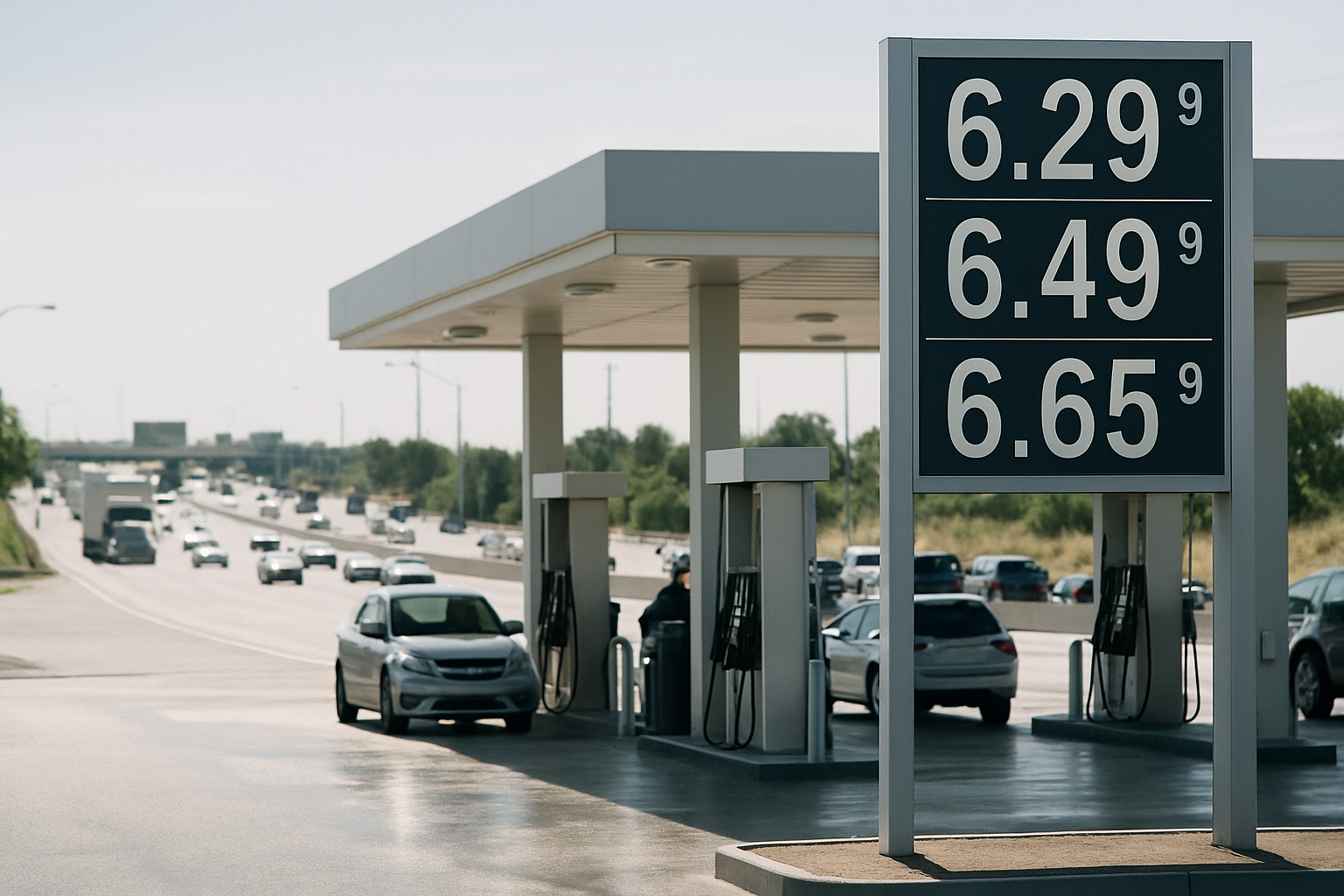
American motorists who had enjoyed a period of relative relief at the pump are facing renewed pressure as gasoline prices trend higher heading into the peak summer driving season. A combination of tightening crude oil supplies, persistent geopolitical instability in the Middle East, and robust seasonal demand is pushing fuel costs back toward levels not seen since earlier in the year, according to a Marketplace report published July 8, 2026.
The national average for a gallon of regular gasoline has risen approximately 15 to 18 cents over the past three weeks, reversing a modest decline that had offered consumers some breathing room. Analysts tracking wholesale energy markets say the move reflects both structural supply factors and renewed speculative pressure in crude futures, with West Texas Intermediate hovering near levels that tend to translate into higher retail costs within two to three weeks.
Middle East Uncertainty Keeps Supply Outlook Fragile
Despite a diplomatic agreement earlier this year aimed at de-escalating tensions between the United States and Iran, energy markets have not returned to normal. According to Al Jazeera reporting, analysts cautioned in mid-June that U.S. fuel prices could take months to fully normalize following the deal, given the complex logistics of restoring Iranian crude flows to global markets and the residual uncertainty surrounding compliance and sanctions enforcement.
Those concerns have proven well-founded. Oil markets have continued to price in a meaningful risk premium tied to Middle East instability, with supply risk concerns underpinning consecutive weeks of crude price gains. Brent crude has held above $80 per barrel for much of late June and into July, a level analysts say is inconsistent with the lower retail prices many consumers and policymakers had expected to see materialize by now.
The failure of pump prices to fall more sharply during the brief window of crude softness has drawn political attention. Treasury Secretary Scott Bessent publicly called out fuel retailers earlier this month, warning that the cost savings from lower wholesale prices needed to be passed on to consumers at the station level. The Bessent warning drew widespread attention and reflects the growing frustration in Washington over what critics describe as asymmetric pricing behavior by fuel retailers — prices rising faster than they fall.

Inflation Watch Complicates the Federal Reserve’s Calculus
The renewed climb in gasoline prices arrives at an awkward moment for monetary policymakers. Energy costs feed directly into headline inflation figures, and any sustained increase in pump prices risks complicating the Federal Reserve’s efforts to bring overall price growth sustainably back toward its 2 percent target. Richmond Fed President Tom Barkin acknowledged in late June that while there are nascent signs of relief on the inflation front, elevated oil prices remain a meaningful upside risk to the broader price outlook, according to Fortune’s coverage of his remarks.
Consumer sentiment surveys suggest households are acutely sensitive to fuel price movements, which tend to serve as a daily, visible barometer of economic conditions. Economists note that a sustained 10-cent rise in the national average pump price effectively transfers several billion dollars annually out of consumer discretionary spending and into energy costs — a drag that could weigh on retail sales and broader economic activity if prices continue their current trajectory through the remainder of the summer.
For investors and market participants, the energy price picture intersects with a broader set of macro risks. The Federal Reserve’s next policy decision will be scrutinized for any signal that persistent fuel inflation is altering the timeline for potential rate adjustments. Coverage of related monetary policy developments, including Federal Reserve advisory restructuring under incoming leadership, underscores how rapidly the institutional context around U.S. economic management is itself evolving. Meanwhile, questions about whether the broader economy can sustain consumer spending amid rising input costs will only grow louder if pump prices continue their upward drift into August. The coming weeks are likely to serve as a critical test of both market resilience and policy credibility. For more on how macro pressures are reshaping economic behavior, see our recent analysis of the American economic identity entering a period of profound structural change.