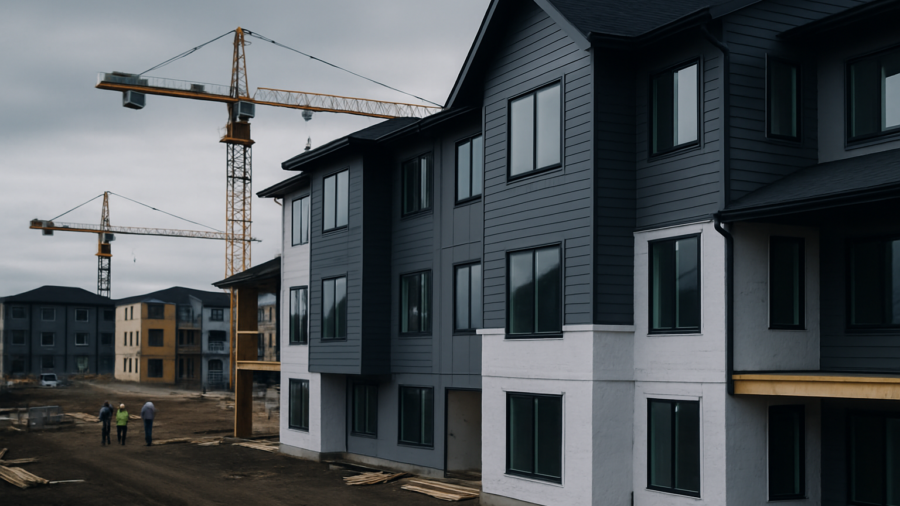
After more than two years of historically elevated borrowing costs, American homebuyers and homeowners are hungry for relief. Mortgage rates, which surged above 7 percent in 2023 and remained stubbornly high through much of 2024, are expected to ease gradually over the next five years — but forecasters caution that a swift return to the sub-3 percent environment of the pandemic era is almost certainly off the table. Understanding the trajectory of rates matters enormously for millions of households weighing whether to buy, refinance, or wait.
According to Yahoo Finance projections, the 30-year fixed mortgage rate is broadly expected to drift toward the mid-to-upper 5 percent range by 2026 and 2027, assuming the Federal Reserve continues its measured rate-cutting cycle and inflation remains on a controlled downward path. By 2028 and 2029, some economists see rates potentially settling between 5.5 percent and 6 percent — a meaningful improvement from current levels, but still nearly double the record lows recorded in 2021.
Federal Reserve Policy Remains the Central Variable
The Federal Reserve’s benchmark federal funds rate remains the single most consequential factor shaping mortgage costs over the medium term. The central bank began cutting rates in late 2024 after holding them at a two-decade high of 5.25 to 5.50 percent in its effort to tame inflation that peaked above 9 percent in mid-2022. Markets currently expect additional cuts totaling between 50 and 100 basis points over 2025, though the pace is far from guaranteed and hinges heavily on incoming inflation and employment data.
Mortgage rates do not move in lockstep with the fed funds rate — they track more closely with the yield on the 10-year U.S. Treasury note, which reflects broader investor expectations about growth, inflation, and fiscal sustainability. Persistent federal deficits and elevated Treasury issuance have kept long-term yields elevated, serving as a structural floor beneath mortgage rates. Even if the Fed cuts aggressively, analysts warn that the spread between the 10-year Treasury yield and the average 30-year mortgage rate — which widened significantly during the 2022–2024 tightening cycle — may not fully normalize for several years, limiting how far mortgage rates can fall in the near term.
This dynamic helps explain why many forecasters are penciling in a relatively slow rate descent rather than a sharp drop. For prospective buyers, the implication is that waiting for dramatically lower rates could mean sitting on the sidelines for years, particularly given that home prices have continued to climb even as affordability has deteriorated, reducing the financial benefit of a delayed purchase.

What This Means for Buyers, Sellers, and the Broader Housing Market
The practical consequences of a five-year outlook marked by gradual — rather than dramatic — rate relief are significant. Housing affordability, by most standard measures, remains near its worst levels in four decades. A household purchasing a median-priced U.S. home today at prevailing mortgage rates dedicates a far higher share of monthly income to principal and interest payments than at virtually any point since the early 1980s. Even a decline to 5.5 percent on a 30-year fixed loan would reduce monthly payments by roughly 10 to 12 percent compared with current rates near 7 percent, offering real but incomplete relief.
The so-called lock-in effect — whereby existing homeowners with mortgages at 3 or 4 percent are reluctant to sell and take on new loans at nearly twice that rate — has constrained inventory and supported prices. As rates gradually decline toward the second half of the five-year window, economists anticipate that more sellers will re-enter the market, slowly easing supply constraints that have kept competition among buyers fierce in most metropolitan areas. A normalization of inventory could, in turn, moderate the pace of home price appreciation, improving affordability on two dimensions simultaneously.
For adjustable-rate mortgage holders and those approaching the end of fixed-rate terms, the outlook offers cautious optimism. Refinancing opportunities are likely to expand meaningfully if rates reach the mid-5 percent range by 2027. Financial advisers broadly recommend that borrowers avoid market timing and instead evaluate purchases based on personal financial stability, local housing conditions, and long-term housing needs. Investors tracking the broader real estate sector may also want to monitor developments in retiree financial planning, where housing wealth and mortgage obligations intersect with mounting healthcare expenses to create complex long-term balance sheet risks.
The next five years in the mortgage market will demand patience. Rates are expected to fall, but slowly and unevenly, shaped by forces ranging from Federal Reserve decisions to geopolitical shocks to the structural dynamics of the U.S. Treasury market. Buyers and homeowners who plan around realistic expectations — rather than hoping for a rapid return to pandemic-era lows — will be better positioned to make sound financial decisions in an environment where certainty remains scarce.