
Arabica coffee futures climbed to a fresh all-time high this week after a rapidly escalating tariff dispute between the United States and Colombia sent commodity traders scrambling to reprice supply risk across one of the world’s most actively traded agricultural markets. The benchmark arabica contract on the Intercontinental Exchange surged past $4.30 per pound, extending a rally that has already seen prices more than double over the past twelve months as tight global supplies and adverse weather in key growing regions pressured inventories heading into 2025.
The immediate trigger was a threat by President Donald Trump to impose 25 percent tariffs on all Colombian goods entering the United States, a move made in response to Bogotá’s refusal to accept U.S. military deportation flights carrying Colombian migrants. Colombia’s President Gustavo Petro swiftly announced retaliatory measures, including tariffs of his own on American imports, before the two governments reached a temporary agreement to stand down. Even so, the episode underscored how vulnerable agricultural commodity prices have become to sudden geopolitical shocks, particularly where supply is already stretched thin, according to WSJ reporting on the market reaction.
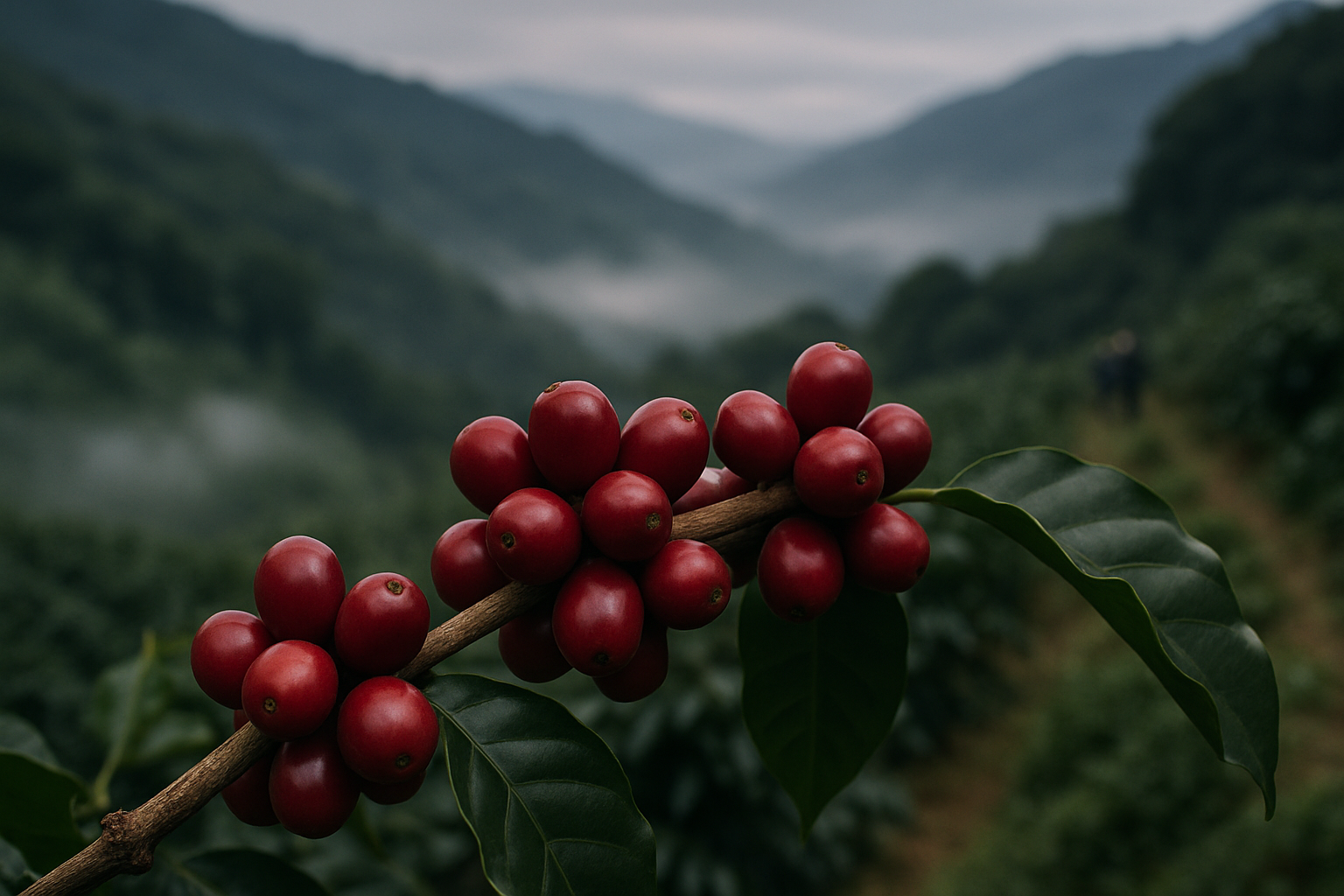
Colombia’s Central Role Amplifies Market Sensitivity
Colombia ranks among the world’s top three arabica producers, accounting for roughly 10 to 12 percent of global output in a typical harvest year. Unlike the robusta-dominant crops of Vietnam or the large-volume arabica harvests of Brazil, Colombian beans carry a premium grade prized by specialty roasters and multinational coffee chains alike. Any disruption to Colombian export flows — whether through logistics bottlenecks, weather events, or now trade policy — ripples quickly through futures markets, which had already been operating under thin certified exchange inventories.
Certified arabica stocks monitored by the Intercontinental Exchange have fallen sharply from levels seen just two years ago, leaving the market with little buffer against supply shocks. Analysts at several commodity trading firms noted that the diplomatic standoff, even in its brief form, was sufficient to push speculative positioning in arabica to historically elevated levels. Open interest in arabica futures contracts rose sharply in the days following Trump’s initial tariff announcement, reflecting a surge in hedging activity by roasters and importers anxious to lock in prices before further deterioration. Retail coffee prices in the United States, which have already risen noticeably at major chains and grocery outlets, could face another leg higher if the diplomatic standoff reignites.
Broader Commodity Markets and Trade Policy Uncertainty
The coffee price spike arrives at a moment when global commodity markets are broadly grappling with the unpredictability of U.S. trade policy under the current administration. Tariff threats have already rattled freight markets, where uncertainty over bilateral trade flows has compounded costs across multiple shipping lanes. The Fiscalist previously examined how trans-Pacific freight costs surged above $7,900 per container as geopolitical pressures reshaped global logistics, a dynamic that now appears to be extending into soft commodity supply chains as well.

For importers and consumer goods companies with significant coffee exposure, the risk calculus has shifted considerably. Firms that source heavily from Colombia are now weighing the cost of diversifying procurement toward Brazilian or Central American arabica supplies, though substitution is neither seamless nor immediate given quality differentiation and existing contract structures. Hedging costs through options markets have also climbed, with implied volatility on near-term arabica contracts reaching levels not seen in several years.
Observers of Colombia’s broader trade and energy sectors are watching the diplomatic situation closely. The Fiscalist has previously reported on Colombian energy developments, where regulatory uncertainty has already complicated foreign investment decisions, suggesting that the current diplomatic tensions may have ramifications extending well beyond coffee exports. For now, traders remain focused on whether the temporary U.S.-Colombia détente holds, or whether a renewed standoff sends arabica futures toward still-uncharted territory above the $4.50 per pound threshold that would have seemed implausible only eighteen months ago.