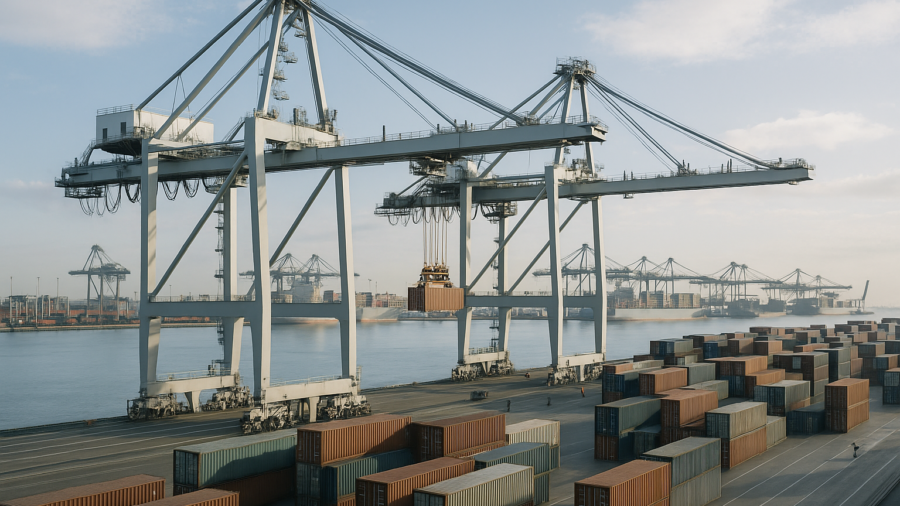
Ocean freight rates on the Asia-to-United States trade corridor have surged past $7,900 per forty-foot equivalent unit, marking one of the more significant pricing spikes in trans-Pacific shipping since the supply chain dislocations of the pandemic era. The move higher reflects a confluence of redirected cargo flows, tightening vessel capacity, and persistent uncertainty over global trade policy — even as the immediate threat of conflict around the Strait of Hormuz has begun to recede from the foreground of shipper anxiety.
According to Yahoo Finance commodities, rates on the benchmark Asia-to-US West Coast lane have climbed sharply in recent weeks, with the broader move driven in part by front-loading behavior among American importers anxious to beat further tariff escalations. The result has been a pronounced tightening of available space on major container services operating out of Chinese, South Korean, and Southeast Asian ports.
Front-Loading Demand Compresses Available Capacity
The dominant force behind the current rate environment appears to be demand-side pressure rather than a supply disruption in the traditional sense. Importers across retail, electronics, and consumer goods sectors have been pulling forward shipments at an accelerated pace, seeking to build inventory buffers ahead of what many procurement teams regard as an unstable tariff outlook through the second half of 2025. This behavior effectively concentrates demand into a shorter booking window, overwhelming the ability of carriers to dynamically reallocate tonnage.
Spot market data indicates that the Asia-to-US East Coast lane — a longer and more fuel-intensive routing — has seen comparable upward pressure, with rates trading in a range that makes the current environment among the most expensive for trans-Pacific shippers outside of the extraordinary spike witnessed in late 2021 and early 2022. Carriers including several of the major alliance groupings have responded by reinstating peak-season surcharges and, in some cases, blanking sailings on lower-demand secondary routes to defend yield on the primary corridors.
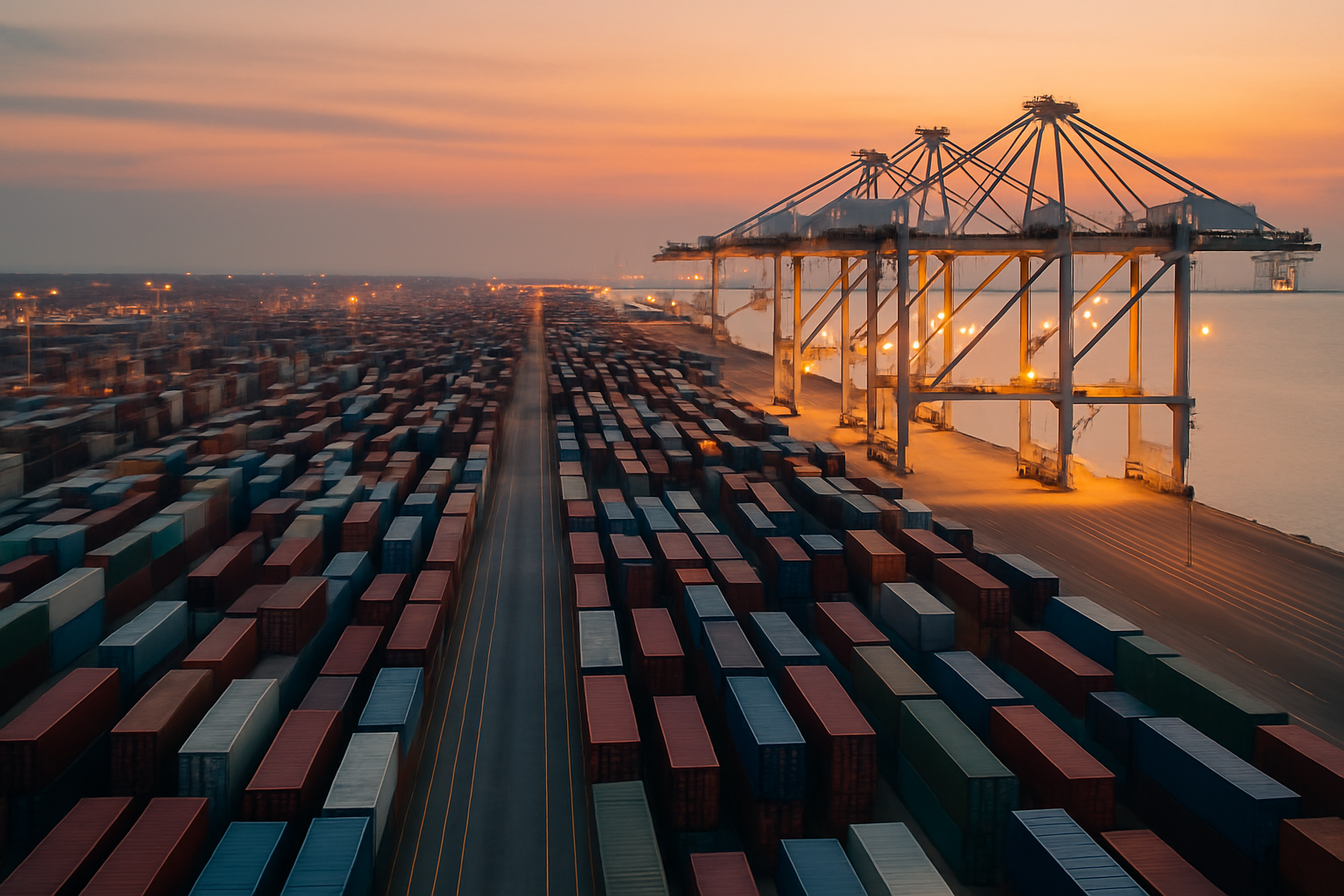
The Hormuz dimension, while now somewhat diminished as an acute market driver, has not fully disappeared from carrier and shipper risk assessments. Earlier in the year, tensions in the broader Middle East region prompted a meaningful share of global container traffic to avoid the Red Sea entirely, forcing rerouting around the Cape of Good Hope and adding as many as ten to fourteen days to certain Europe-Asia voyages. While that disruption was more directly felt on Asia-Europe lanes, the cascading effect on vessel positioning and port congestion contributed to tighter-than-expected capacity across all major trade routes, including the Pacific.
Tariff Uncertainty Extends the Rate Pressure Horizon
What distinguishes the current rate environment from a straightforward seasonal peak is the degree to which policy uncertainty has become a structural input into shipper decision-making. The imposition and subsequent partial suspension of sweeping U.S. tariffs on Chinese goods earlier this year created a stop-start dynamic in booking patterns that has proved difficult for carriers to manage efficiently. When tariff relief windows open, even temporarily, demand surges. When they close or appear threatened, importers scramble to move cargo before the deadline, further compressing available capacity.
This dynamic has effectively created a market in which pricing power has shifted substantially back toward carriers after a prolonged period of overcapacity and weak rates that characterized much of 2023 and the first half of 2024. Freight forwarders have noted that contract rates negotiated earlier in the year are increasingly being supplemented — or in some cases supplanted — by spot bookings at considerably higher levels, as importers find their allocated contract capacity insufficient to meet accelerated shipment timelines.
The broader implications for U.S. consumer prices remain a subject of debate among economists, with some arguing that elevated freight costs will eventually filter through to retail shelves with a lag of three to six months, while others contend that the import composition has shifted sufficiently — with more goods sourced from Vietnam, India, and Mexico — to dilute the inflationary pass-through relative to prior episodes. The Federal Reserve policy environment adds another layer of complexity, as policymakers weighing the inflationary implications of tariffs and supply chain costs must now factor in renewed freight market tightness.
For logistics and supply chain professionals monitoring contract renewal cycles, the current spike is already shaping expectations heading into the annual trans-Pacific rate negotiation season. Analysts covering the sector have flagged that the combination of resilient demand, disciplined carrier capacity management, and ongoing geopolitical unpredictability could sustain elevated rates well into the fourth quarter. Shippers who locked in long-term contracts during the softer rate environment of 2023 may find themselves with a significant cost advantage, while those reliant on spot market access face meaningful margin pressure. Industry observers tracking freight contract modernization, including developments around freight RFP platforms, note that the current volatility has accelerated corporate interest in more dynamic and automated bidding mechanisms.