
Bitcoin is poised to close out a third successive winning week, with the world’s largest cryptocurrency by market capitalisation consolidating gains even as a deteriorating macroeconomic backdrop weighs on traditional risk assets. The digital currency has drawn renewed attention from investors seeking alternatives to equities and sovereign bonds, as concerns over slowing growth, persistent inflation, and geopolitical instability continue to cloud the outlook for conventional portfolios. Analysts note that the pattern echoes earlier episodes when household wealth inequality and institutional disillusionment with legacy assets accelerated flows into decentralised alternatives.
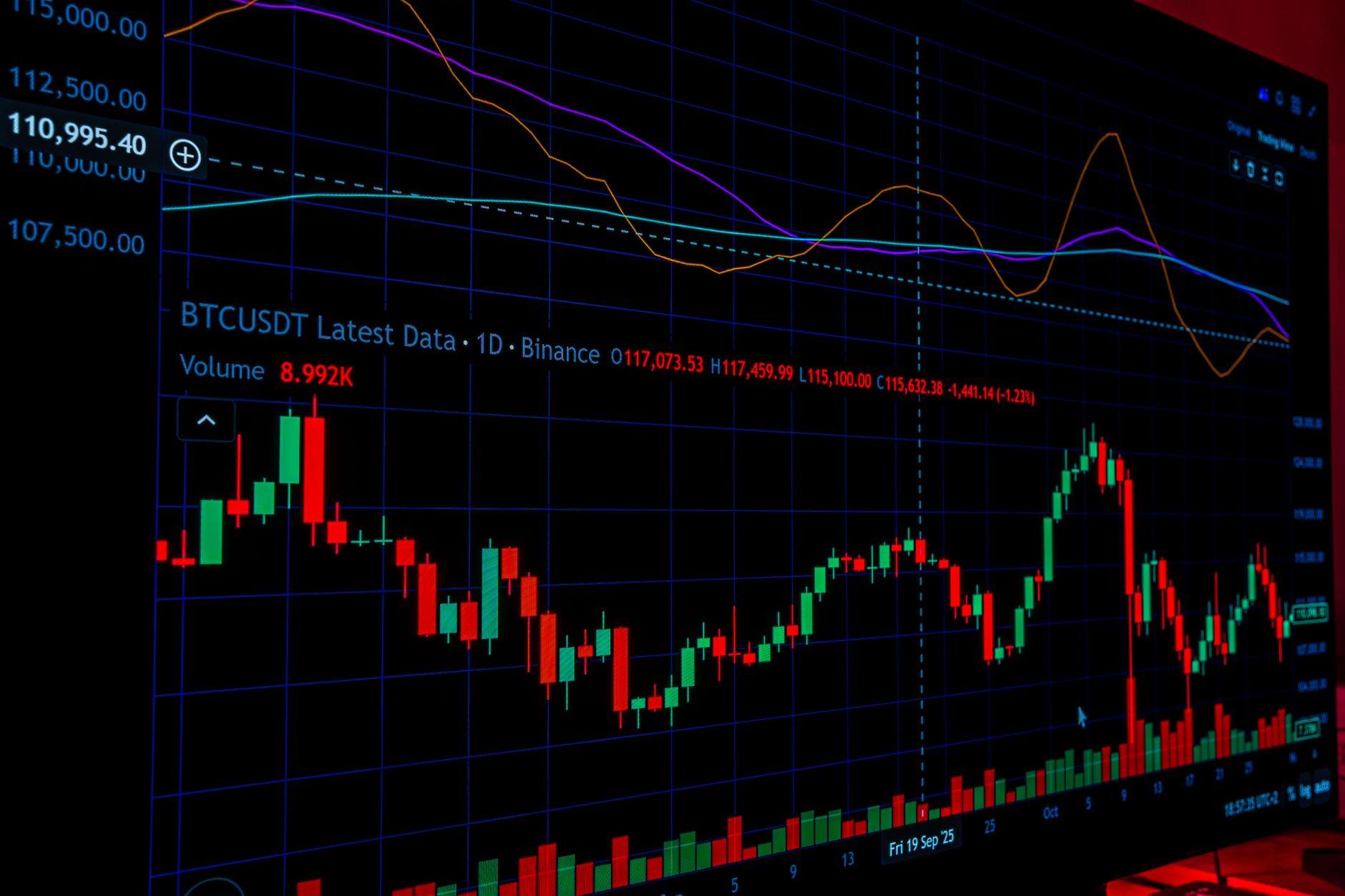
As of Friday, September 4, 2026, Bitcoin was trading near $64,200, having risen approximately 7.4 percent over the prior five sessions, according to data cited by CNBC markets in its report titled “Bitcoin heads for third winning week in a row as macro pressures mount.” The asset briefly touched a local high of $65,800 mid-week before pulling back modestly, a move traders attributed to profit-taking ahead of the weekend rather than any fundamental deterioration in sentiment.
Macro Stress Fuels Safe-Haven Rotation
The broader macroeconomic environment has played a significant role in underpinning Bitcoin’s resilience. United States manufacturing data released earlier in the week showed continued contraction, with the ISM Manufacturing Index falling to 46.3 in August, its fifth consecutive sub-50 reading. Meanwhile, Federal Reserve officials have signalled that monetary policy will remain restrictive well into the fourth quarter, with the benchmark federal funds rate holding at 5.25 percent. That combination — weakening growth alongside tight financial conditions — has historically pressured equities while simultaneously prompting some institutional allocators to reconsider their exposure to uncorrelated assets.
In Europe, the picture is similarly strained. German industrial output fell 1.2 percent month-on-month in July, adding to fears of a shallow technical recession in the eurozone’s largest economy. Currency markets reflected the stress, with the euro slipping 0.6 percent against the dollar through the week. Against that backdrop, Bitcoin’s gains have appeared all the more striking, with the asset outperforming the S&P 500, which edged down 0.9 percent over the same period, and gold, which added a modest 1.1 percent. Trade tensions have added an additional layer of complexity to the global picture, with ongoing disputes between major economies — explored in depth in our coverage of G20 export disputes — continuing to disrupt cross-border capital flows.

Institutional Demand and On-Chain Signals
Beyond the macro narrative, on-chain data has provided technical support for the bullish thesis. Active wallet addresses rose 11 percent week-on-week, while exchange outflows — a metric closely watched as a proxy for long-term accumulation — hit their highest level since late June. Spot Bitcoin exchange-traded funds listed in the United States recorded net inflows of approximately $480 million across the week, suggesting that institutional demand remains a durable force rather than a speculative surge driven purely by retail momentum.
Mining difficulty also adjusted upward for the second consecutive fortnight, a signal that more computing power is being directed toward the network and that miners anticipate sustained or rising price levels. Options markets reflected a broadly constructive mood, with the put-call ratio falling to 0.74 as of Thursday’s close, indicating that traders are positioning more heavily for further upside than for a near-term correction. Analysts at several trading desks cautioned, however, that the $66,000 to $67,000 range represents a meaningful resistance zone, and that a clean break above that band would be required to confirm that the current rally has the structural depth to challenge highs last seen in the first quarter of the year.
Looking ahead, market participants will closely monitor the Federal Reserve’s next policy meeting, scheduled for later in September, as well as any developments in U.S. fiscal negotiations, which have the potential to shift risk appetite sharply in either direction. For now, Bitcoin’s three-week run stands as a testament to its growing role as a macro barometer — one that an expanding cohort of professional investors appears increasingly willing to treat as a legitimate portfolio consideration rather than a speculative side bet.