
Dollar Strengthens as Risk Appetite Returns to Currency Markets
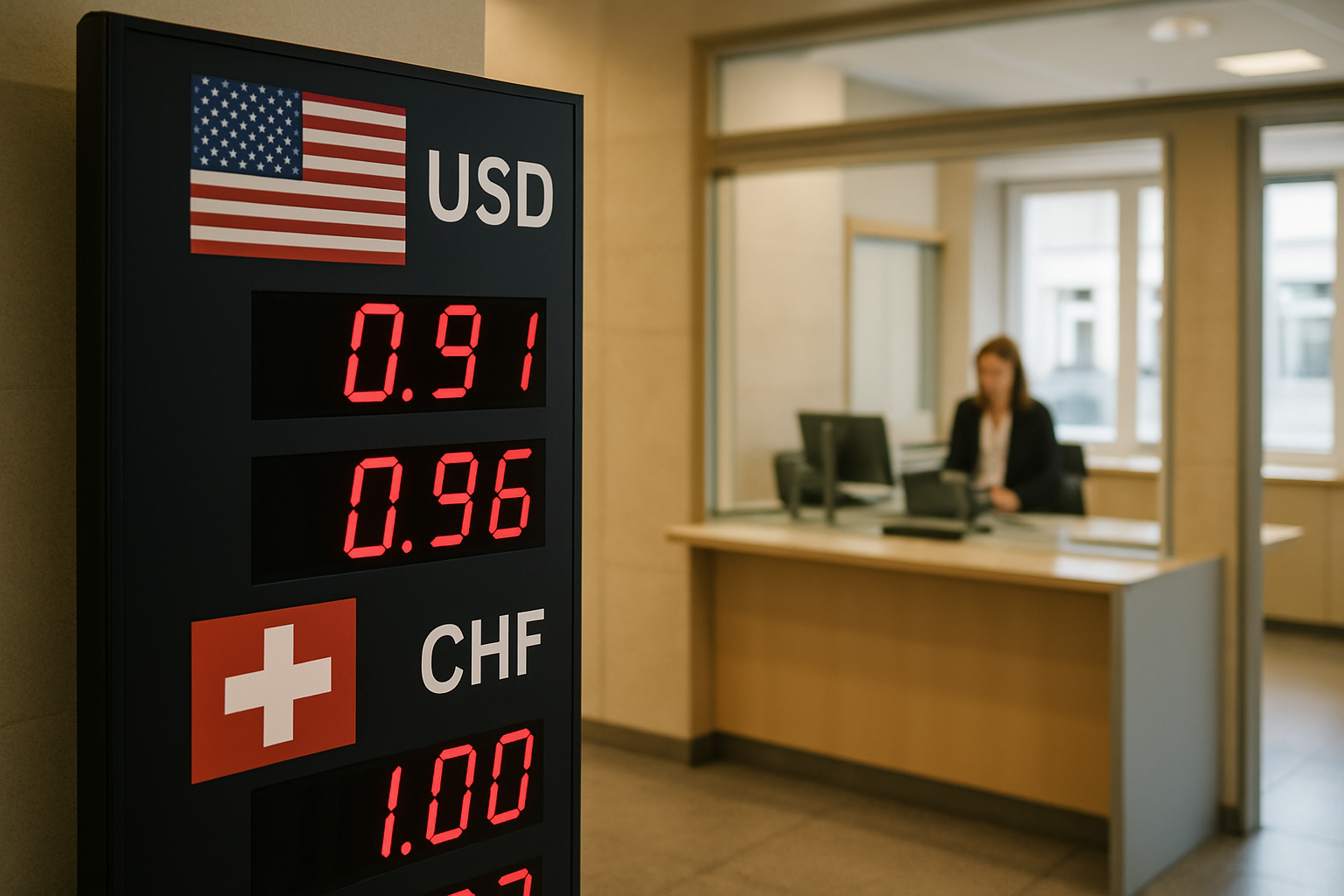
The United States dollar reported a sharp intraday advance on Tuesday, climbing 0.5% against the Swiss franc to reach 0.8890, as improving investor sentiment across global markets diminished the appeal of traditional safe-haven assets. The move marked one of the more decisive single-session gains for the dollar against the franc in recent weeks, reflecting a broader recalibration of risk positioning among institutional currency traders.
The Swiss franc, long regarded as one of the world’s premier defensive currencies, has attracted persistent capital inflows during periods of geopolitical stress and financial market turbulence. Its latest retreat against the dollar suggests that at least some of those hedging flows are being unwound, with investors rotating back toward assets tied more directly to economic growth expectations. Currency strategists noted that the 0.5% move, while not dramatic in isolation, carries significance given the franc’s typical resistance to sharp directional shifts over short timeframes.
Broader dollar strength was also visible across other major pairings during the session, with the greenback posting gains against a basket of developed-market currencies. The Dollar Index, which measures the US currency against six major peers, edged higher as traders reassessed the interest rate outlook following a string of resilient domestic economic data releases. Analysts at several major investment banks had recently flagged that the dollar was oversold relative to underlying fundamentals, and Tuesday’s session appeared to offer some validation of that view.
Swiss National Bank Policy and the Franc’s Structural Role
The Swiss National Bank has historically been deeply interventionist when it comes to franc strength, mindful that an appreciating currency poses deflationary risks to Switzerland’s export-heavy economy. With the SNB having already pushed its policy rate into negative territory in prior cycles and only recently returning to more conventional settings, the central bank’s tolerance for renewed franc appreciation remains limited. Market participants have consistently factored in the possibility of verbal or direct intervention whenever the franc approaches levels that threaten the competitiveness of Swiss exporters in sectors ranging from precision manufacturing to pharmaceuticals.
Tuesday’s softening of the franc aligns with a pattern observed in recent months, where brief spikes in safe-haven demand — often triggered by geopolitical headlines or equity market volatility — have been followed by relatively swift reversals once the immediate catalyst fades. The USD/CHF pair had been trading in a fairly compressed range prior to Tuesday’s move, and the 0.5% jump raised the pair to its highest level in several sessions, drawing attention from technical analysts who track breakout patterns in major currency pairs.
Switzerland’s economic data calendar has been relatively quiet of late, leaving franc pricing increasingly subject to external drivers rather than domestic fundamentals. Inflation in Switzerland has remained subdued compared with most other developed economies, which has reduced the urgency for the SNB to maintain a hawkish policy stance. That divergence with the US Federal Reserve, which has signaled a more cautious and data-dependent approach to rate cuts, continues to structurally favour dollar strength over the medium term, many analysts argue.

Broader Currency Market Context and the Outlook for USD/CHF
The dollar’s advance against the franc is unfolding against a complex macroeconomic backdrop in which major central banks are navigating the final stages of their respective tightening cycles with notably different timelines and communication strategies. The Federal Reserve has maintained a firm stance against premature rate cuts, with several officials reiterating in recent public remarks that policy will remain restrictive until inflation convincingly returns to the 2% target. That posture continues to underpin dollar demand, particularly against currencies linked to central banks that have either already begun easing or signalled a more dovish pivot.
Meanwhile, global risk sentiment has been shaped by a range of intersecting factors, including evolving trade policy dynamics and shifting flows in commodity markets. Earlier this month, the copper market drew considerable attention after hitting a six-month low as traders reassessed green transition timelines — a development that added further nuance to the global growth outlook and indirectly influenced safe-haven currency flows.
Looking ahead, currency strategists are watching whether the dollar can sustain the 0.8890 level against the franc or whether renewed risk-off sentiment could push the pair back toward the 0.8800 region. The near-term trajectory will likely depend heavily on upcoming US economic releases, including inflation and labour market data, which could either reinforce or complicate the case for a prolonged period of dollar outperformance. For the Swiss franc, the key question remains whether the SNB’s relatively dovish posture can be maintained if the global growth outlook deteriorates and defensive capital once again seeks shelter in Zurich.