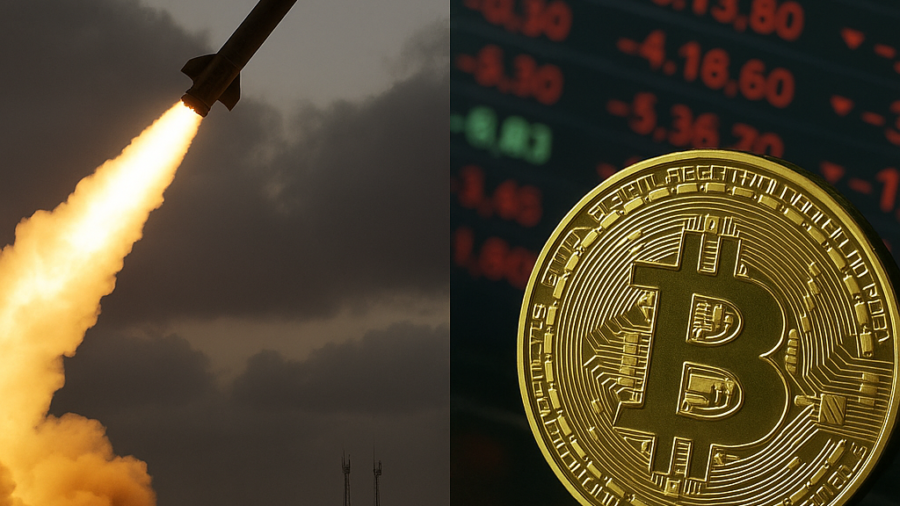
Iran’s Islamic Revolutionary Guard Corps launched missile and drone strikes against United States military installations in Kuwait and Bahrain on Monday, triggering an immediate flight from risk assets across global markets and sending Bitcoin tumbling below $73,000 for the first time in several weeks. Crypto Briefing reported that the attack, titled “IRGC Strikes US Bases, Bitcoin Plunges,” marked one of the most direct Iranian military actions targeting American facilities in the Gulf region in recent memory.
Bitcoin fell as much as 8.4 percent in the hours following confirmation of the strikes, dropping from approximately $79,600 to a intraday low of $72,800 before staging a partial recovery. Ethereum declined by roughly 11 percent over the same period, while broader crypto markets shed an estimated $180 billion in aggregate market capitalization within 24 hours. Traders cited the sudden escalation in Middle Eastern geopolitical tension as the primary catalyst for the sell-off, with algorithmic selling amplifying the initial move lower.

Oil markets moved in the opposite direction, with Brent crude surging to its highest level in over two months as traders priced in potential disruption to shipping lanes and regional energy infrastructure. Front-month Brent contracts rose more than 6 percent to trade above $91 per barrel, while West Texas Intermediate climbed in parallel. Gold also benefited from the safe-haven rush, adding approximately 2.1 percent to trade near $2,480 per troy ounce.
The strikes add a significant new layer of uncertainty to an already volatile macroeconomic backdrop. Equity futures in the United States fell sharply in overnight trading, with S&P 500 futures declining around 1.8 percent before stabilising. Analysts at several major banks warned that a sustained escalation could push energy prices high enough to reignite inflationary pressures, complicating the Federal Reserve’s path on interest rates. The signalling from Minneapolis Fed President Neel Kashkari that a rate hike remains possible in 2026 had already unsettled markets heading into the week.

For crypto markets specifically, the episode reinforces a long-running debate about Bitcoin’s role as a safe-haven asset. Rather than attracting capital during the crisis, Bitcoin behaved more like a high-beta risk asset, consistent with its behaviour during previous geopolitical shocks. Portfolio managers increasingly favour non-US sovereign bonds and traditional commodities over digital assets during acute stress events, a trend that Monday’s trading appeared to confirm emphatically.
The Pentagon confirmed the strikes late Monday, stating that US personnel had been placed on heightened alert status and that defensive countermeasures had been deployed. No casualty figures were immediately released. Diplomatic channels between Washington and Tehran were described by State Department officials as effectively suspended. Analysts warned that any retaliatory US military response could further destabilise energy markets and sustain downward pressure on risk assets in the sessions ahead.