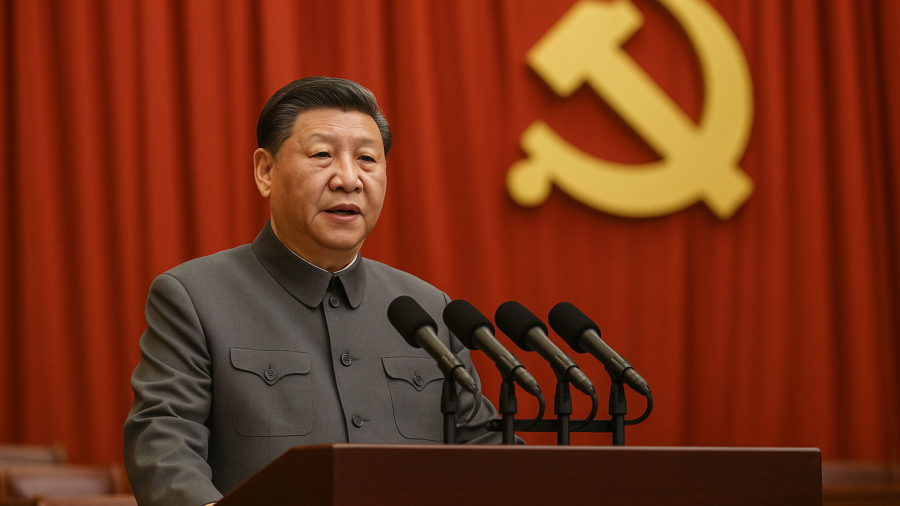
Chinese President Xi Jinping delivered a sweeping address on Tuesday marking the 105th anniversary of the Chinese Communist Party, using the occasion to assert the party’s expanding global influence, reaffirm China’s claim over Taiwan, and outline an economic and political vision intended to position Beijing as a counterweight to Western-led institutions. The speech, widely covered including by CNBC’s anniversary report, drew immediate attention from diplomats, markets, and foreign policy analysts across the globe.
Xi’s remarks, delivered in Beijing’s Great Hall of the People before senior party officials, carried an unmistakably assertive tone. He described the CCP as an indispensable force for global stability and positioned the party’s century-long development as a model that other nations — particularly those in the Global South — might look to as an alternative to liberal democratic governance. The speech coincided with a period of heightened geopolitical tension, ongoing trade friction with Washington, and a Chinese economy still navigating a sluggish post-pandemic recovery that saw GDP growth hover near 4.7 percent in the first half of 2026.
Taiwan and Territorial Ambitions Dominate Political Messaging
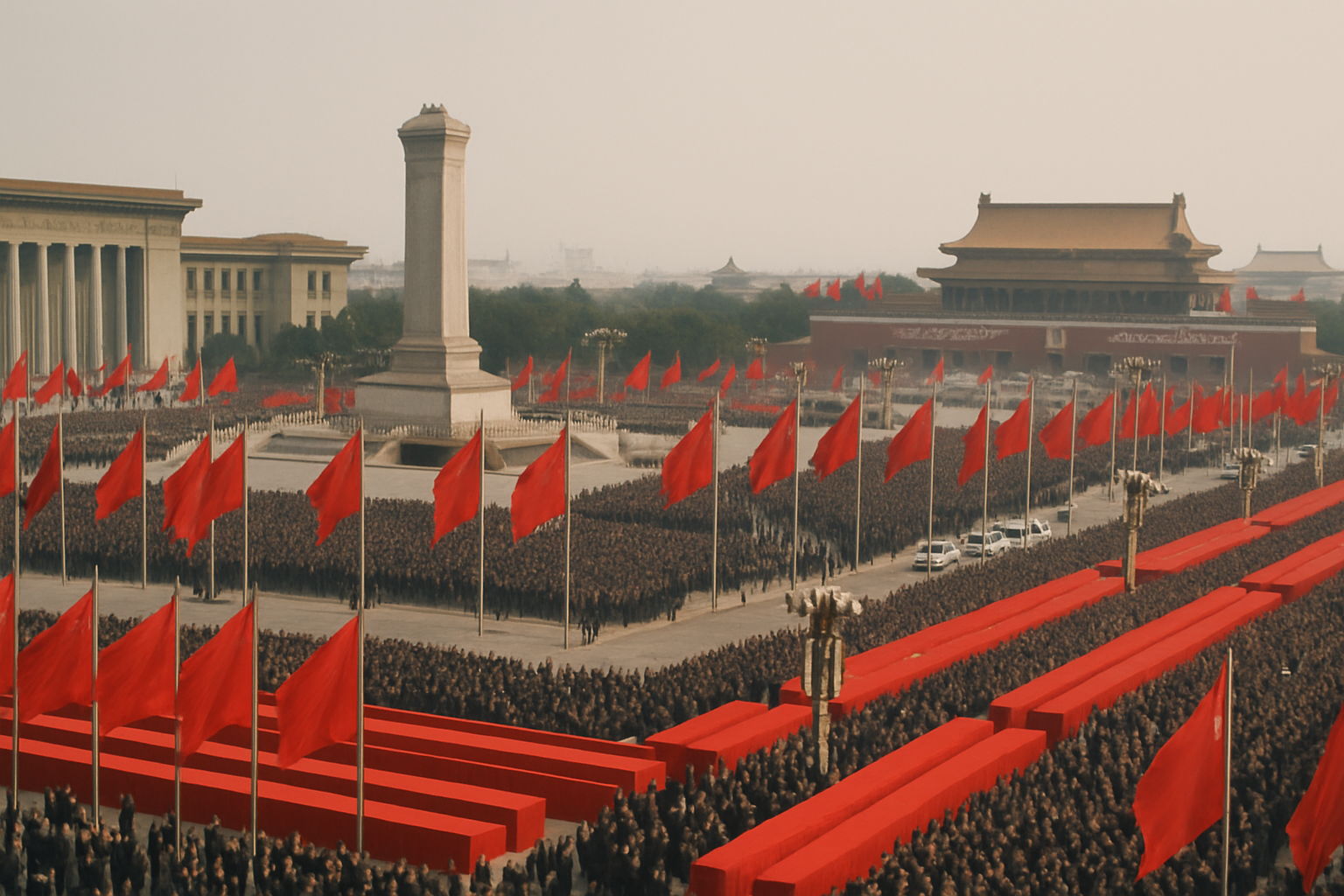
Xi reiterated Beijing’s long-standing position that Taiwan’s reunification with mainland China is a historical inevitability and that the CCP would not tolerate what he called foreign interference in China’s internal affairs. The remarks came at a particularly sensitive time, with Taiwan’s government reporting a 12 percent increase in People’s Liberation Army air incursions near the island’s air defense identification zone during the first six months of 2026 compared to the same period in 2025.
The Taiwan comments reverberated quickly through regional financial markets. The Taiwan Taiex index slipped approximately 0.8 percent in early trading following the speech before partially recovering, while the offshore Chinese yuan edged lower against the dollar. Analysts at several major investment banks warned that any escalation in cross-strait rhetoric could disrupt global semiconductor supply chains, given Taiwan’s dominant role in producing roughly 60 percent of the world’s advanced logic chips. The episode underscored how tightly political statements from Beijing can ripple through financial markets from Tokyo to New York.

Economic Undertones and the Battle for Global Institutional Influence
Beyond territorial politics, Xi’s speech carried clear economic messaging. He championed the Belt and Road Initiative as evidence of China’s constructive global engagement, citing infrastructure investments spanning more than 140 countries and claiming cumulative project value exceeding $1 trillion since the program’s 2013 launch. Xi framed these investments not merely as commercial ventures but as expressions of a shared development philosophy that he argued benefits partner nations more equitably than Western-led multilateral lending.
The speech also touched on China’s push to internationalise the renminbi, accelerate domestic semiconductor development, and expand its footprint in artificial intelligence — sectors where Beijing has made significant state-directed capital commitments running into the hundreds of billions of dollars annually. Investors and policymakers monitoring China’s ambitions in the technology sector will note that these themes closely intersect with broader competition dynamics explored in earlier reporting on China-U.S. AI rivalry, which has become one of the defining economic fault lines of the decade.
Xi concluded his address by calling on party members to maintain ideological discipline and resist what he described as external attempts to destabilise China’s political system. For global markets, the speech offered few surprises in policy terms but served as a clear signal that Beijing intends to press its geopolitical and economic ambitions with renewed confidence heading into the second half of 2026. Currency strategists noted that the dollar’s recent strength against safe-haven currencies may be tested if cross-strait tensions sharpen further, pushing capital flows toward more defensive positions. With the CCP now 105 years old and Xi firmly entrenched as its most powerful leader in decades, the party’s global posture shows little sign of softening.