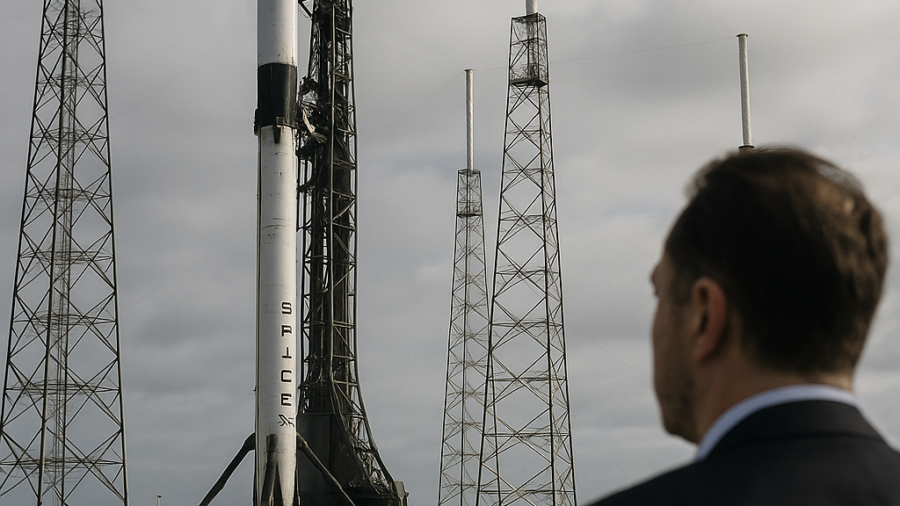
Short sellers are beginning to take a closer look at SpaceX, Elon Musk’s privately held aerospace giant, but a deep-seated wariness about wagering against one of the most consequential entrepreneurs in modern history is keeping most bearish investors firmly on the sidelines, according to a report by CNBC published Monday.
The increased scrutiny comes as SpaceX’s private-market valuation has ballooned to approximately $350 billion, a figure that some analysts argue leaves little margin for error and raises legitimate questions about whether the company’s growth trajectory can justify such a premium. Secondary market trading in SpaceX shares has surged in recent months, with platforms facilitating private-equity transactions reporting a notable uptick in volume as institutional participants attempt to gain or offload exposure ahead of any potential public listing.

Despite the elevated valuation, constructing a conventional short position against SpaceX remains structurally difficult. Because the company has not yet completed an initial public offering, traditional equity short-selling mechanisms are largely unavailable. Investors seeking to express a negative view must rely on over-the-counter derivatives, secondary market instruments, or positions in publicly traded proxies, all of which carry significantly higher costs and complexity. The Financial Times has previously noted that private-market valuations often escape the disciplinary pressure that public short interest typically imposes on listed companies.
Market participants who spoke to CNBC acknowledged that Musk’s personal brand remains a powerful deterrent. His ability to attract government contracts through SpaceX’s Starlink and Falcon programs, combined with a demonstrated capacity to reshape narratives rapidly, has burned short sellers before. Shares of Tesla, the electric vehicle company Musk also leads, have historically punished bearish investors during periods of high short interest, with short sellers collectively losing an estimated $40 billion during Tesla’s 2020 rally alone, according to data from Bloomberg.
That history weighs heavily. Some hedge fund managers who expressed cautious skepticism about SpaceX’s near-term commercial satellite revenues told analysts they preferred to reduce exposure to high-concentration technology bets through other means. Readers interested in how private company exposure filters into broader portfolios may find relevant context in our earlier analysis, which examined how index funds are hiding a looming tech-stock risk and how investors can protect their portfolios.
Regulatory attention is also a factor. The Securities and Exchange Commission has been expanding its oversight of secondary private-market trading, adding compliance uncertainty for would-be participants. Meanwhile, any valuation reassessment could ripple across the private credit ecosystem, an arena that regulators are already watching closely. For now, SpaceX remains a company many are curious about challenging, but few are brave enough to bet against. The Wall Street Journal reported earlier this year that institutional demand for SpaceX secondary shares continues to outpace supply, underscoring the asymmetry between bullish conviction and bearish hesitation that defines the company’s current market dynamic.