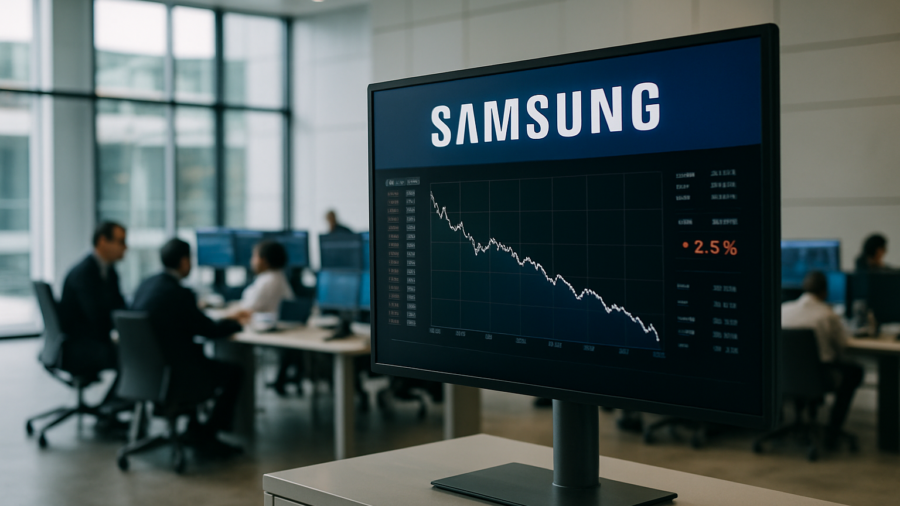
Samsung Electronics delivered what analysts described as a standout set of quarterly results, yet the South Korean technology giant found itself in the uncomfortable position of watching its share price decline in the aftermath. The disconnect between strong reported earnings and investor sentiment has drawn fresh scrutiny to the structural challenges facing one of the world’s largest chipmakers, even as demand for semiconductors tied to artificial intelligence infrastructure continues to surge.
According to a Marketplace report, Samsung’s latest quarterly figures surpassed market expectations on several key metrics, yet the stock retreated in Seoul trading as investors chose to look beyond the headline numbers toward longer-term concerns about the company’s competitive positioning.
Strong Numbers, Muted Reaction
Samsung reported operating profit that significantly exceeded analyst consensus estimates, driven in large part by recovering memory chip prices and robust demand from data centre customers investing heavily in AI-capable hardware. Revenue growth was similarly impressive, reflecting a broader cyclical upswing in the global semiconductor market following the prolonged downturn of 2023 and early 2024.
Despite these figures, the stock’s decline underscores a well-documented phenomenon in equity markets: strong backward-looking results do not automatically translate into forward-looking optimism. Investors appear to be discounting the earnings beat in favour of weighing Samsung’s ability to sustain momentum against intensifying competition, particularly in the high-bandwidth memory segment that has become central to AI chip supply chains. Analysts noted that Samsung has faced persistent yield and production challenges in its most advanced memory products, issues that have allowed rivals to capture market share at a critical juncture.
Rivals Close the Gap in High-Bandwidth Memory
The competitive landscape has shifted materially in recent quarters. SK Hynix, Samsung’s primary domestic rival and a key supplier to Nvidia, has aggressively expanded its presence in high-bandwidth memory, which commands premium pricing compared with standard DRAM. The strategic importance of this segment was thrown into sharp relief when SK Hynix completed a significant capital raise in the United States. According to CNA reporting, SK Hynix raised US$26.5 billion through a US offering after pricing its American depositary receipts at US$149, a transaction that underscored the depth of investor appetite for companies perceived to be winning the AI memory race.
That fundraising success stands in contrast to the more cautious reception Samsung’s results received, and it reflects a broader investor narrative in which Samsung is viewed as playing catch-up in next-generation memory technologies rather than leading them. While Samsung retains massive scale advantages and a vertically integrated manufacturing model that few competitors can match, the perception gap has real consequences for its valuation multiple. The company’s price-to-earnings ratio has compressed relative to SK Hynix in recent months, a trend that some analysts argue is unjustified given Samsung’s breadth of operations but which others see as a rational repricing of technology leadership risk.

What Investors Are Watching Next
Market participants are now closely monitoring Samsung’s capital expenditure guidance and any updates on its next-generation HBM4 qualification timelines with major chip designers. A successful qualification from a customer the scale of Nvidia or AMD could serve as a significant re-rating catalyst. Conversely, further delays would reinforce the narrative that the company’s engineering execution has fallen short of its commercial ambitions at a pivotal moment in the AI infrastructure buildout cycle.
The broader semiconductor sector remains one of the most closely watched corners of global equity markets. Our earlier coverage of chip stocks volatility documented how even marginal shifts in AI demand projections can generate outsized intraday swings across the sector. Samsung’s results, and the muted market response to them, are likely to keep that theme alive through the remainder of the earnings season. Investors seeking context on how the competitive dynamics between Samsung and SK Hynix are playing out in real time will also find relevant background in our reporting on Hynix’s US debut, which examined the market reception to the Korean chipmaker’s American listing in detail. For now, Samsung’s challenge is clear: translating engineering scale into the kind of product leadership that equity markets are willing to pay a premium for.