
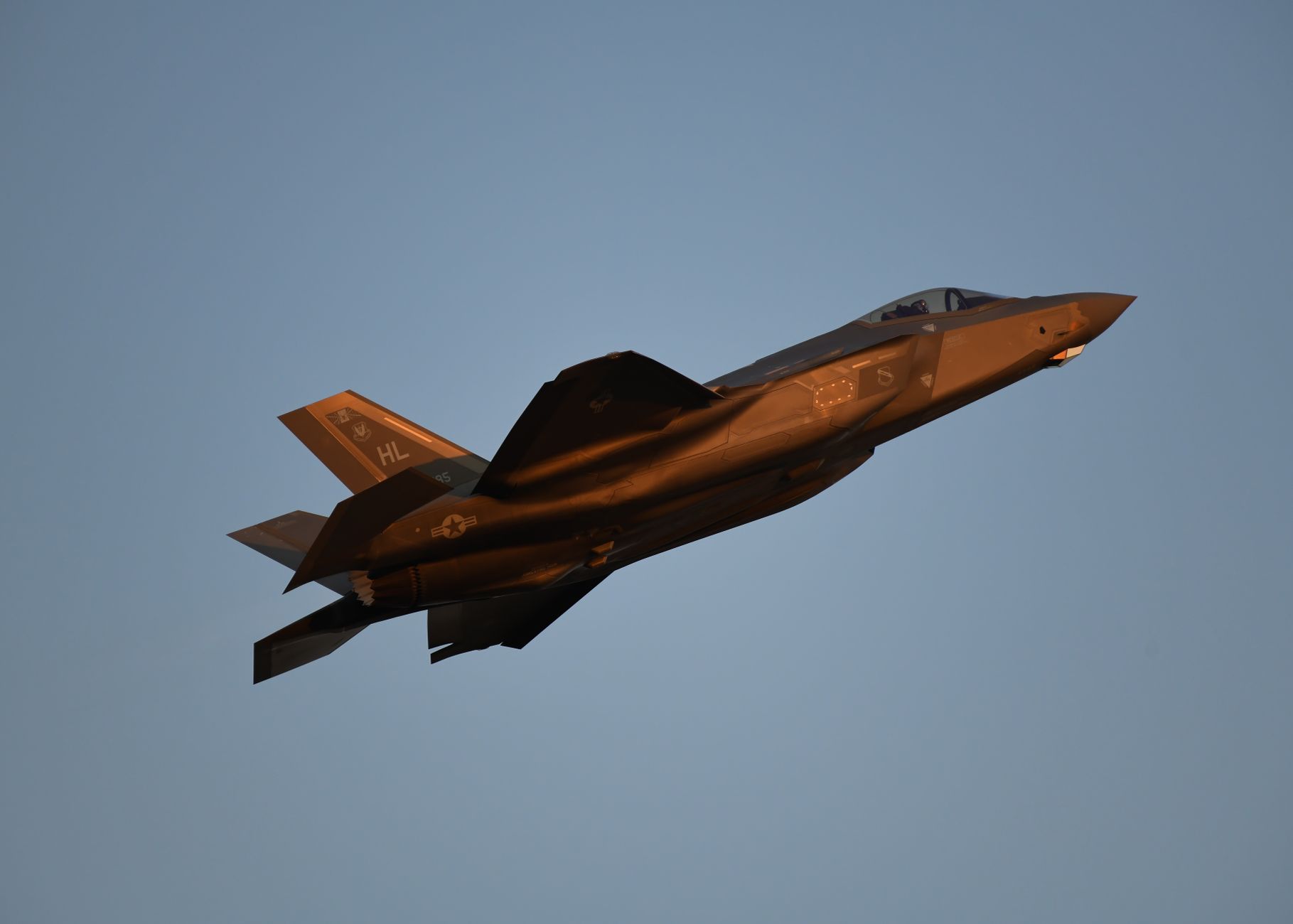
Israeli defense contractor Rafael Advanced Defense Systems has begun the technical process of integrating its SPICE 1000 precision-guided glide bomb with the Lockheed Martin F-35 stealth fighter, a move that could meaningfully expand the combat payload options available to F-35 operators across multiple allied air forces. The development, Calcalist Tech reported, marks a significant step in Rafael’s ambition to position its smart-weapon family as a standard armament option on one of the most widely deployed advanced fighter platforms in the Western world. The F-35 program spans more than a dozen nations and involves an estimated fleet of over 3,000 aircraft over the life of the program, making certification on the platform a commercially critical milestone for any weapons manufacturer.
The SPICE — Smart, Precise Impact, Cost-Effective — family of weapons has become one of Rafael’s flagship export products, with variants already integrated on aircraft including the F-15, F-16, and various European platforms. The 1000-pound class SPICE 1000 uses a combination of GPS and electro-optical scene-matching guidance to achieve high precision strikes at extended standoff ranges, reducing aircrew exposure to air defense systems. The integration effort with the F-35 represents a technical challenge distinct from earlier platforms, given the aircraft’s tightly managed internal weapons architecture and the software-intensive nature of its mission systems. Interest in Israeli defense technology has grown substantially among NATO-aligned buyers in recent years, driven in part by demonstrated performance in active conflict environments.
Strategic Value of F-35 Certification for Rafael
Gaining certification on the F-35 would give Rafael access to a procurement pipeline that stretches across the United States, the United Kingdom, Australia, Japan, South Korea, the Netherlands, Italy, and several other allied nations. Defence analysts estimate that the global F-35 sustainment and weapons integration market is worth tens of billions of dollars annually when ammunition procurement, software upgrades, and support contracts are aggregated. For Rafael, a company that generated revenues reported in the range of several hundred million dollars annually from its precision munitions division, a successful F-35 integration would represent a material uplift to its addressable market.
The process of integrating a new weapon onto the F-35 is governed by Lockheed Martin and the F-35 Joint Program Office, a multi-government body that oversees the aircraft’s development and sustainment. Certification requires extensive flight testing, software compatibility validation, and compliance with the aircraft’s complex stores management system. This process can take several years and involves significant investment from the munitions developer. Rafael has not publicly disclosed the projected cost of the integration program, but comparable efforts by other manufacturers have been estimated to run into the tens of millions of dollars before first operational clearance is granted.
Operational Context and Export Market Dynamics
The timing of the SPICE 1000’s F-35 integration push comes as demand for precision standoff munitions has risen sharply among Western military planners, a trend accelerated by the conflict in Ukraine and heightened threat assessments across the Indo-Pacific. Air forces operating the F-35 have been actively seeking to diversify their available weapon sets beyond those initially cleared during the aircraft’s early operational capability phases. Rafael’s ability to offer a combat-proven system with an established logistics and support infrastructure gives it a competitive edge over newer entrants in the standoff munitions space.
The SPICE family’s guidance technology, which allows the weapon to identify and home in on a target using stored reference imagery even in GPS-denied environments, has been highlighted by Rafael as a differentiating capability relevant to contested electromagnetic environments. This positions the SPICE 1000 not simply as a cost-effective alternative to American-made precision weapons but as a complementary option for specific mission profiles where GPS jamming is anticipated. Several F-35 operator nations have expressed public interest in expanding their indigenous or allied weapon sourcing to reduce dependency on a single supply chain, a policy dynamic that works in Rafael’s favour as it advances the certification process.
Beyond the immediate revenue implications, a successful integration would elevate Rafael’s profile within the F-35 industrial ecosystem, potentially opening pathways for future variants — including the longer-range SPICE 250 — to follow the same certification route. The company’s defence electronics and precision weapons divisions have increasingly been viewed as high-value assets within Israel’s broader technology export economy, an area where, as seen in recent Israeli technology funding activity tracked by outlets including Construction AI Platform coverage of Israeli deep-tech rounds, foreign capital and partnership interest has remained robust despite regional geopolitical pressures.