
Plaid Cymru First Minister Rhun ap Iorwerth has launched a pointed critique of UK Prime Minister Keir Starmer’s government, accusing Labour of systematically underfunding Wales and failing to honour commitments made during the 2024 general election campaign. The Irish Times reported that ap Iorwerth delivered his most direct assessment yet of the Westminster relationship, framing the economic neglect of Wales as both a political failure and a structural injustice with measurable consequences for Welsh households and businesses.
Wales remains one of the poorest nations within the United Kingdom, with gross value added per head running at approximately 73 percent of the UK average, a gap that has barely narrowed over the past two decades. Ap Iorwerth argued that without meaningful fiscal autonomy and a revised funding formula, Wales would continue to lag behind England’s core economic regions. He pointed specifically to infrastructure investment, where Wales receives a per-capita share of UK-wide spending that critics say does not reflect the nation’s relative economic disadvantage.
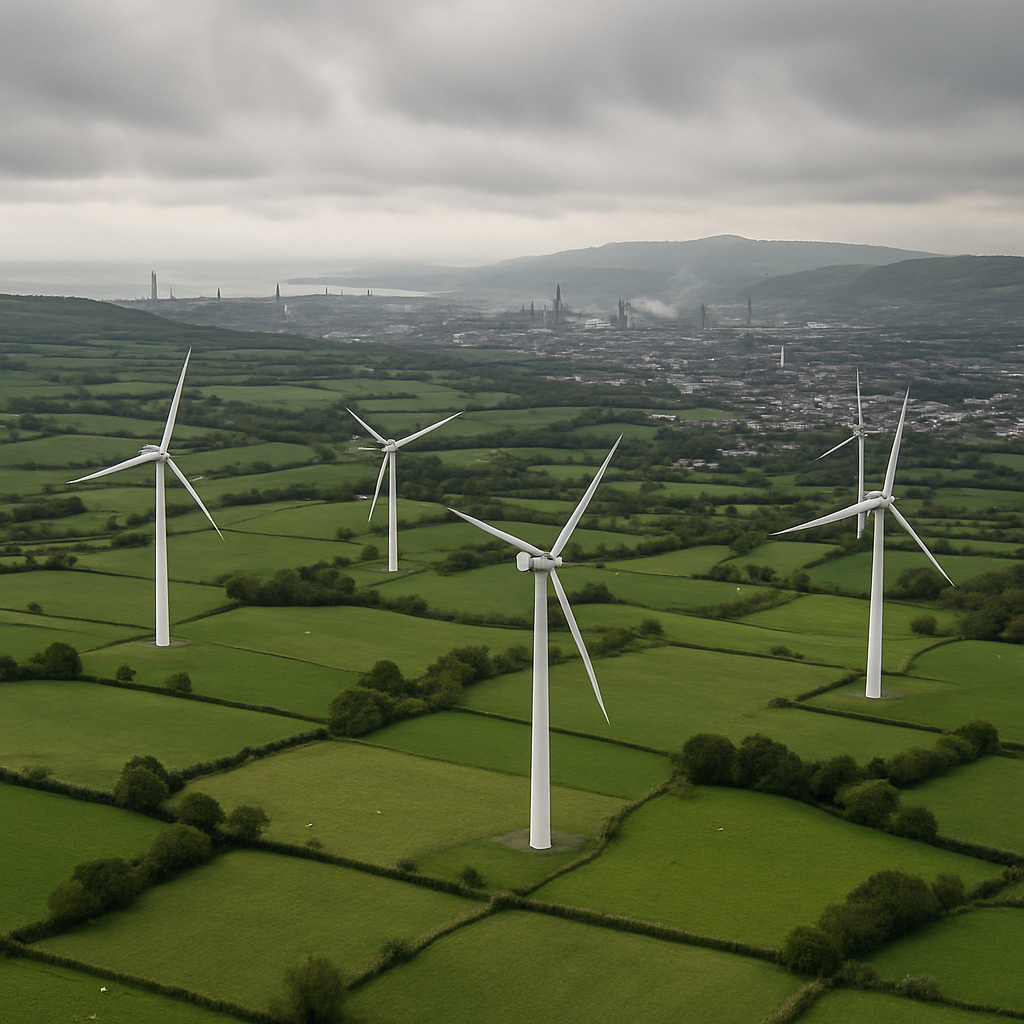
Central to ap Iorwerth’s economic agenda is an acceleration of Wales’s renewable energy transition, a sector he believes could generate billions in annual output if Cardiff Bay is granted greater control over energy consenting powers currently retained by Westminster. Wales already generates roughly 55 percent of its electricity from renewable sources, and the First Minister has set a target of reaching 100 percent by 2035. He argued that the Starmer government’s reluctance to devolve those consenting powers represented a direct cost to Welsh economic development, delaying investment decisions and deterring private capital.
On the question of Welsh independence, ap Iorwerth was careful but deliberate, describing nationhood as an economic necessity as much as a political aspiration. He cited polling suggesting that support for independence has climbed into the mid-30 percent range, a figure that, while short of a majority, represents a significant shift from under 20 percent a decade ago. Observers across Westminster and Cardiff have noted that the political calculus around devolution is changing faster than many anticipated. Those tracking broader trends in decentralised fiscal governance may find it useful to explore how comparable structural shifts are reshaping public finance models across other regions.

Ap Iorwerth also addressed Wales’s relationship with international markets, noting that uncertainty around the UK’s post-Brexit trade arrangements continues to weigh on Welsh exporters, particularly in agriculture and advanced manufacturing. He called for a bespoke trade framework that would allow Wales to engage more directly with European Union partners. Analysts who have been tracking devolved economic performance warn that without significant structural reform, the productivity gap between Wales and the UK’s wealthiest regions could widen further over the next parliamentary cycle, compounding long-standing challenges in public service delivery and business investment.