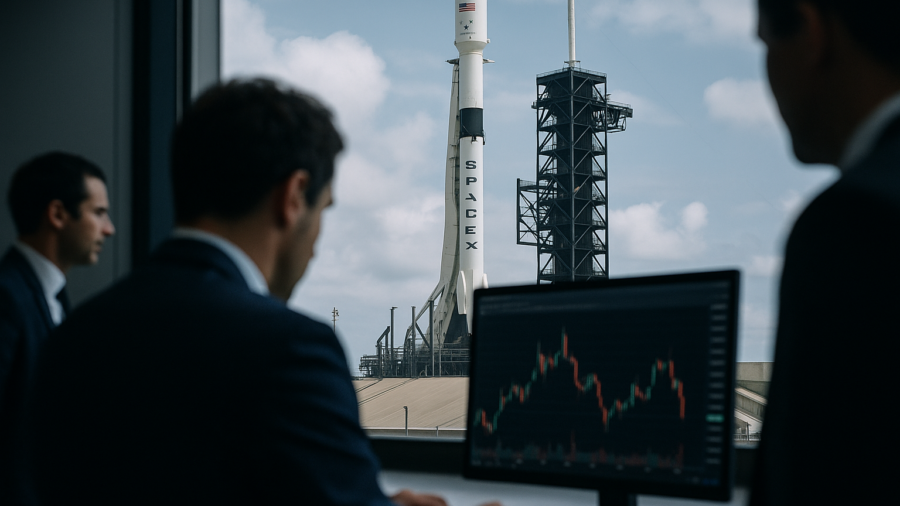
While Elon Musk commands most of the headlines surrounding SpaceX, a far quieter figure may have reaped one of the most extraordinary returns in the company’s investor history. James Murdoch, the younger son of media patriarch Rupert Murdoch and former chief executive of 21st Century Fox, appears to have generated as much as $7.5 billion from a pre-IPO stake in SpaceX, according to a Fortune report published in July 2026. The figure underscores just how transformative early access to private space-economy equity has become for a select class of institutional and high-net-worth investors.

Murdoch, who has maintained a deliberately low public profile since departing News Corp’s orbit, made his investment through Lupa Systems, the private investment firm he founded in 2019 after a well-publicised falling-out with his family over the editorial direction of their media properties. Lupa has positioned itself as a vehicle for long-horizon bets across technology, media, and sustainable infrastructure. SpaceX appears to have been among its most consequential early wagers.
The Scale of the Return and How It Was Built
The precise size of Murdoch’s original stake has not been publicly disclosed, but analysts and sources familiar with SpaceX’s capital structure suggest the position was established when the company carried a private valuation significantly below the figures now being discussed in anticipation of a public listing. SpaceX’s valuation has climbed dramatically in recent years, reaching approximately $350 billion in its most recent secondary market transactions, up from roughly $137 billion in early 2023. That trajectory alone would have multiplied even a mid-sized entry position many times over.
If the $7.5 billion figure proves accurate, it would place Murdoch’s SpaceX return among the largest single private-investment gains by a non-founding investor in recent memory, comparable in scale to some of the most celebrated venture capital exits of the past decade. The return would also substantially outpace the performance of most diversified investment vehicles over the same period, including public equity indices and private equity funds, which have faced a more challenging fundraising and exit environment since 2022. The broader venture landscape has grown more selective, as detailed in The Fiscalist’s coverage of U.S. venture capital trends, which found that while headline figures hit record highs in 2026, early-stage allocations have become increasingly concentrated among a narrow group of investors.

SpaceX’s IPO Path and What It Means for Early Investors
SpaceX has long resisted public market pressure, with Musk repeatedly deferring or dismissing IPO timelines for the parent entity while allowing its Starlink satellite internet subsidiary to be discussed as a potential separate listing. Any move toward a full SpaceX IPO would force a crystallisation of valuations that have so far remained fluid in private secondary markets, locking in gains — or exposing inflated expectations — for investors who have accumulated stakes over the past several years.
For Murdoch, a public listing would represent a liquidity event of rare personal significance. Unlike institutional venture funds, which distribute proceeds to limited partners, Lupa Systems operates closer to a family office structure, meaning any realised gains would flow more directly to Murdoch himself. His estimated $7.5 billion return, if realised at or near current valuations, would represent a generational wealth event independent of the Murdoch family inheritance and media empire from which he has spent years deliberately distancing himself. It would also cement his standing as a serious principal investor rather than simply a scion of an established dynasty.
The SpaceX story also intersects with broader questions about how private capital markets are evolving for ultra-high-net-worth individuals who can access pre-IPO rounds that remain inaccessible to most retail investors. That dynamic has drawn increasing scrutiny from regulators and market observers alike, even as the potential rewards on display in cases like this one continue to attract new capital into the private space economy. Readers following high-stakes speculative investment themes may also find relevant context in The Fiscalist’s analysis of alternative asset returns during periods of geopolitical volatility.