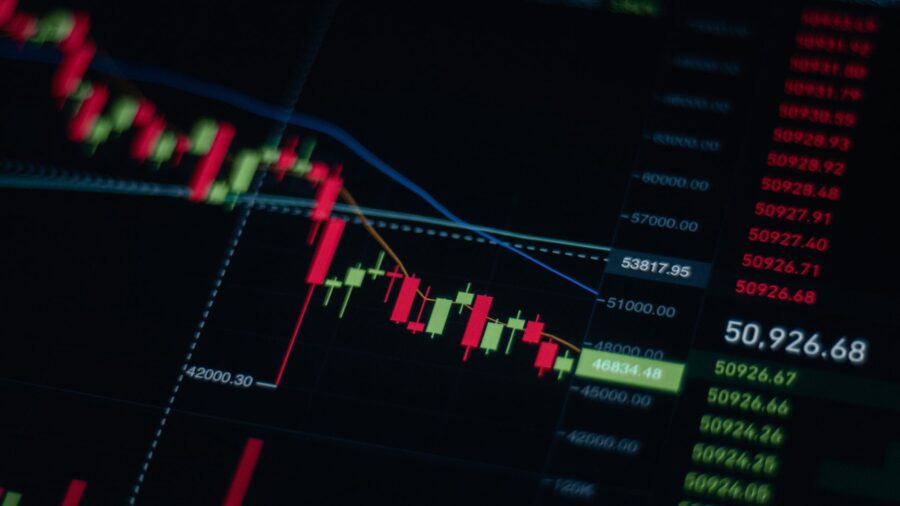
Oil prices fell in cautious trading as investors weighed the potential market impact of renewed US threats to impose tighter sanctions on Iranian crude exports, a move that could reshape global supply dynamics but whose near-term credibility traders appeared to discount. Brent crude slipped toward the lower end of its recent range, while West Texas Intermediate edged lower in a session marked by thin conviction on either side of the trade. The uncertainty surrounding diplomatic progress — or the lack of it — kept price action choppy across energy markets.
The broader geopolitical context has been building for weeks. As this publication detailed in its coverage of Iran oil sanctions, Washington has steadily widened its economic pressure campaign against Tehran, targeting crude flows and the foreign intermediaries that facilitate them. That escalating posture has injected a persistent risk premium into oil markets, even as traders struggle to determine how aggressively the administration intends to enforce any new restrictions.

Sanctions Credibility and the Strait of Hormuz Factor
Central to the market’s hesitation is the question of enforcement. While Washington has repeatedly signalled an intent to clamp down on Iranian barrels reaching international buyers — particularly in Asia — the practical mechanisms for doing so remain contested. According to Fortune’s Iran coverage, a preliminary agreement touching on the Strait of Hormuz has been floated, though the deal carries significant caveats and its timeline remains fluid. The Strait, through which roughly 20 percent of the world’s seaborne oil passes daily, remains the single most consequential chokepoint in global energy supply chains.
Analysts note that the credibility gap between threatened and enforced sanctions is precisely what has kept oil from staging a more dramatic rally on the news. Iran has continued to move significant volumes of crude despite existing measures, with much of it flowing to Chinese refiners through a network of intermediaries and flagged vessels. Any tightening of that pipeline would have meaningful supply consequences, but market participants have repeatedly been burned by pricing in enforcement that failed to materialise at scale. The net effect has been a market inclined to wait for action rather than react to rhetoric.
There is also the question of diplomatic channel activity running in parallel. Negotiations between Washington and Tehran have not formally collapsed, and the possibility of a broader agreement — however distant it may appear — introduces asymmetric risk for traders who might bet too aggressively on supply disruption. That ambiguity has capped the upside for oil bulls even as the sanctions narrative provides a floor for prices in the short term.
Broader Market Conditions Complicate the Oil Outlook
The oil market’s subdued response also reflects headwinds in the wider macro environment. The US dollar showed signs of softening during the session, which would ordinarily provide a tailwind for dollar-denominated commodities. However, according to Bloomberg’s markets wrap, the greenback’s weakness came as traders trimmed Federal Reserve rate-hike expectations, a development that speaks to a cooling growth outlook rather than a straightforward inflationary impulse. A softer economy historically translates into weaker energy demand, and that demand concern has tempered enthusiasm among crude bulls even as supply fears linger.
Equity markets provided a similarly mixed backdrop, with major indices trading without clear direction as investors digested a dense set of competing signals — from central bank policy expectations to geopolitical risk assessments. Energy sector stocks tracked oil’s modest decline, though the sector’s relative defensiveness in recent sessions suggests investors are not fully pricing out the possibility of a more disruptive sanctions outcome in the weeks ahead.
Analysts covering the Iran sanctions strategy have cautioned that the pattern of escalatory threats followed by incomplete follow-through may itself be eroding the effectiveness of US economic statecraft over time, reducing the deterrent power of future measures. For oil traders, the immediate challenge is distinguishing between noise and policy reality in an environment where both arrive in similar packaging. Until enforcement materially tightens or a diplomatic breakthrough resets the calculus, crude prices are likely to remain rangebound, reactive to headlines but anchored by fundamental uncertainty on both the supply and demand side of the equation.