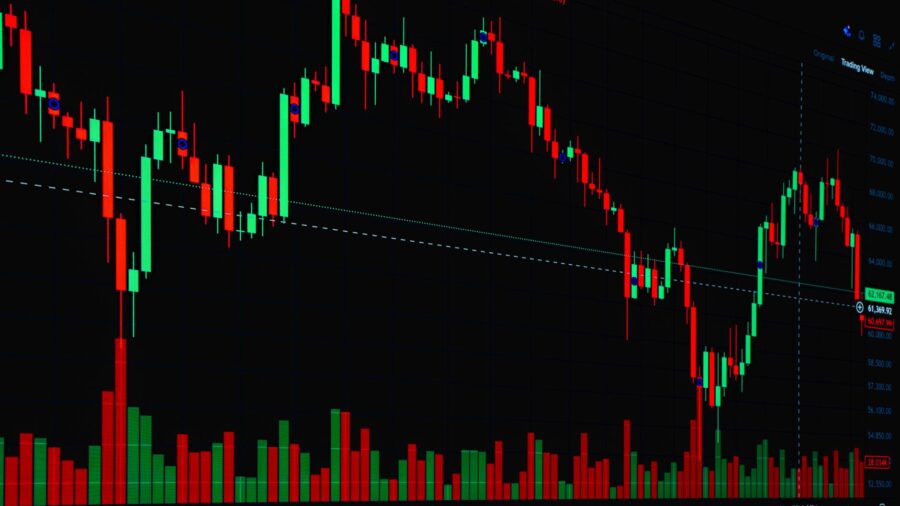
Federal Reserve rate hike expectations collapsed on Friday after the September employment report delivered a stark miss against Wall Street forecasts, sending interest rate futures markets into a rapid repricing and pushing the probability of an October policy tightening to levels most analysts described as negligible. The data injected fresh uncertainty into a monetary policy debate that had been building throughout the summer, as Fed Chair Kevin Warsh and his colleagues weighed the resilience of the labor market against stubborn inflationary pressures. For investors already tracking August price data with growing anxiety, Friday’s release offered a rare moment of relief — though not without complications.
According to CNBC’s markets report, fed funds futures contracts tied to the October meeting swiftly shifted following the Bureau of Labor Statistics release, with the implied probability of a 25-basis-point increase dropping to approximately 4 percent from roughly 28 percent just 24 hours earlier. The economy added fewer jobs than expected in September, with the headline nonfarm payrolls figure coming in well below the consensus estimate, while the unemployment rate edged marginally higher. Average hourly earnings growth also softened on a month-over-month basis, reducing one of the key inflationary pressure points the Fed had cited in recent communications.
Warsh’s Credibility and the September Decision Shadow
The October repricing carries particular weight given the political and institutional context surrounding Warsh’s leadership. As CNBC previously reported in a detailed vote count analysis, Warsh’s rate battle heading into the September meeting was already far from settled, with several regional Fed presidents expressing reservations about the pace of tightening. That September hike ultimately proceeded, cementing Warsh’s hawkish credentials but also raising the stakes for subsequent meetings. A pause in October, now the overwhelming base case, would not necessarily signal a policy reversal, but it would grant the committee time to assess whether September’s labor market softness marks the beginning of a more pronounced slowdown or merely a one-month anomaly.
Fortune reported ahead of the September decision that Warsh’s credibility was closely tied to following through on rate guidance, noting that backing down would have risked undermining forward guidance as a policy tool. The publication’s analysis, captured in its Warsh interest rates coverage, underscored how much personal and institutional capital had been staked on a consistent tightening posture. With that hike now delivered, analysts argue Warsh may actually have more flexibility to stand pat in October without appearing to capitulate — a nuance that bond markets appeared to absorb relatively calmly on Friday, with the 10-year Treasury yield falling approximately 11 basis points to near 4.67 percent.
Market Strategy Shifts as Rate Path Uncertainty Grows
Equity markets reacted with a mixed but broadly positive tone. Rate-sensitive sectors including utilities, real estate investment trusts, and consumer staples posted gains as investors rotated away from financials, which had benefited in recent months from expectations of a higher-for-longer rate environment. The S&P 500 ended the session modestly higher, though trading volumes were elevated and intraday volatility reflected the degree to which Friday’s data reshaped near-term positioning across asset classes.

For individual investors and portfolio managers navigating the uncertainty, the recalibration raises practical questions about sector allocation and fixed income duration. TheStreet’s coverage of defensive rate moves had already highlighted a growing appetite for defensive repositioning amid concerns about both rising rates and oil price volatility — dynamics that a Fed pause could partially alleviate, though energy markets remained elevated and geopolitical risks continued to weigh on the broader macro outlook. Analysts at several major banks revised their December rate hike probabilities upward following Friday’s data, essentially suggesting the Fed may skip October but retain the option to act before year-end if inflation reaccelerates. The Fed’s next scheduled policy meeting concludes on October 29, with the formal rate decision and accompanying statement due that afternoon. Markets will scrutinize the language closely for any signal that the committee views October’s pause as a one-meeting break rather than a pivot toward easing — a distinction that, in the current environment, carries enormous consequence for asset prices across every major class.