
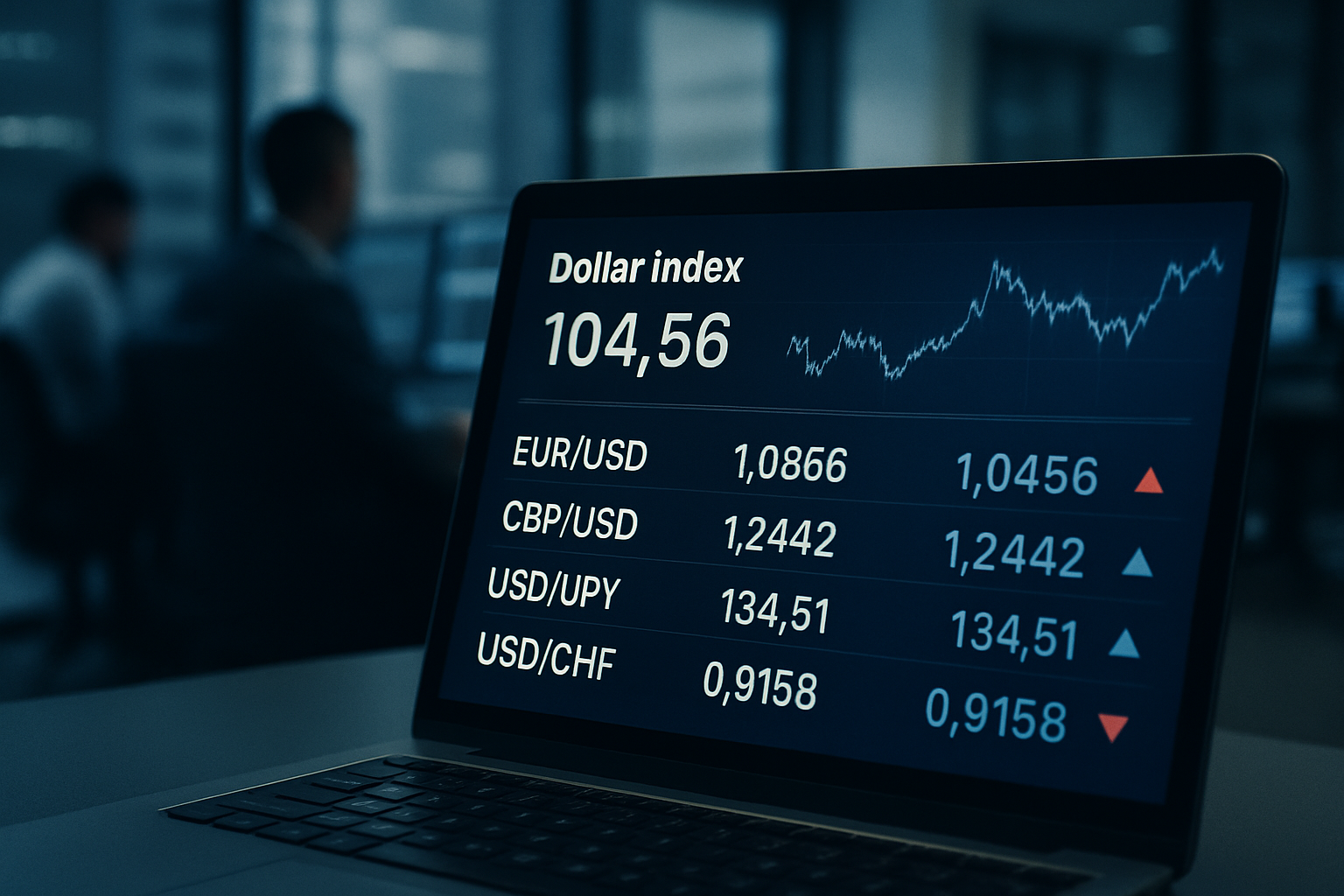
Speculative bets on the U.S. dollar have climbed to their most bullish level in approximately ten years, as currency traders pile into long positions on the greenback amid persistent interest rate differentials and mounting global economic uncertainty. The positioning shift marks a significant turning point for a currency that endured a turbulent stretch earlier in 2025 and signals renewed institutional confidence in U.S. monetary policy staying tighter for longer than many rivals.
According to a MarketWatch report, net long positions on the dollar tracked through futures markets have surged to levels not seen since roughly 2015, a period when the Federal Reserve was in the early stages of its post-financial-crisis rate normalization cycle. The data, drawn from Commodity Futures Trading Commission reports, underscores how rapidly sentiment has rotated in the dollar’s favor over recent weeks.
Rate Divergence Fuels the Rally
The primary engine behind the dollar’s resurgence is a widening interest rate gap between the United States and major economies including the eurozone and Japan. While the European Central Bank has moved cautiously toward easing, and the Bank of Japan remains mired in its gradual and politically sensitive attempt to normalize ultra-loose policy, the Federal Reserve has held its benchmark rate in a restrictive range above 5 percent for an extended period. Higher U.S. yields attract capital inflows that mechanically lift the dollar, as global investors reallocate toward dollar-denominated assets to capture superior returns.
The dollar index, which measures the greenback against a basket of six major currencies, has gained meaningful ground in recent months after bottoming out earlier in the year. Analysts at several major investment banks have revised upward their year-end dollar targets, with some projecting the index could push toward levels last visited during the acute phase of rate hike expectations in 2022 and 2023. Options markets also reflect the bullish skew, with one-month risk reversals tilting toward dollar calls across most major currency pairs.
Gold and Competing Safe Havens Lose Ground
The dollar’s revival is exerting notable pressure on competing stores of value. Gold, which surged in the first half of 2025, has come under increasing strain as the stronger dollar raises the effective cost of the metal for non-dollar buyers. A Business Insider analysis noted that gold recently flashed a technical death cross — a bearish signal in which the 50-day moving average crosses below the 200-day moving average — at the end of what was its worst quarter in 13 years. That deterioration in gold’s technical picture reflects in part the same forces propelling the dollar: expectations that U.S. interest rates will remain elevated well into 2026, reducing the appeal of non-yielding assets.
Currency strategists caution that while the setup for further dollar gains is constructive, several risks could interrupt the trend. A sharper-than-expected slowdown in U.S. economic data, particularly in the labor market, could revive Fed pivot speculation and quickly unwind long positions. Geopolitical developments or a surprise policy pivot from the Bank of Japan — which would strengthen the yen — also represent meaningful counterweights. Liquidity in summer trading can amplify moves in either direction, meaning the current positioning could itself become a source of volatility if sentiment shifts abruptly.
What Needs to Hold for the Dollar to Keep Climbing
For the dollar to extend its gains meaningfully, traders and analysts broadly agree on a handful of conditions that must remain intact. U.S. economic data needs to stay resilient enough to keep the Fed on hold, inflation must not re-accelerate in a way that spooks equity markets and triggers risk-off flows that complicate the dollar’s trajectory, and global growth outside the United States must continue to disappoint relative to consensus expectations. All three conditions are plausible, but none are guaranteed through the second half of the year.
Investors monitoring the broader impact of dollar strength on corporate earnings and capital market conditions may also want to track developments in U.S. equity positioning. The Nasdaq-100 outlook heading into year-end has already grown more cautious in prediction markets, suggesting that dollar strength, while a vote of confidence in U.S. rates, could create headwinds for multinationals that report in dollars but generate significant overseas revenues. Separately, those managing long-term retirement income strategies may find the Security timing debate increasingly relevant as currency and rate dynamics reshape real return calculations for fixed-income investors.