China and Egypt have agreed to expand their bilateral currency swap arrangement, deepening financial ties between the two nations as trade flows between Cairo and Beijing reach record highs. The move, reported by the China Morning Post, reflects a broader strategic push by Beijing to extend the global reach of the yuan while offering Egypt an alternative liquidity buffer as the country continues to navigate a challenging foreign exchange environment.
The expanded swap line gives Egypt greater access to Chinese renminbi, reducing Cairo’s dependence on dollar-denominated financing for bilateral transactions. For a country that has leaned heavily on International Monetary Fund support — securing a $8 billion programme in 2024 — the arrangement provides a supplementary cushion that does not carry the same conditionality as multilateral lending. The agreement also signals Egypt’s growing comfort with Chinese financial instruments, a trend with implications well beyond trade settlement, as explored in The Fiscalist’s earlier analysis of Egypt’s digital allegiances between Washington and Beijing.

Trade Volumes and the Case for Yuan Settlement
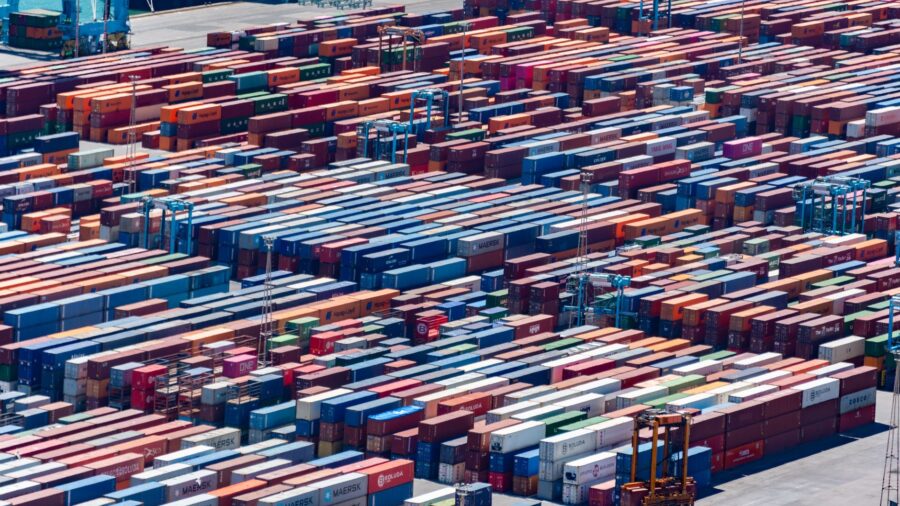
Bilateral trade between China and Egypt has expanded sharply over the past three years, driven by Egyptian imports of Chinese machinery, electronics, and manufactured goods, alongside Chinese demand for Egyptian agricultural products and petrochemicals. Industry estimates suggest the two-way trade relationship has grown to exceed $15 billion annually, with Chinese exports to Egypt accounting for the substantial majority of that figure. The imbalance has long created pressure on Egypt’s foreign currency reserves, making a local-currency settlement mechanism economically attractive for Cairo.
Currency swap lines function by allowing two central banks to exchange their respective currencies at an agreed rate for a set period, enabling bilateral trade and investment to proceed without converting funds into a third currency such as the US dollar. For Egypt’s central bank, the expanded facility lowers transaction costs and hedges against dollar scarcity during periods of external pressure. For Beijing, it advances the People’s Bank of China’s long-running objective of internationalising the renminbi, a programme that now encompasses swap agreements with more than 40 countries globally.
Strategic Context: Egypt as a Belt and Road Anchor
Egypt occupies a pivotal position in China’s Belt and Road Initiative, serving as a gateway between African markets and the Mediterranean. The country hosts several flagship Chinese infrastructure investments, including a substantial footprint in the Suez Economic and Trade Cooperation Zone — a special economic zone near the canal where Chinese firms have committed several billion dollars in industrial and manufacturing capacity. Deepening currency cooperation sits naturally alongside those physical investments, creating an integrated financial and logistical corridor that reduces reliance on Western financial infrastructure.

The timing of the expanded swap agreement is also notable. Egypt is in the midst of a broad economic reform programme that has included significant pound devaluations and interest rate adjustments designed to restore macroeconomic stability. Securing additional renminbi liquidity from China provides a degree of flexibility as the country manages its balance of payments, and could reduce the volume of dollars that Egyptian importers must source from the open market when purchasing Chinese goods. Analysts have noted that similar arrangements in other emerging markets have had a modest but measurable stabilising effect on local currency volatility during periods of dollar tightening.
Wider Implications for Dollar Dependency
The China-Egypt currency swap expansion arrives at a moment when a growing number of developing economies are actively exploring ways to reduce their exposure to dollar-denominated transactions. Saudi Arabia, Brazil, and several members of the ASEAN bloc have engaged in analogous discussions with Beijing in recent years, raising questions about the long-term structural demand for the dollar in global trade settlement. While the dollar retains overwhelming dominance in international finance, the cumulative effect of bilateral renminbi agreements is gradually widening the yuan’s operational footprint in Africa, the Middle East, and Southeast Asia.
For Egypt specifically, the swap line reinforces a pattern of pragmatic multi-alignment — maintaining core relationships with the United States and international financial institutions while simultaneously deepening engagement with China across trade, technology, and now monetary policy. That balancing act carries its own risks, particularly as geopolitical competition between Washington and Beijing intensifies. Nevertheless, for a government prioritising economic stabilisation, access to a broader toolkit of currency instruments represents a tangible near-term benefit that is likely to outweigh those longer-term diplomatic complexities.