Jeff Bezos has confirmed that he liquidates approximately $1 billion worth of Amazon shares each year to finance Blue Origin, his privately held aerospace venture, describing the capital allocation as the most consequential deployment of his personal wealth. The disclosure, first reported by Yahoo Finance, underscores the extraordinary personal financial commitment Bezos has made to the commercial space sector as competition with Elon Musk’s SpaceX intensifies across launch contracts, orbital services, and deep-space exploration. For investors tracking the long-term trajectory of Amazon stock, the sustained and predictable share liquidation program adds a layer of supply-side pressure that analysts have increasingly factored into their models.
Bezos’s remarks place Blue Origin alongside the most aggressively funded private aerospace programs in history. The founder and executive chairman of Amazon, whose net worth hovers near $200 billion according to publicly tracked estimates, framed the annual stock sales not as a financial strategy but as a personal mission. “It’s the most important work I’m doing,” he said, a statement that signals his long-term commitment irrespective of near-term market conditions or Amazon’s share price performance. For context on how concentrated bets by founder-level investors can reshape entire sectors, the Tesla valuation debate offers a parallel case study in how mission-driven capital deployment defies conventional financial logic.

Blue Origin Seeks Outside Capital as Space Race Costs Escalate
The scale of Bezos’s personal funding commitment becomes clearer when set against the broader capital requirements of orbital and lunar programs. According to Fortune reporting, Blue Origin is raising outside capital for the first time in its history, a significant strategic shift for an organization that has operated almost exclusively on Bezos’s personal balance sheet since its founding in 2000. The move to bring in external investors suggests that even $1 billion per year in founder contributions is insufficient to sustain the pace of development required to compete credibly for NASA contracts and commercial launch business at scale.
Blue Origin is competing directly with SpaceX for contracts tied to NASA’s Artemis lunar program and commercial satellite launch services, a rivalry that has grown sharper as government space budgets expand and private demand for launch capacity rises. The decision to court institutional capital reflects both the maturation of the commercial space market and the rising cost structure of next-generation heavy-lift vehicles. Developing and certifying a new launch system can require upward of $5 billion to $10 billion over a full development cycle, a figure that contextualizes why $1 billion per year, while substantial, represents only a fraction of what sustained competitiveness demands.
Amazon Share Sales and the Investor Calculus
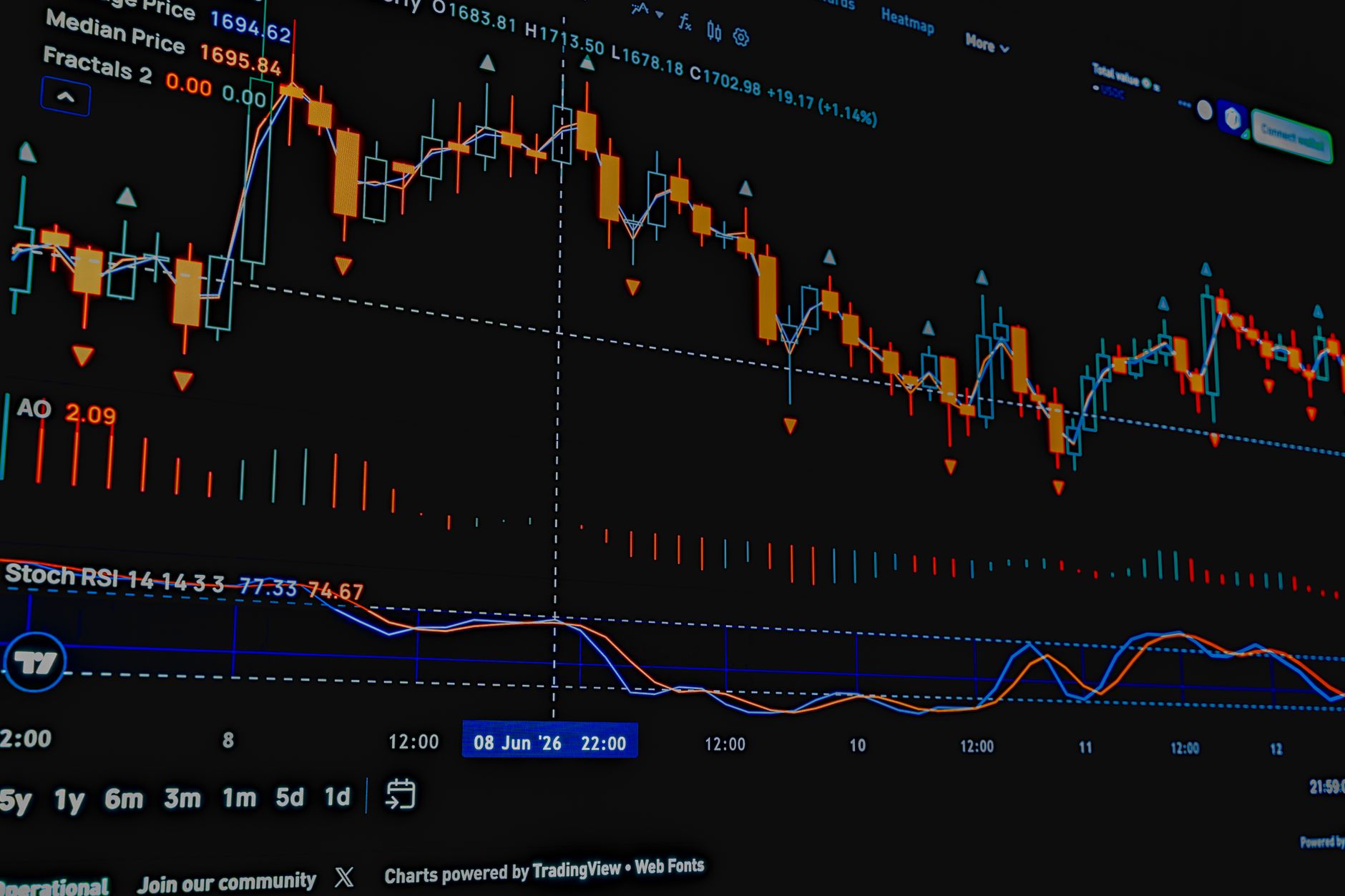
The mechanics of Bezos’s liquidation program are noteworthy from a market structure perspective. Selling $1 billion in Amazon stock annually implies a disciplined, pre-scheduled disposal strategy, most likely executed under a Rule 10b5-1 trading plan, which allows insiders to sell shares according to a predetermined schedule without triggering insider trading concerns. Amazon’s market capitalization, which has fluctuated between approximately $1.8 trillion and $2.2 trillion over the past twelve months, means that $1 billion in annual sales represents a relatively modest fraction of total float, limiting immediate price impact. Nevertheless, sustained founder selling at this cadence contributes to a consistent stream of supply that institutional investors monitor carefully.
The broader narrative here is one of capital recycling from a mature technology giant into frontier infrastructure. Bezos built Amazon into one of the most valuable companies on earth, and he is now systematically converting that equity wealth into rocket fuel — literally and figuratively. Whether Blue Origin can close the competitive gap with SpaceX on unit economics, launch cadence, and contract wins remains an open question, but the financial architecture Bezos has constructed around it — combining personal share sales now supplemented by first-ever outside investment rounds — suggests a venture that is transitioning from passion project to institutional-scale enterprise. For those watching the intersection of private capital and space exploration, the coming years will test whether Bezos’s billion-dollar annual wager can generate returns that justify the extraordinary personal commitment he has made.