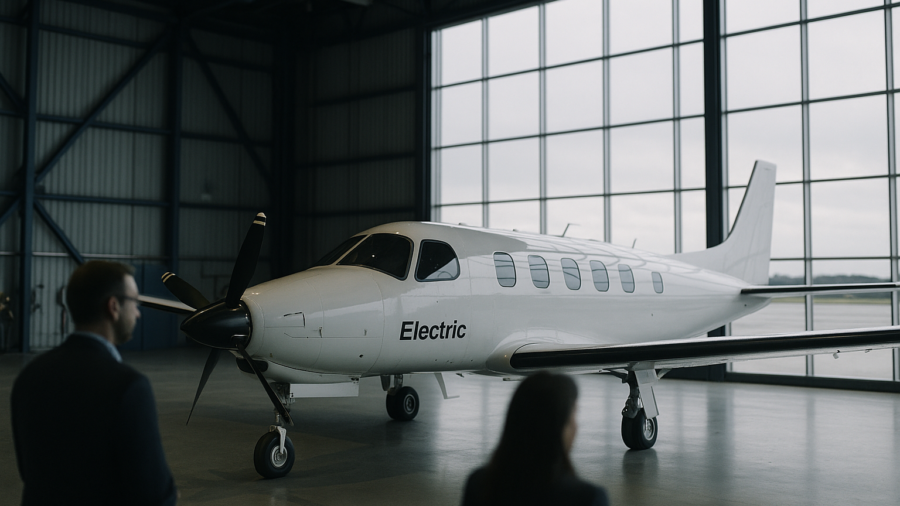
The global market for aircraft electric motors is on course to expand dramatically over the next decade, with new research projecting the sector will reach USD 24.66 billion by 2035, up from a comparatively modest base today. The forecast, detailed in a GlobeNewswire report published in July 2026, underscores a structural shift taking hold across commercial aviation, urban air mobility, and defense as electrification moves from an experimental ambition to a bankable industrial trend.
The compound annual growth rate underpinning those projections sits at approximately 22 percent over the forecast period, a pace that reflects both surging regulatory pressure to cut aviation emissions and the maturation of battery and power-electronics technologies that make electric propulsion systems commercially viable at scale. Investors and aerospace primes are taking notice, with capital flows into electrified aircraft programs accelerating across North America, Europe, and the Asia-Pacific region.

eVTOL Demand and Regulatory Tailwinds Reshape the Market Landscape
Electric vertical take-off and landing aircraft, commonly known as eVTOLs, represent one of the most dynamic growth vectors within the broader market. Developers including Joby Aviation, Archer, Lilium’s successor entities, and Wisk Aero are all racing toward certification, with regional air mobility services anticipated to enter commercial operation in several major metropolitan corridors before the end of this decade. Each eVTOL platform requires multiple high-density electric motors, meaning that even modest fleet sizes translate into substantial motor unit volumes and significant procurement budgets for tier-one suppliers.
Regulatory momentum is equally powerful. The European Union has enshrined binding targets for sustainable aviation as part of its ReFuelEU Aviation regulation, while the United States Federal Aviation Administration has been progressively expanding its framework for certifying electric and hybrid-electric propulsion systems. These policy frameworks are not merely symbolic; they create long-dated revenue visibility for manufacturers and lower the cost of capital for projects that might otherwise struggle to attract institutional financing. That combination of policy certainty and technology readiness is precisely what analysts point to when explaining the steep growth trajectory in the forecasts.
Competitive Dynamics and the Race Among Established Aerospace Giants
Legacy aerospace suppliers are not ceding the electrification opportunity to startups. Companies such as Honeywell, Safran, Collins Aerospace, and Rolls-Royce have all made material investments in electric motor programs, either through internal research and development or through targeted acquisitions of specialist firms with proprietary motor and power-management technologies. Their entry into the segment brings manufacturing scale, certification expertise, and established airline relationships that pure-play startups typically cannot match, setting the stage for a two-tier competitive market defined by incumbents and disruptors vying for distinct customer segments.
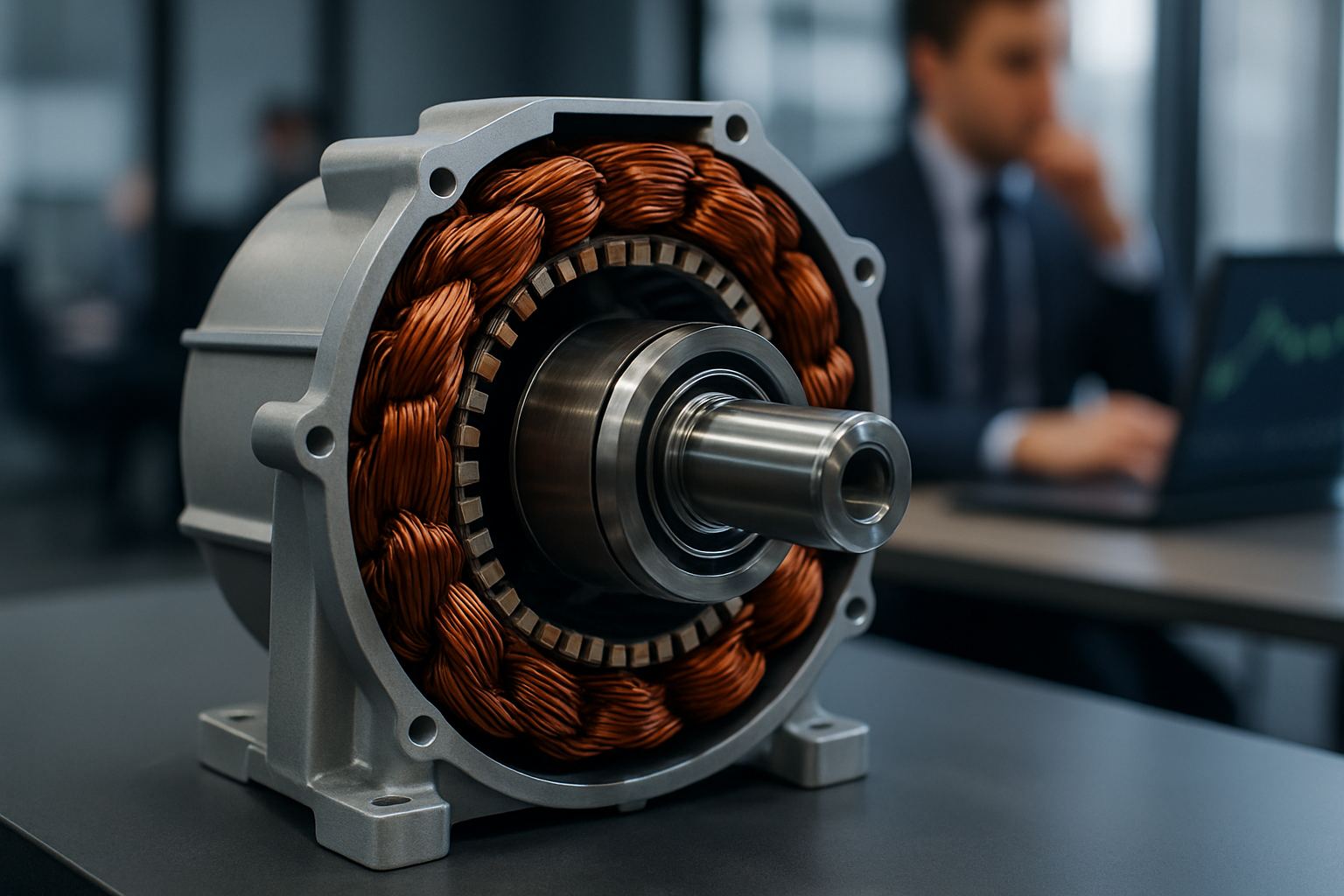
The supply chain implications are considerable. High-performance aircraft electric motors demand advanced materials, including rare-earth permanent magnets, thermally stable insulation systems, and precision-wound copper or aluminum windings capable of sustaining continuous operation under extreme temperature and vibration conditions. Securing reliable access to those input materials has become a strategic priority for motor manufacturers, particularly given ongoing concerns about the concentration of rare-earth processing capacity in China. Some European and North American suppliers have begun dual-sourcing agreements and investing in alternative magnet formulations specifically to reduce that geopolitical exposure.
From an investment perspective, the sector’s growth trajectory invites comparison to other technology-driven industrial transitions that have reshaped capital allocation in recent years. Just as AI infrastructure spending has redirected attention and funding away from traditional energy assets, aviation electrification is beginning to redirect procurement budgets and equity capital away from conventional turbine and fuel-systems suppliers toward power-electronics and motor-technology specialists. The reallocation may accelerate further if battery energy density continues to improve at its recent historical pace, unlocking hybrid-electric configurations for narrowbody commercial jets beyond the short-haul and urban-mobility segments where electric propulsion is already closest to viability.
Analysts caution that the path to USD 24.66 billion is not without risk. Certification timelines for novel propulsion architectures have historically extended well beyond initial estimates, and the capital intensity of scaling production can erode margins for even well-funded entrants. Nevertheless, the breadth of corporate, government, and venture capital committed to the space makes a significant reordering of the global propulsion supply chain appear increasingly inevitable. For market participants tracking the broader shift toward clean industrial technology, the pattern financial institutions positioning ahead of structural transitions offers a useful parallel for how early-mover advantage is likely to compound in electric aviation over the decade ahead.