
President Donald Trump is set to deliver a formal national address focused on election integrity, according to NPR reporting, a move that arrives against a backdrop of years of legally discredited claims about widespread voter fraud. The announcement has drawn immediate scrutiny from constitutional scholars, market analysts, and corporate governance experts who warn that sustained institutional uncertainty can carry measurable economic consequences.
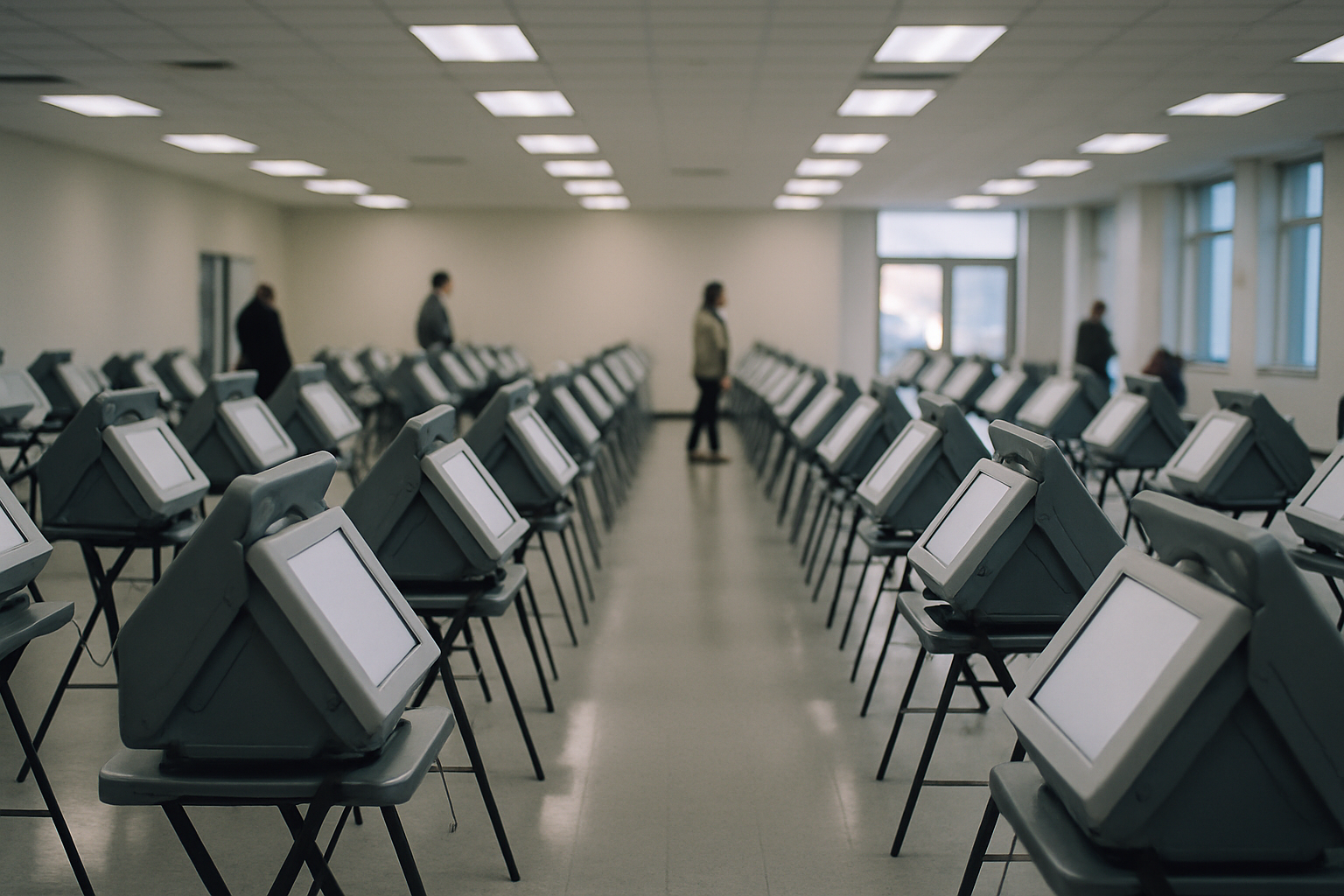
Trump’s forthcoming address is expected to call for expanded federal oversight of state-administered elections, tighter voter identification requirements, and an audit mechanism for electronic voting systems. The White House has not released a full policy outline ahead of the speech, leaving financial markets and business leaders uncertain about the legislative agenda that may follow.

A Contested Record and Its Policy Implications
Since the 2020 presidential election, courts across the United States dismissed more than 60 legal challenges alleging widespread electoral fraud, with judges appointed by both parties finding no credible evidence to support the claims. Despite this, polling conducted earlier this year indicated that roughly 35 percent of American adults continue to express doubts about the integrity of recent federal elections, a figure that has remained stubbornly elevated and which analysts say reflects the lasting influence of repeated high-profile messaging from senior political figures.
For businesses and institutional investors, prolonged uncertainty over democratic norms is not merely a civic concern. Research from governance-focused economists suggests that countries with weakening institutional confidence tend to see a measurable contraction in long-term foreign direct investment, sometimes in the range of 3 to 7 percent over a five-year horizon, as capital gravitates toward more predictable regulatory environments. Whether Trump’s address translates into concrete legislative proposals — or remains primarily rhetorical — will likely determine the degree of market reaction in the weeks that follow.
Legislative Pathway and Market Sensitivity
Any federal legislation reshaping election administration would face a complex path through Congress, where procedural rules and bipartisan opposition in the Senate could limit the scope of new measures. Analysts at several Washington-based policy research firms noted this week that the most consequential near-term risk is not legislation itself, but the signal such an address sends to international partners and multilateral institutions already monitoring democratic governance indicators in the United States.
The U.S. Chamber of Commerce and several large industry associations have in recent years identified institutional stability as a top-tier concern for corporate planning cycles, ranking alongside inflation and supply chain disruption in annual risk surveys. Executives in sectors heavily dependent on federal contracting — defence, infrastructure, and healthcare — are understood to be monitoring the administration’s posture closely, given that shifts in government legitimacy perceptions can affect the speed and reliability of procurement decisions.
Financial markets showed little immediate movement on news of the planned address, with equity indices holding broadly steady. However, currency strategists at several major banks flagged that a sustained campaign around electoral systems could incrementally pressure the dollar if it feeds broader narratives about U.S. political risk among foreign reserve managers. The Treasury market, often a barometer of institutional confidence, was similarly calm but not dismissive of the longer-term implications.
Broader Economic and Governance Context
The timing of the address coincides with an already complex macroeconomic environment. Consumer price inflation, while moderating from its 2022 peaks, remains above the Federal Reserve’s 2 percent target in several core categories, and the central bank has signalled limited appetite for rate cuts in the near term. Against this backdrop, fiscal policy clarity is at a premium for business planners, making any additional source of political uncertainty a marginal but real drag on investment confidence.
Governance analysts also point out that election-related rhetoric can influence labour markets in subtle ways, particularly in the public sector and among contractors whose long-term workforce planning depends on stable government structures. Municipalities and state governments, which collectively employ more than 19 million workers across the United States, may find budget negotiations and long-range capital programmes more difficult to advance if the federal political environment grows more volatile. For investors tracking domestic policy risk, the speech represents one more variable to price into an already uncertain second half of 2026. Coverage of the planned address was first detailed by NPR. Readers tracking broader market implications of U.S. policy shifts may also find relevant context in our earlier analysis of healthcare chip earnings trends, as well as our recent reporting on new-home price cuts across U.S. metropolitan markets.