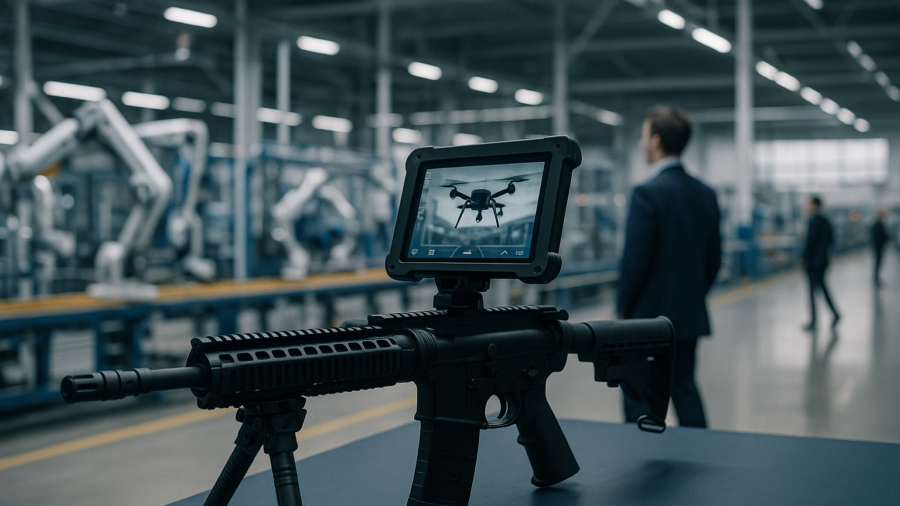
Israeli defence technology company Pyrrhus Aeronautics has unveiled a system that allows soldiers to control a drone directly from a rifle-mounted interface, integrating unmanned aerial vehicle command into standard infantry equipment without requiring a separate controller or dedicated operator. The announcement marks a notable step in the miniaturisation of battlefield drone technology and positions the company within a fast-growing segment of the global defence electronics market.
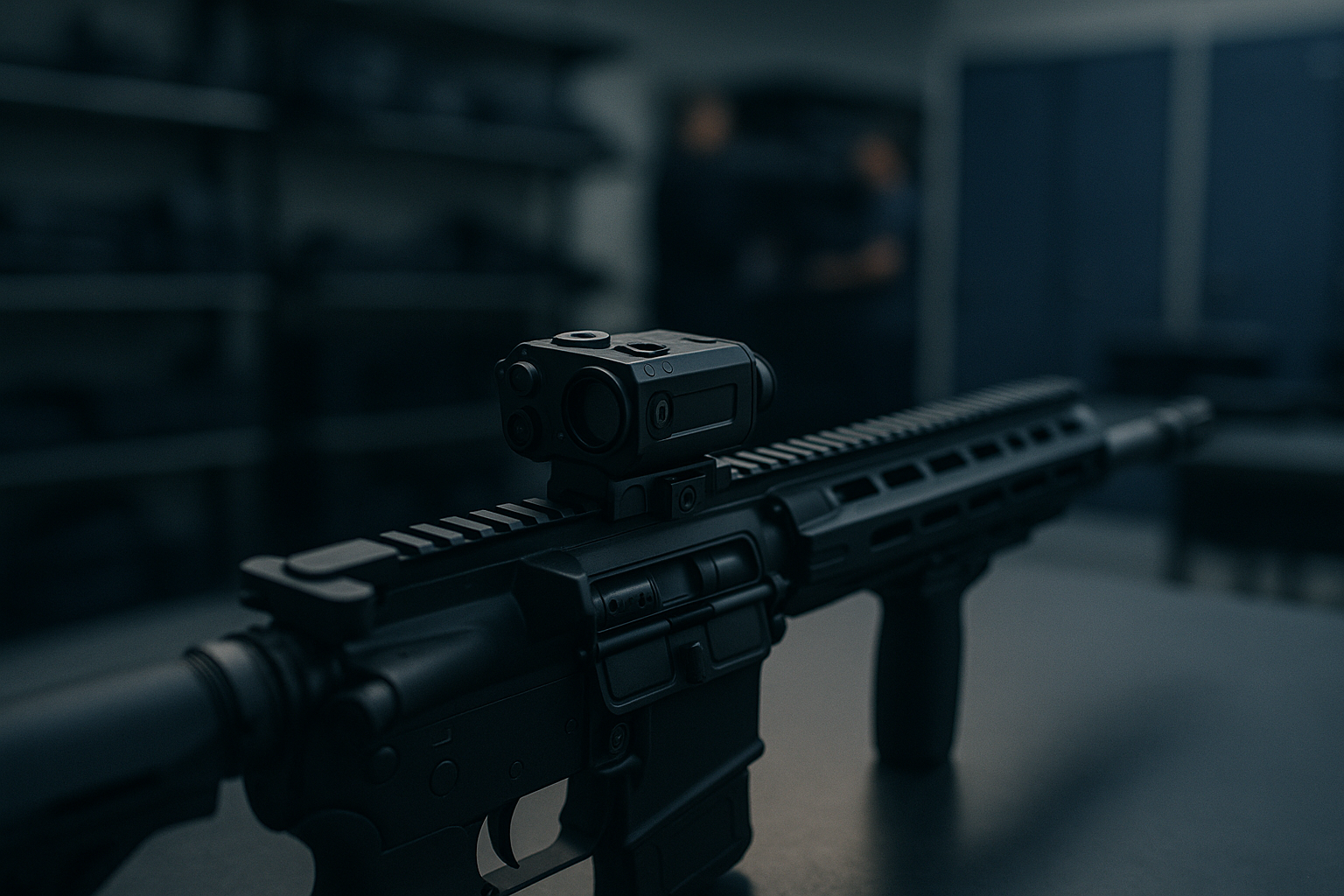
The system, reported by Globes coverage of the Israeli business press, attaches to a rifle in a configuration similar to existing tactical accessories such as optics or foregrips. It enables a single soldier to deploy, navigate, and retrieve a drone while retaining use of the weapon, addressing a persistent operational challenge in which UAV control has historically required a soldier to set aside their primary armament and focus attention on a handheld ground station.
Operational Design and Market Positioning
The core engineering proposition is consolidation. Rather than issuing drone operators as a separate battlefield role, Pyrrhus Aeronautics is designing toward a model in which any rifle-equipped infantryman can double as a UAV operator with minimal additional training burden. The interface is designed to work with small reconnaissance drones, where low latency and intuitive single-hand control are prioritised over range or payload capacity.
The global military drone market has expanded sharply in recent years, with analyst estimates placing the sector’s value above $14 billion annually and projecting compound annual growth rates in the high single digits through the end of the decade. Demand for man-portable, squad-level UAV systems has been a particular driver of that growth, accelerated by documented use of small drones in recent conflicts. Pyrrhus Aeronautics is targeting this lower tier of the market, where unit economics and ease of deployment matter more than the sophisticated sensor packages found on larger platforms.
Israel’s defence technology sector has developed considerable depth in drone systems across multiple price and capability bands. Larger players such as Israel Aerospace Industries have pursued systems at the high end of the threat spectrum — as covered in prior reporting on IAI drone defence — while a newer generation of smaller firms is competing at the tactical edge where infantry units operate. Pyrrhus Aeronautics is positioning itself in the latter space.
Commercial Path and Investment Considerations
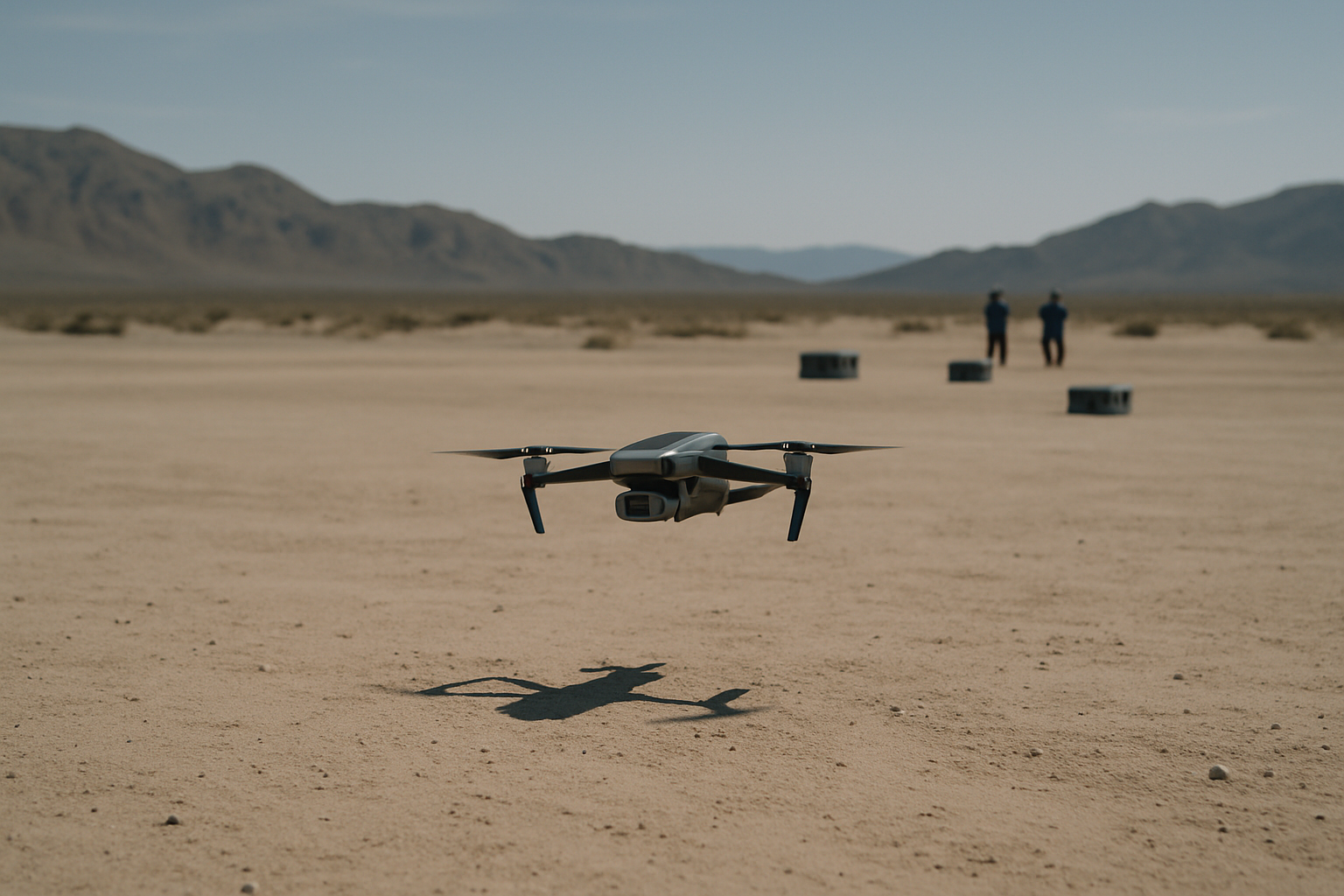
Pyrrhus Aeronautics has not disclosed a production timeline, unit pricing, or named customers in connection with the announcement, leaving key commercial variables open. For investors assessing the company’s near-term prospects, the absence of a confirmed procurement contract means the system remains at the demonstration stage. Defence hardware companies at this phase frequently face lead times of two to four years between a public unveiling and meaningful revenue generation, owing to the qualification, testing, and procurement cycles that govern military purchasing.
That said, the Israeli defence export pipeline has historically provided domestic innovators with early validation pathways. Israel’s defence exports reached approximately $13.1 billion in 2022, according to figures published by the country’s Defence Ministry, with electronics and unmanned systems among the fastest-growing categories. A rifle-mounted drone controller, if it clears field trials, would fall squarely within the kind of compact, software-intensive product that has found buyers across NATO allies and other aligned militaries.
The company’s approach also reflects a broader industry trend in which artificial intelligence and sensor fusion are being pushed closer to the individual soldier rather than concentrated in rear-echelon command infrastructure. Firms operating across the defence technology and advanced chip supply chains are watching this segment closely, given its dependence on low-power processing hardware — dynamics examined in recent reporting on AI chip demand. Pyrrhus Aeronautics has not commented on the specific processing components embedded in the current prototype, nor on plans for a capital raise or strategic partnership to fund a path to production scale. Further disclosures are expected as the system moves toward field evaluation.