
For two and a half centuries, the question Americans asked strangers at cocktail parties, networking events, and family gatherings was not where they lived or what they believed — it was what they did. Work, more than faith, geography, or ancestry, became the organizing principle of American identity. That compact, woven into the cultural fabric since the nation’s founding, is now fraying at a pace that carries real and measurable economic consequences.
Writing in Fortune magazine, organizational theorist Keith Ferrazzi argues that the United States is experiencing nothing less than an identity crisis at the precise moment it celebrates its 250th anniversary. The argument is not merely philosophical. As artificial intelligence eliminates entire categories of white-collar work and labor force participation among prime-age workers remains structurally depressed relative to pre-pandemic norms, the economic institutions built around the assumption of lifelong career-centered lives are beginning to buckle.

The Economic Architecture of a Work-Centered Nation
The United States constructed virtually every major social and financial institution around employment. Health insurance, retirement savings through 401(k) plans, disability protection, and even social status have historically flowed through employer relationships. When work falters — as it does for millions of Americans displaced by automation or the gig economy’s structural precarity — the downstream consequences extend far beyond a lost paycheck.
Labor economists have flagged the numbers for years. The employment-to-population ratio for Americans aged 25 to 54, often considered the cleanest measure of genuine labor market health, remains several percentage points below long-run historical averages when adjusted for demographic shifts. Meanwhile, roughly 36 percent of the United States workforce now participates in freelance or contract work in some capacity, according to independent labor surveys, a figure that has climbed steadily for more than a decade. These workers frequently lack access to the employer-sponsored benefits that form the backbone of middle-class financial security, exposing a yawning gap between the mythology of American industriousness and the lived economic reality.
The arrival of large-scale generative artificial intelligence has accelerated the reckoning. Goldman Sachs has estimated that AI could automate tasks currently performed by the equivalent of 300 million full-time workers globally, with knowledge-work roles in the United States among the most exposed. For a culture that spent 250 years defining virtue through productivity, the prospect of a post-scarcity labor market raises a question the country has never seriously been forced to answer: who are Americans if not what they do?
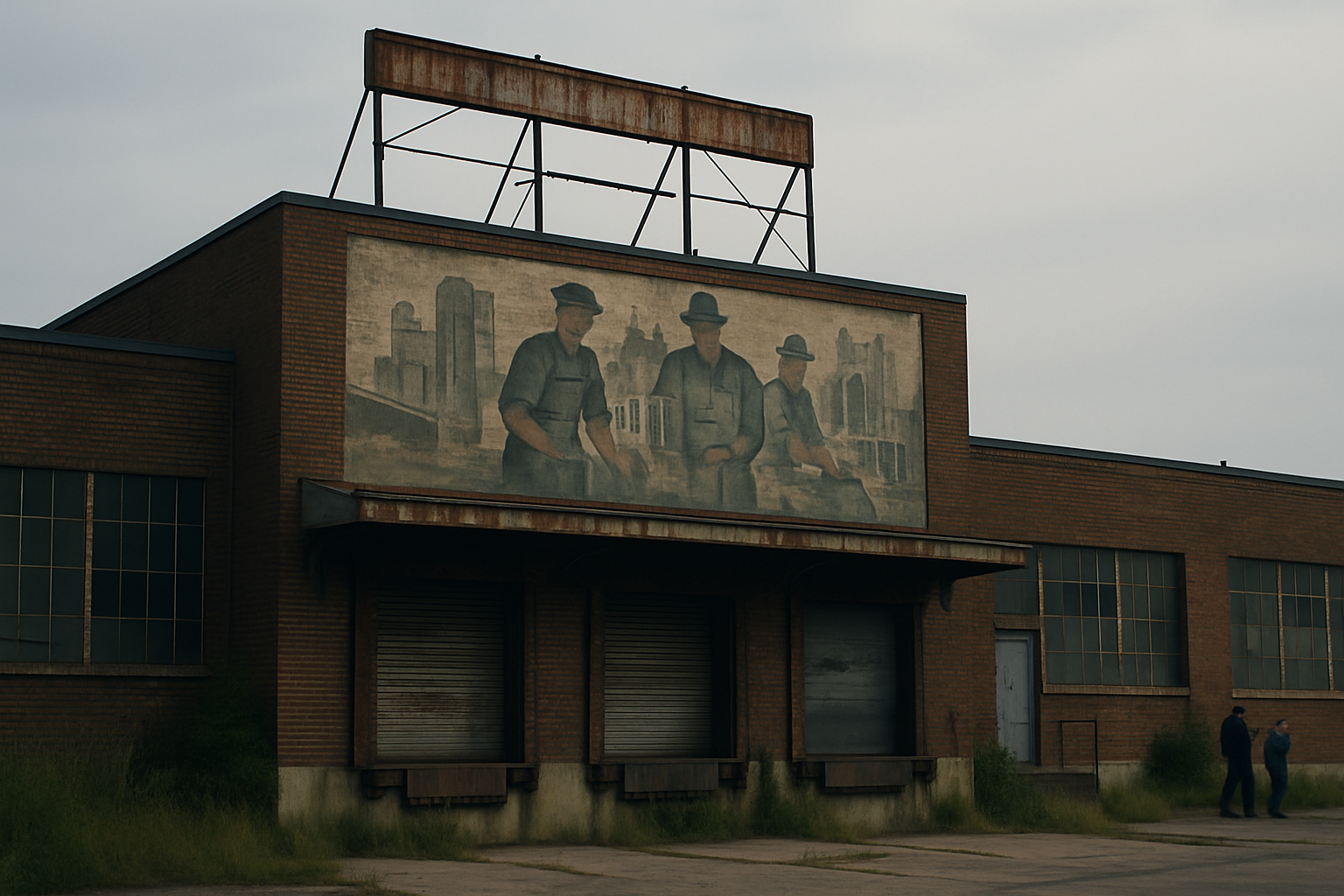
Reimagining Purpose in a Post-Work Economy
Ferrazzi’s analysis, as reported in Fortune, points toward a necessary cultural and institutional reinvention rather than a simple policy fix. The argument draws on a recognition that the Protestant work ethic — the Calvinist notion that labor was morally virtuous and economic success a sign of divine favor — was never a universal human truth. It was a historically contingent ideology that served a specific economic moment. That moment, the analysis suggests, is closing.
The implications for financial planning, retirement policy, and corporate strategy are substantial. If work is no longer the primary vessel for meaning, the industries built on work-adjacent identity — from office real estate to professional networking platforms to corporate wellness programs — face profound demand recalibration. Policymakers face parallel pressure to rethink social insurance frameworks designed for an era of stable, long-tenure employment that no longer reliably exists. Discussions around portable benefits, universal basic income pilots, and expanded public investment in community institutions have moved from academic journals into mainstream policy debate, though no durable political consensus has emerged.
For individual investors and households, the transition demands a reassessment of assumptions baked into long-term financial planning. Career continuity, once a reasonable baseline for retirement projections, can no longer be taken as given across entire industries. As The Fiscalist has previously examined in coverage of Social Security trade-offs and wealth-building strategies, the financial tools most Americans rely on were calibrated to a more stable labor market than the one now emerging. Adapting those tools — and the cultural assumptions behind them — may prove to be the defining economic challenge of America’s next 250 years.