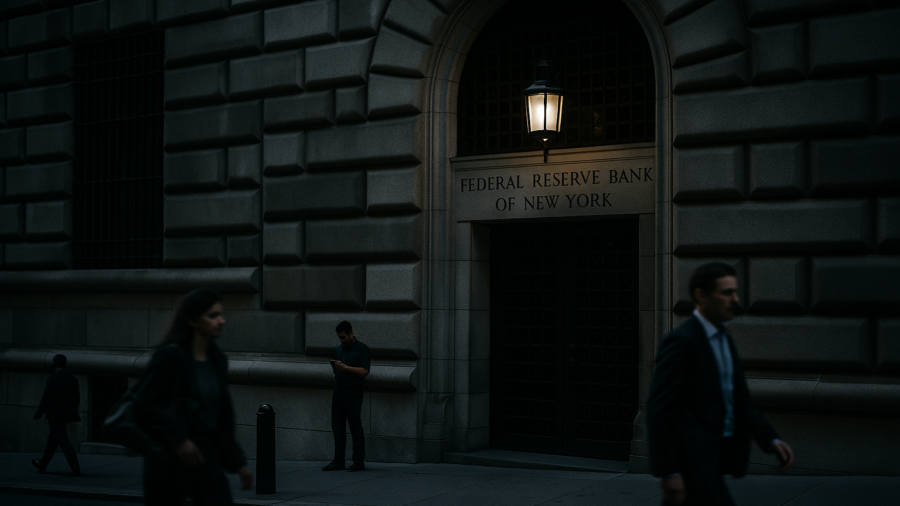
American households are bracing for persistent cost increases across two of their largest budget line items — healthcare and housing — according to new survey data released by the Federal Reserve Bank of New York. The findings underscore a deepening anxiety about everyday affordability that extends well beyond the headline inflation figures policymakers most closely monitor.
The New York Fed’s Survey of Consumer Expectations, as reported by Yahoo Finance, showed that respondents anticipate medical care costs and rent to climb more steeply than most other spending categories over the next year. The survey, drawn from a rotating panel of roughly 1,300 household heads, captures forward-looking sentiment rather than backward-looking price experience — making it a closely watched barometer for the Federal Reserve as it calibrates its monetary policy stance.

Healthcare and Housing Lead the Worry Index
Survey respondents flagged medical costs as one of the top categories where they expect prices to rise most sharply in the coming twelve months, with mean expectations for healthcare price growth running well above the overall one-year inflation outlook. Rent expectations similarly remained elevated, reflecting the persistent lag between real-time rental market data and the lived experience of tenants whose leases have not yet reset to current market rates.
The overall one-year ahead inflation expectation held at 3.0 percent in the most recent reading, unchanged from the prior month, while the three-year ahead measure edged up slightly. The five-year horizon expectation also firmed, suggesting consumers are not fully convinced that price stability is returning on a durable basis. That divergence between near-term stability and longer-term unease is precisely the kind of signal that complicates the Fed’s communication strategy as it debates the pace and timing of any future rate adjustments.
Spending growth expectations also ticked higher, with households anticipating that their total outlays will grow faster over the next year. That figure rose to 5.0 percent, the highest reading in several months, driven in part by the anticipated cost burdens in healthcare and shelter. Analysts note that when consumers pre-emptively brace for higher costs in non-discretionary categories, it can suppress spending in other areas of the economy even before the price increases fully materialise.
Labor Market Confidence Slips as Financial Stress Rises
Beyond price expectations, the survey also captured deteriorating confidence in the labor market. The mean perceived probability of losing one’s job over the next year rose modestly, while the perceived likelihood of finding new employment after a job loss declined. That combination — higher job-loss fear paired with lower re-employment confidence — historically correlates with a pullback in consumer spending and a rise in precautionary saving, both of which carry implications for broader economic momentum.
Household financial distress indicators also worsened. The share of respondents reporting it would be difficult to come up with $2,000 in an emergency within a month increased, and the perceived probability of missing a minimum debt payment over the next three months climbed. These figures paint a picture of a consumer base that, despite a still-resilient aggregate labor market, is feeling increasing strain at the margins — particularly among lower-income cohorts who devote a disproportionate share of their budgets to rent and out-of-pocket healthcare expenses.
The findings align with broader research suggesting that the U.S. economy may be bifurcating along income lines. Income divide analysis from Bank of America has similarly identified divergent financial experiences between higher-earning households, which retain significant cushioning from accumulated savings, and lower-income households that are increasingly reliant on credit to meet recurring expenses.
Policy Implications and the Road Ahead
For Federal Reserve officials, the persistence of elevated inflation expectations in categories like healthcare and rent creates a delicate backdrop. While goods inflation has cooled substantially from its 2022 peaks, services inflation — which encompasses both medical costs and shelter — has proven considerably stickier. The Fed’s preferred inflation gauge, the Personal Consumption Expenditures price index, continues to show services prices running above target, giving policymakers limited room to pivot toward rate cuts without risking a re-anchoring of inflation expectations at a higher level.
The healthcare component carries additional complexity given that medical pricing is shaped as much by regulatory and insurance market dynamics as by conventional supply-and-demand forces. Rent, meanwhile, is subject to its own structural constraints: new housing supply remains well below the pace needed to meaningfully ease affordability pressures in major metropolitan markets, a dynamic likely to keep rental inflation elevated even as broader price growth moderates.
Consumers navigating these pressures face difficult trade-offs, particularly as they plan for longer-term financial security. The calculus of when to draw down retirement benefits, for instance, is increasingly sensitive to expected healthcare costs in later life, a subject explored in prior Fiscalist coverage of Social Security timing for higher-income households. With inflation expectations unanchored across multiple essential categories, the path back to genuine consumer confidence appears longer than aggregate data alone would suggest.