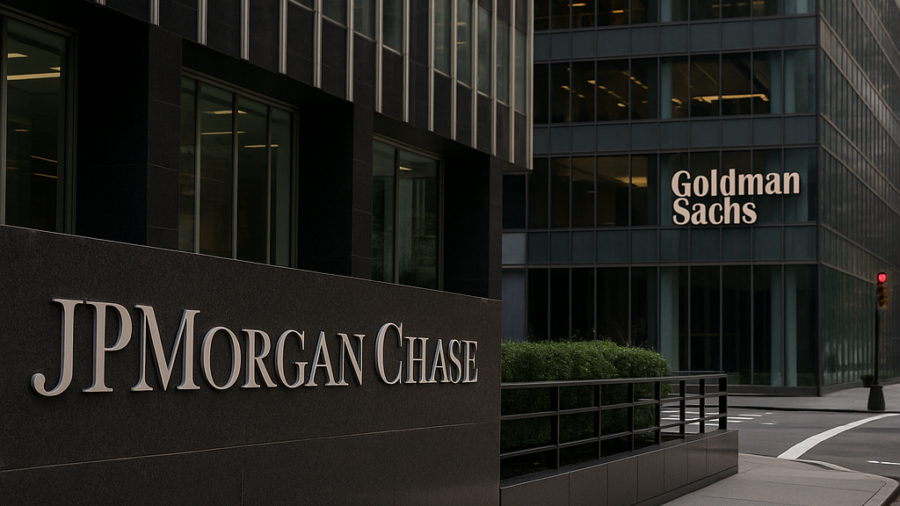
The largest Wall Street banks moved swiftly to reward shareholders on Monday after the Federal Reserve’s annual stress test confirmed that all participating institutions held sufficient capital to weather a severe economic downturn, with JPMorgan Chase announcing a sweeping $50 billion share repurchase programme and Goldman Sachs lifting its quarterly dividend by a significant margin.
CNBC reported that the announcements came within hours of the Fed releasing its 2026 stress test results, which showed the nation’s biggest lenders could absorb hypothetical losses of more than $550 billion under an adverse scenario while maintaining capital ratios well above regulatory minimums. The results effectively cleared a path for banks to deploy excess capital that had been held in reserve pending the regulator’s verdict.
JPMorgan Chase, the largest US bank by assets, said its board had authorised a new $50 billion buyback, replacing a prior repurchase facility that had roughly $10 billion remaining. Chief Executive Jamie Dimon described the authorisation as a reflection of the bank’s “fortress balance sheet” and its confidence in generating durable long-term returns for investors. JPMorgan shares climbed to session highs in extended trading following the disclosure.

Goldman Sachs separately announced it would raise its quarterly dividend to $4.00 per share from $3.00, representing a 33 percent increase and marking one of the most aggressive dividend hikes among the major banks disclosing plans Monday evening. The move underscores Goldman’s ongoing effort to broaden its appeal to income-oriented institutional investors as it continues to streamline its consumer banking retreat and refocus on its core Wall Street franchises.
Other major lenders also outlined capital return plans following the stress test clearance. Morgan Stanley indicated it would increase its quarterly dividend, while Bank of America and Wells Fargo each signalled intentions to expand their buyback programmes, though specific figures were still being finalised at the time of publication. Citigroup, which has been navigating a multiyear transformation plan, offered more cautious guidance on near-term capital distributions.

The Fed’s stress test has grown increasingly influential as a mechanism that effectively determines how much capital major banks can return to shareholders in any given year. Critics have argued the framework has become overly prescriptive, while consumer advocates contend that large buybacks prioritise investor returns over lending capacity. Regulators have, for their part, defended the test as a cornerstone of post-financial-crisis oversight. Investors tracking broader portfolio concentration risk may also wish to consider how financial sector weightings interact with passive index exposure heading into the second half of the year.
Markets are expected to scrutinise the pace of buyback execution in the coming quarters, particularly as the Federal Reserve navigates a complex rate environment and credit quality across commercial real estate and consumer lending segments remains under close watch.