
Rising crude oil prices represent the most significant threat to Indian corporate earnings at present, according to Anupam Tiwari, equity fund manager at Groww Mutual Fund. In a wide-ranging market commentary reported by Business Standard, Tiwari argued that a sustained rally in global crude benchmarks could materially erode the margin recovery that Indian companies have carefully engineered over the past two years. With Brent crude trading in elevated territory, the concern is not merely theoretical — it carries direct consequences for sectors ranging from paints and chemicals to aviation and consumer goods. This view dovetails with broader anxieties in emerging markets, where currency vulnerabilities and import-cost pressures compound the effect of oil price swings, a dynamic explored in depth in The Fiscalist’s earlier coverage of IMF India rupee policy tensions.
Tiwari’s comments come at a moment when global macro conditions are unusually complicated. The United States Federal Reserve’s policy trajectory continues to inject uncertainty into risk assets worldwide, and the interplay between dollar strength and commodity pricing creates a double bind for oil-importing economies such as India. A stronger dollar, which typically accompanies tighter Fed policy, pushes up the rupee cost of every barrel India imports, amplifying the domestic inflationary effect of any uptick in benchmark crude prices.
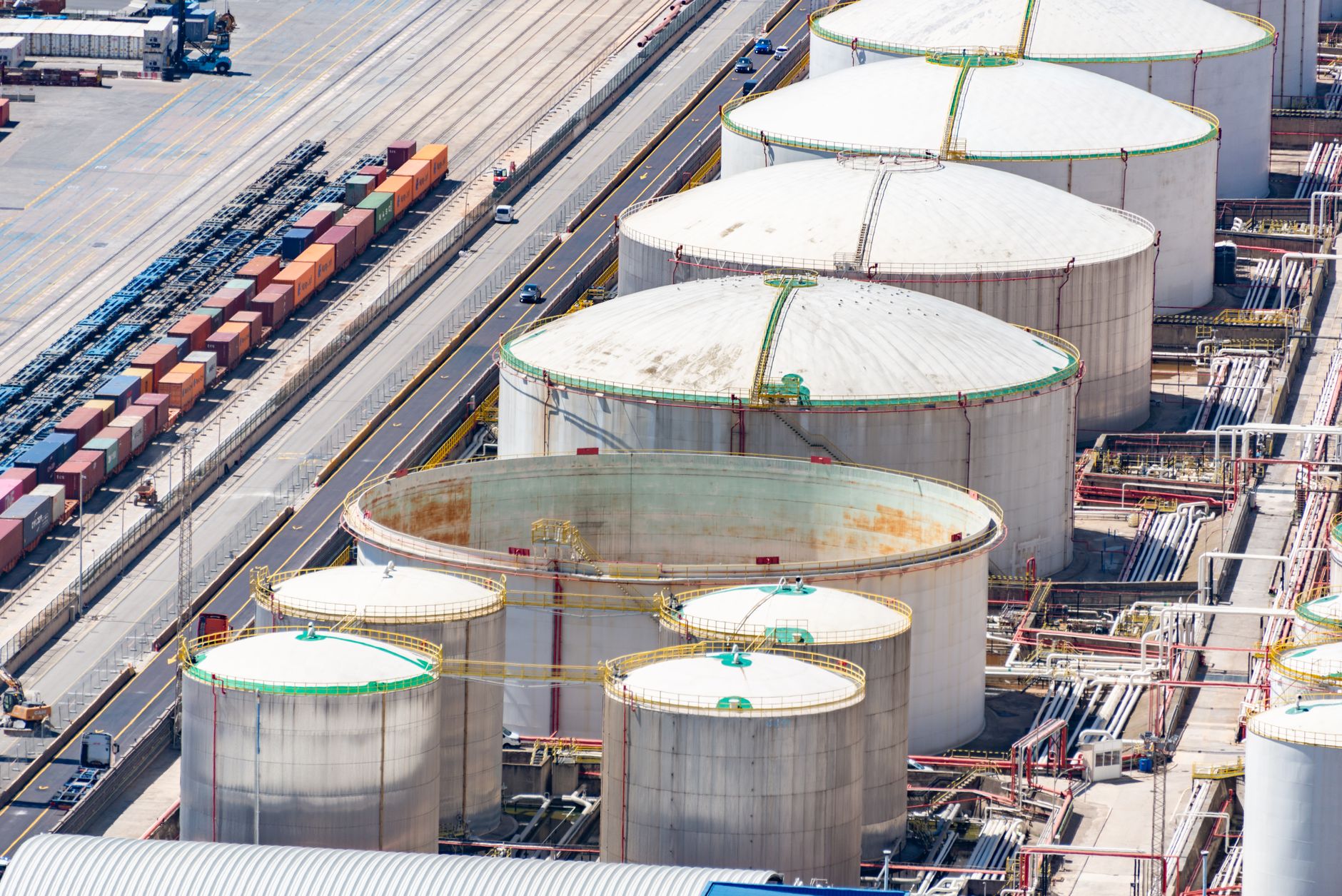
Margin Pressure Builds Across Oil-Sensitive Sectors
India imports approximately 85 percent of its crude oil requirements, making corporate India acutely sensitive to movements in global energy prices. For companies in input-cost-heavy sectors — including specialty chemicals, polymers, logistics, and airlines — each ten-dollar increase in the price of a barrel of Brent crude can shave between one and two percentage points off operating margins, depending on the degree to which higher costs can be passed on to end consumers. In an environment where urban consumption growth has already shown signs of moderation, pricing power remains constrained, making any margin defence harder to sustain.
Tiwari highlighted that the earnings upgrade cycle that buoyed Indian equities through much of the recent bull run was built partly on the tailwind of relatively soft global commodity prices. Should oil prices consolidate at persistently high levels rather than retreating, the consensus earnings growth estimates for Nifty 50 constituents — currently forecast in the mid-to-high teens for the fiscal year ending March 2026 — could face meaningful downward revision. Analysts tracking the broader market have noted that every significant earnings disappointment season in the last decade has had an energy cost component somewhere in the causal chain.
Global Rate Environment Complicates the Outlook
Beyond crude, Tiwari acknowledged that the global interest rate environment adds another layer of complexity for equity investors. Elevated yields in developed markets reduce the relative attractiveness of emerging market equities on a risk-adjusted basis and can trigger capital outflows that weaken currencies, further raising the local-currency cost of oil imports. The US Treasury yield has recently climbed to levels not seen since 2007, a development that continues to reshape the calculus for portfolio allocators weighing Indian equities against the now-competitive returns available in risk-free dollar-denominated instruments.
Despite these headwinds, Tiwari stopped short of turning categorically bearish on Indian equities, arguing that the domestic growth story retains structural integrity. He pointed to government capital expenditure, gradual rural demand recovery, and the continuing formalisation of the economy as factors capable of sustaining corporate revenue growth even if margin expansion stalls. However, he was emphatic that investors should stress-test their portfolios against a scenario in which Brent crude remains above eighty-five dollars per barrel for an extended period, as that level begins to visibly bite into the earnings of a wide swath of listed companies.
Portfolio Strategy in a High-Energy-Cost Scenario
For fund managers navigating this environment, sectoral positioning becomes critical. Tiwari’s framework suggests a preference for businesses with pricing power, low direct energy exposure, or the ability to benefit from elevated oil prices — such as upstream oil producers and oil field services companies. Conversely, sectors with high feedstock dependence and limited ability to pass through costs, including certain consumer staples manufacturers and mid-tier chemical processors, warrant more cautious weightings until the oil price trajectory clarifies.
The broader equity market has so far absorbed the oil price risk without a dramatic selloff, partly because domestic institutional flows have remained robust and partly because some investors view current valuations as already pricing in a degree of earnings deceleration. Whether that embedded caution proves sufficient will depend heavily on how geopolitical dynamics in the Middle East and OPEC production discipline evolve over the coming quarters. For now, Tiwari’s warning serves as a timely reminder that in an oil-dependent economy, global commodity markets remain the variable that all other investment theses must ultimately be tested against.