
The Bank of England has confirmed that its closely watched interest rate decision this Thursday will be released at 12:02 p.m. London time rather than the customary noon announcement, as the central bank observes the two minutes of silence marking the 80th anniversary of Victory in Europe Day. The minor but symbolically significant scheduling adjustment underscores the weight of the national commemoration, which is being observed across the United Kingdom with a series of official ceremonies and public events.
According to a MarketWatch report, the Bank confirmed the adjusted timing ahead of what markets are pricing as one of the more consequential monetary policy meetings of the year. Traders, economists, and fixed-income desks across the City of London had already been preparing for the announcement, and the two-minute delay is not expected to materially affect market positioning or liquidity conditions at the open.
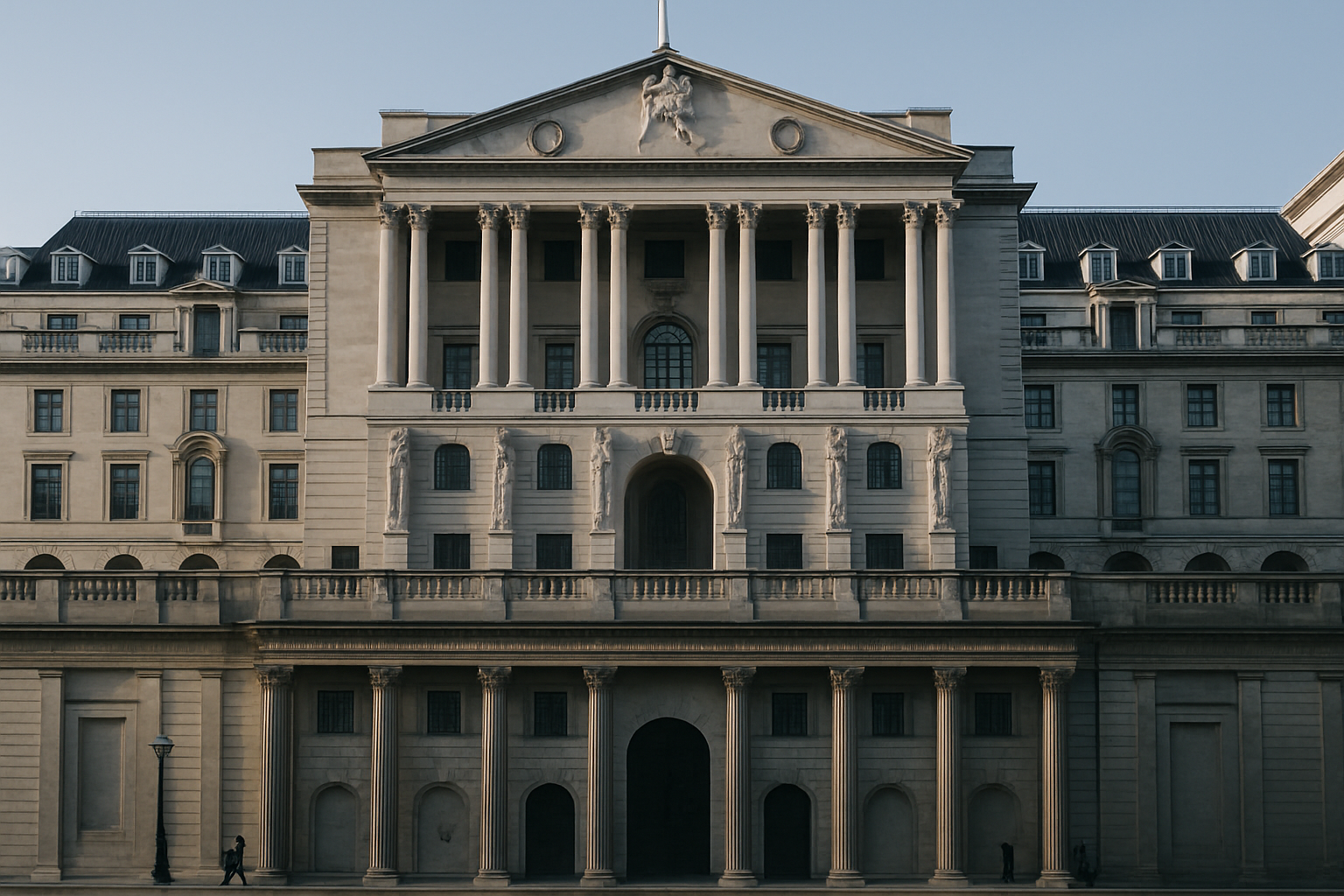
Rate Decision in Focus as Inflation Pressures Persist
The timing adjustment arrives at a pivotal moment for British monetary policy. The Monetary Policy Committee is widely expected to deliver a 25 basis point cut to the benchmark interest rate, which currently stands at 4.25 percent, as policymakers navigate a complex environment of slowing growth and gradually easing inflation. Consumer price inflation in the United Kingdom fell to 2.6 percent in the year to March 2025, down from a peak above 11 percent in late 2022, though services inflation has remained sticky at around 4.7 percent, complicating the path toward a more accommodative stance.
Economists at several major investment banks had forecast between two and four rate cuts across 2025, contingent on continued moderation in wage growth and domestic demand. Average earnings growth in the UK remains elevated at approximately 5.6 percent on a three-month basis, a figure that the MPC has cited repeatedly as a constraint on the pace of easing. The committee votes eight to one or nine to zero in most scenarios modelled by market participants, though a split decision cannot be ruled out given the divergence in recent economic signals.
The broader context for central bank decision-making globally remains one of cautious recalibration. As noted by CNA’s analysis of central bank behaviour, geopolitical developments — including shifts in Middle East tensions — have done little to deter major institutions from maintaining a hawkish tilt where domestic inflation data demands it. The Bank of England is operating within that same framework, balancing external shocks against the imperative to bring price stability back within mandate.

Markets Brace for Gilt and Sterling Volatility at 12:02
Fixed-income traders have flagged the 12:02 p.m. release as a practical non-event in terms of strategy, but the symbolic nature of the change has drawn attention to the broader calendar of UK public life intersecting with financial market schedules. Ten-year gilt yields were hovering near 4.55 percent in the days leading up to the announcement, reflecting market uncertainty about the pace of future cuts and the durability of the disinflation trend. Sterling had also been trading near $1.33 against the US dollar, a level sensitive to any dovish surprises from the MPC.
Liquidity desks at major banks typically prepare for elevated volatility in the minutes immediately surrounding a Bank of England decision, and the two-minute delay effectively compresses the pre-announcement trading window. Algorithmic trading systems and high-frequency strategies will be recalibrated to the 12:02 p.m. trigger, a routine adjustment but one that requires explicit confirmation from clearing and settlement teams ahead of the release.
The VE Day commemoration itself carries economic relevance beyond ceremony. Public holidays and national events in the United Kingdom can dampen retail activity and shift short-term output figures, factors the MPC may reference when contextualising near-term GDP readings. UK economic growth came in at 0.5 percent in the first quarter of 2025, a modest but better-than-expected result that has given the committee some room to manoeuvre without urgency. For further context on how inflation dynamics are evolving across major Western economies, The Fiscalist’s coverage of tariff-driven price pressures offers a useful framework. Readers tracking the Federal Reserve’s parallel deliberations may also find value in our analysis of Warsh’s monetary signals as a counterpoint to the Bank of England’s current approach.