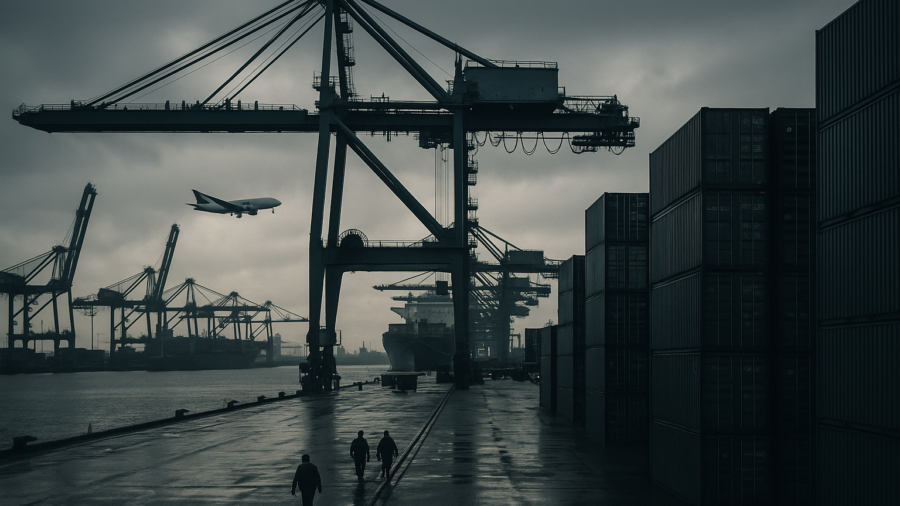
When armed conflict disrupted oil flows through the Middle East earlier this year, the consequences for global aviation and logistics were swift and severe. Jet fuel prices spiked sharply as tanker routes were rerouted, refinery inputs tightened, and risk premiums widened across energy markets. For carriers and freight operators already navigating post-pandemic cost pressures, the surge presented an existential test of operational discipline — and few companies faced it at greater scale than DHL.
The German logistics giant consumes approximately 1.88 million tonnes of jet fuel annually across its global express and air freight network. At that volume, even a modest per-tonne price increase translates into hundreds of millions of euros in additional operating costs within a single quarter. How management responds — through hedging strategies, route optimisation, surcharge mechanisms, and fleet efficiency decisions — has become as strategically significant as any investment in infrastructure or technology, according to a Fortune report published this week.

A $100 Billion Industry Shock That Airlines Could Not Absorb Alone
The scale of the fuel cost shock extends well beyond any single operator. According to IATA profitability data reported by CNBC, global airline fuel costs are expected to jump by $100 billion this year, a surge so severe it is projected to halve industry-wide profitability. The International Air Transport Association had already flagged fuel as the sector’s single largest cost line, typically accounting for 20 to 30 percent of total operating expenses in stable markets. Under current conditions, that share has risen materially.
The conflict’s downstream pricing effects are also proving more persistent than many energy analysts initially forecast. Fuel prices in the United States are expected to take months to normalise following a ceasefire framework between Washington and Tehran, according to Al Jazeera reporting on the agreement’s economic aftermath. That timeline reflects the complexity of rebuilding supply chain confidence across Gulf refining infrastructure and global spot markets, even after active hostilities subside. For logistics operators locking in forward fuel contracts, the normalisation lag carries direct balance sheet implications.
Gulf states themselves are grappling with the conflict’s broader economic fallout. A DW analysis marking 100 days of the Iran war documented how regional economies have been forced to recalibrate trade and energy policy simultaneously, compressing the decision-making window for energy-dependent industries across Europe and Asia.
DHL’s Strategic Position and the Wider Freight Repricing Cycle
Despite the severity of the shock, a full-scale jet fuel shortage has not materialised for most commercial operators. Airlines and logistics carriers moved quickly to secure alternative supply chains, adjust routing away from higher-risk corridors, and accelerate negotiations with fuel suppliers outside the affected region. That adaptive response, while costly, has prevented the kind of operational paralysis that some analysts warned was possible in the conflict’s early weeks.
For DHL specifically, the crisis has sharpened internal focus on fuel efficiency investment, dynamic surcharge structures, and the sequencing of its longer-term transition toward sustainable aviation fuel. The company’s Europe chief executive has publicly acknowledged the material impact of the price environment on network economics, framing the challenge not only in financial terms but in the context of workforce stability and operational wellbeing — an increasingly visible dimension of how large logistics groups communicate cost pressures to employees and investors alike.
The episode also arrives at a moment when broader inflationary dynamics are already weighing on global supply chains. Our earlier analysis of tariff-driven inflation documented how layered cost pressures are forcing companies to make difficult pricing decisions across multiple product categories simultaneously. Freight and express delivery are not immune to that dynamic, and the fuel spike compounds an already difficult repricing environment for industrial shippers and e-commerce platforms dependent on reliable air cargo networks.
Investor scrutiny of how DHL and its peers manage fuel exposure is likely to intensify through the second half of the year. With Q3 market conditions already facing elevated uncertainty, any deterioration in fuel cost guidance from major logistics operators could ripple through transport sector valuations and broader freight rate benchmarks. The 1.88 million tonne figure is not merely an operational statistic — it is a financial risk variable that analysts and shareholders will be watching closely.