
The United States is grappling with what economists are beginning to describe as a dual inflation problem: a pre-existing wave of elevated consumer prices that never fully subsided, now being amplified by a second surge driven by sweeping import tariffs. The distinction matters enormously for policymakers, businesses, and ordinary households trying to understand why their grocery receipts and utility bills continue to climb even as official headline figures appear to moderate.
According to a Marketplace analysis, the difficulty lies in separating two overlapping phenomena that carry the same label but have fundamentally different causes, timelines, and policy remedies. The result is a public debate that is frequently talking past itself, with some analysts pointing to tariff-induced price shocks as a discrete, correctable event, while others argue that structural inflation never truly retreated to the Federal Reserve’s 2 percent target in the first place.
Tariff Shocks Layer Onto an Already Elevated Price Base
The mechanics are straightforward, if uncomfortable. Import tariffs imposed under the current administration on goods ranging from consumer electronics to steel inputs have already begun flowing through to retail shelves. Economists broadly estimate that a sustained 10 percentage-point increase in effective tariff rates can translate into a 0.5 to 1.5 percentage point increase in core consumer prices over a 12-to-18-month period, depending on how much of the cost importers and retailers absorb versus pass on.
What makes the current situation particularly difficult to parse is that this new tariff-driven pressure is landing on top of a price level that never fully normalised. Core personal consumption expenditures, the Fed’s preferred inflation gauge, spent much of 2024 and early 2025 hovering above 3 percent — well clear of the 2 percent target — before tariff effects began adding incremental pressure in late 2025 and into 2026. For consumers, the cumulative effect is stark. Food costs, in particular, have remained stubbornly elevated, and food bill pressures are being widely reported at the household level, with grocery receipts offering some of the most visceral evidence that relief has not arrived for many Americans.

The compounding effect creates a statistical illusion that can mislead casual observers. Headline inflation figures may appear relatively contained in year-over-year terms if the initial tariff shock is gradual, but the cumulative price level — the actual number on the shelf compared to three or four years ago — tells a very different story for consumers whose wages have not kept pace.
Fed Policy Faces a Diagnostic Dilemma
The distinction between tariff inflation and structural inflation is not merely academic. It has direct implications for how the Federal Reserve responds. Tariff-driven price increases are, in theory, a one-time level adjustment: prices rise, stabilise, and then the inflation rate returns to baseline unless further tariff increases are layered on. Structural inflation, by contrast, reflects persistent mismatches between demand, wages, and supply capacity that require sustained monetary tightening to address.
If the Fed misidentifies tariff inflation as structural, it risks overtightening and unnecessarily increasing unemployment. If it dismisses tariff effects as transitory — a word that haunts the institution after its 2021 miscalculation — it risks allowing inflationary expectations to become unanchored. Cleveland Fed President Beth Hammack has previously flagged the risk that new cost pressures, including those from technology investment cycles, could make the inflation picture more persistent than models suggest, a warning tracked in earlier Fed inflation signals covered by The Fiscalist.
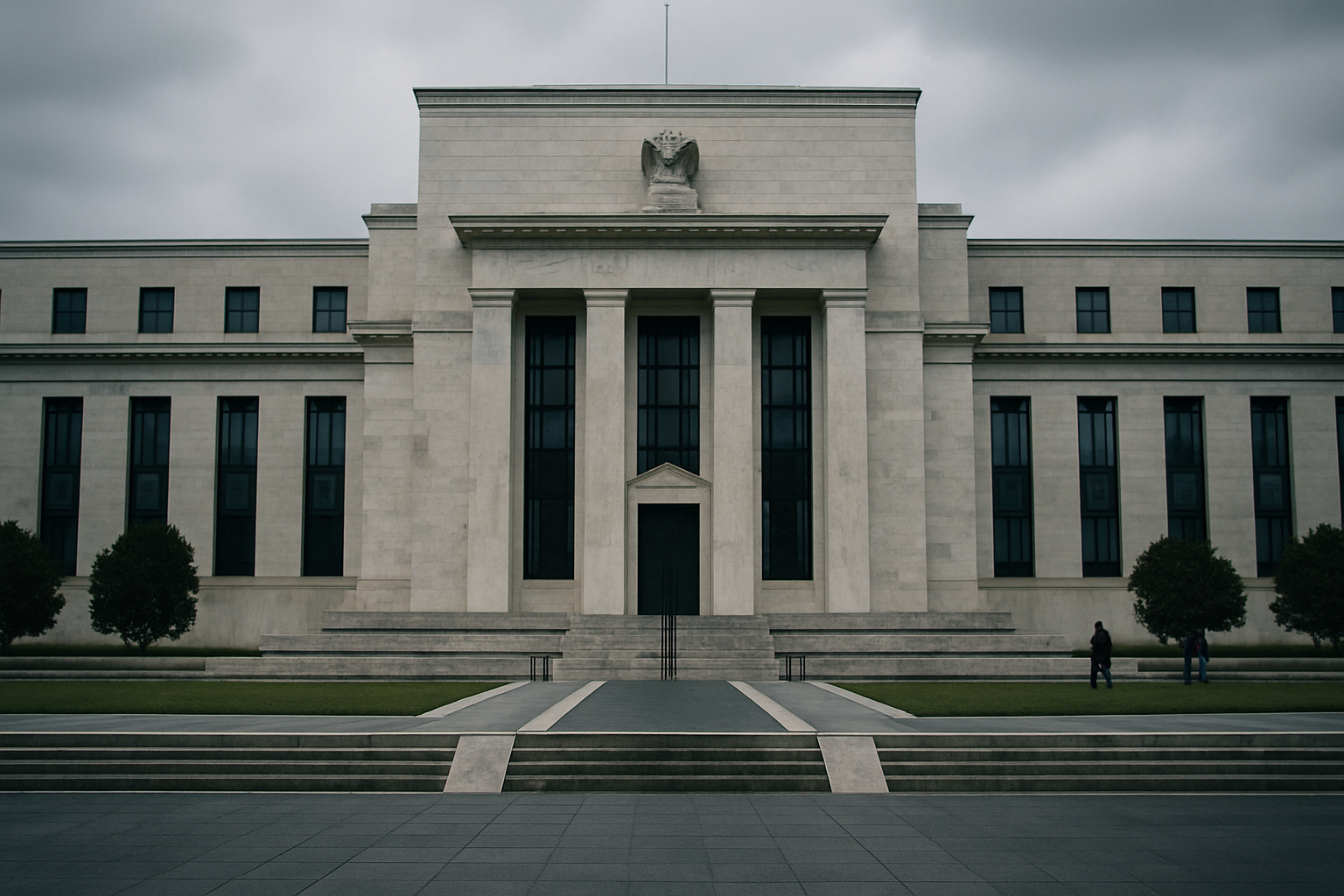
Markets are watching the Fed’s communications closely for any sign of which interpretation is gaining traction within the Federal Open Market Committee. Rate futures as of late June 2026 reflect significant uncertainty, with traders pricing in a roughly even split between one and two cuts before year end — a distribution that itself signals the diagnostic confusion gripping the institution.
What Households Are Actually Experiencing
Beyond the policy debate, the real-world impact is landing unevenly across income groups. Lower-income households, which spend a disproportionate share of their budgets on food, energy, and non-discretionary goods, are bearing the heaviest burden from both inflation waves simultaneously. Higher-income households, with more discretionary flexibility, are better positioned to substitute away from price-affected categories or delay purchases.
This distributional dimension complicates any political or policy narrative that treats inflation as a single, uniform experience. The market dimension adds further complexity: US stock volatility in recent weeks has reflected investor anxiety about precisely this uncertainty — whether corporate earnings guidance can hold if consumer purchasing power continues to erode from two directions at once. For investors and policymakers alike, correctly diagnosing which inflation they are fighting may ultimately matter as much as the tools they deploy to fight it. The broader macroeconomic backdrop, including how artificial intelligence investment cycles may reshape cost structures over the medium term, adds yet another variable, a dynamic examined in The Fiscalist’s earlier coverage of AI inflation costs.