An Israeli defense technology startup named Covenant is moving to capitalize on a fundamental shift in European security thinking, announcing plans to build a missile manufacturing facility capable of producing 5,000 units per year. The company is betting that Europe’s accelerating drive toward European defense policy independence from the United States will generate sustained long-term demand for domestically sourced, allied-nation precision weaponry. The announcement signals growing confidence among smaller defense firms that the continent’s rearmament cycle is not a short-term political reaction but a structural realignment of spending priorities.
According to a Calcalist report, Covenant’s leadership believes the timing is deliberate. European governments have collectively pledged to raise defense budgets toward and beyond the NATO target of 2 percent of gross domestic product, with several nations already exceeding that threshold and committing to figures as high as 3.5 percent. That political momentum has created an addressable market that Covenant’s founders argue is large enough to justify industrial-scale investment in missile production infrastructure.
Factory Scale and Production Strategy
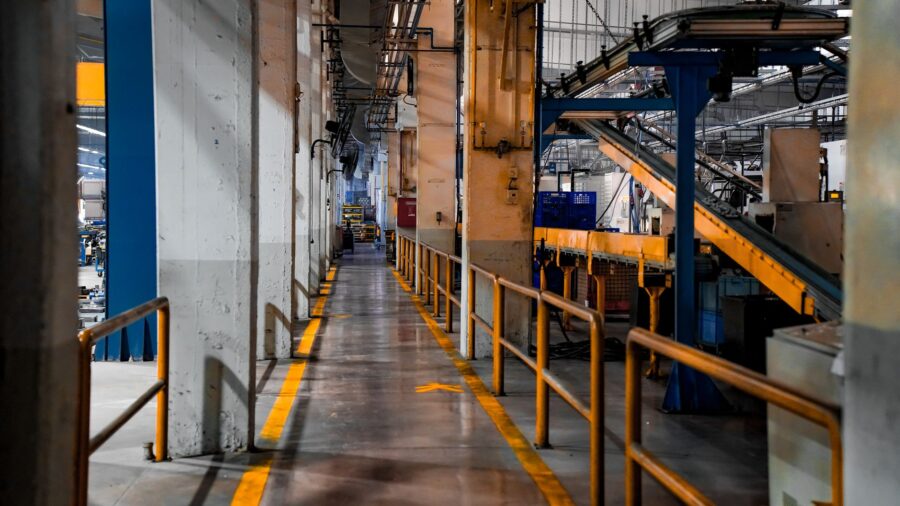
The planned facility is designed around a high-throughput manufacturing model rather than the bespoke, low-volume production lines that have historically characterized much of the Western defense sector. At 5,000 missiles per year, the plant would represent a significant production commitment by startup standards, requiring substantial capital expenditure for precision tooling, propulsion assembly, and guidance system integration. Covenant has not publicly disclosed the factory’s planned location, though reports indicate European sites are under active evaluation, a choice that would ease regulatory approvals and strengthen the firm’s positioning as a locally embedded supplier rather than a foreign exporter.
The production ambition also reflects lessons drawn from the war in Ukraine, which exposed critical shortfalls in Western munitions stockpiles. Multiple NATO member states exhausted meaningful portions of their missile inventories supplying Kyiv, creating urgent replacement demand and prompting defense ministries across the continent to reassess supply chain resilience. Covenant’s factory pitch directly addresses that vulnerability by offering a dedicated, allied-nation production source that is not subject to the political and logistical complications of transatlantic procurement channels.

Market Timing and Competitive Positioning
Covenant enters a defense market that has seen a sharp influx of venture and institutional capital since 2022. European defense investment funds and national procurement agencies have both broadened their apertures to include startups and dual-use technology firms, a departure from decades of preference for established primes such as MBDA, Rheinmetall, and Thales. Covenant is positioning itself not as a direct competitor to those giants but as an agile, software-driven manufacturer capable of iterating on guidance and targeting systems at a pace that legacy contractors cannot match.
The company’s strategy also draws on Israel’s established reputation as a precision weapons developer, a credibility asset that carries weight in European defense procurement conversations even as broader trade relationships face occasional friction. The Israeli export trade has navigated a complex environment in recent years, but defense procurement has largely remained insulated from the retail-level pressures that have affected civilian goods. Covenant appears to be leaning into that distinction, framing its product not as a geopolitically sensitive import but as a contribution to European collective security infrastructure.

Investor Outlook and Financial Considerations
For investors, Covenant’s proposition rests on a confluence of favorable macro conditions: rising defense budgets, political will for procurement diversification, and a genuine industrial gap in medium-range precision strike capability. The company has not yet disclosed its funding round size or valuation, but the scale of the factory plan implies that a significant capital raise is either underway or imminent. Defense-focused venture funds in Europe and Israel have been among the most active segments of the technology investment landscape over the past two years, with several multi-hundred-million-dollar vehicles specifically targeting hardware and munitions startups.
Risks remain considerable. Defense procurement cycles are notoriously long, regulatory hurdles for missile technology exports are substantial, and the political landscape in Europe could shift in ways that slow budget commitments. Nevertheless, Covenant’s calculation appears to be that the structural demand signal is strong enough to underwrite the infrastructure investment now, ahead of the formal contract awards that would follow. Whether that bet pays off will depend as much on diplomatic relationships and procurement politics as on the company’s engineering capabilities.