
A growing number of Americans approaching retirement age are staring down a savings shortfall that conventional investment strategies may struggle to close in time. Against that backdrop, some financial advisers are fielding an increasingly common question from clients: can cryptocurrency provide the outsized returns needed to make up lost ground before they leave the workforce? The answer, according to planners and market analysts, is nuanced — and depends heavily on an individual’s timeline, risk tolerance, and existing portfolio composition. As Yahoo Finance reported, the debate is sharpening as digital assets become more accessible to everyday investors.
The broader trend of crypto entering mainstream financial planning has accelerated notably in recent months. Brokerage platforms have steadily expanded their digital asset offerings, widening access beyond Bitcoin to a broader range of tokens. That democratisation of access is one reason advisers say clients are more willing to raise the subject during retirement planning sessions. For context on how institutional and retail crypto availability is evolving, The Fiscalist previously examined how Schwab crypto offerings are expanding to include assets like Solana, Avalanche, and Chainlink.
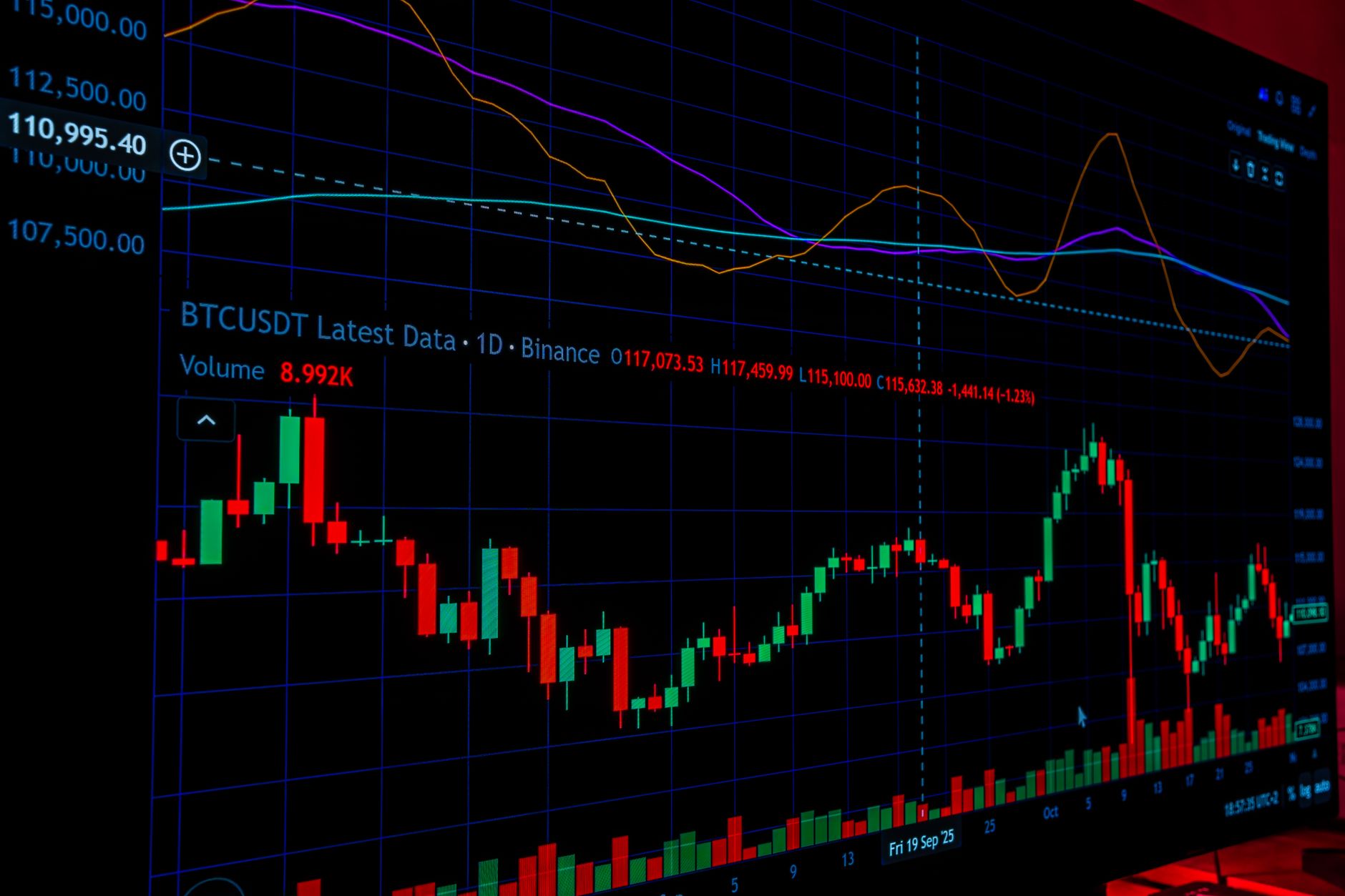
The Case For and Against Crypto as a Catch-Up Vehicle
Proponents of the strategy point to Bitcoin’s historical performance as evidence that digital assets can generate the kind of compounding growth that traditional fixed-income instruments simply cannot replicate in a compressed timeframe. Bitcoin, for example, returned more than 150 percent in 2023, and has posted gains that dwarf the average annual returns of broad equity indices over multiple five-year windows. For a 55-year-old with a $200,000 retirement deficit and ten years until their target retirement date, even a modest allocation to high-performing digital assets could, in theory, meaningfully close that gap.
However, financial planners are quick to temper enthusiasm with an equally compelling list of risks. Cryptocurrency markets are notoriously prone to drawdowns of 50 percent or more within a single calendar year — a loss magnitude that a retiree or near-retiree simply cannot afford to absorb without permanently impairing their financial security. Unlike younger investors with decades to recover, those in their fifties and sixties have limited time to wait out a bear cycle. Advisers broadly recommend capping any crypto exposure within a retirement-focused portfolio at between two and five percent of total assets, a figure that limits catastrophic loss while still providing some upside participation.
There is also the question of tax treatment. Cryptocurrency is classified as property by the Internal Revenue Service, meaning that every sale or exchange triggers a taxable event. For investors using taxable brokerage accounts — rather than crypto-enabled individual retirement accounts — frequent rebalancing can generate significant capital gains liabilities that erode net returns. Some advisers suggest that clients explore self-directed IRAs structured to hold digital assets, though these products carry their own complexity and custodial costs.

Structural Realities and the Adviser’s Dilemma
The retirement savings gap in the United States is not a marginal problem. Studies have consistently found that a large proportion of Americans over the age of 50 have saved less than $100,000 for retirement, far below the roughly $1 million to $1.5 million that financial planning models suggest is necessary to sustain a 30-year retirement on a middle-class income. That gap is partly a product of stagnant wage growth, inadequate employer match participation, and the broader erosion of defined-benefit pension plans over the past four decades.
Given that structural shortfall, the temptation to reach for higher-yielding assets is understandable. But advisers note that cryptocurrency introduces a category of risk that goes beyond ordinary market volatility. Regulatory uncertainty remains a persistent concern, with potential policy shifts capable of affecting asset valuations rapidly and without warning. Inflationary pressures and interest rate dynamics also interact with crypto markets in ways that are still poorly understood, as The Fiscalist noted in its coverage of how sticky US inflation continues to complicate asset allocation decisions across the board.
The consensus emerging among registered investment advisers is that cryptocurrency should not be viewed as a primary catch-up mechanism, but rather as a speculative satellite holding within a diversified strategy that leads with equities, bonds, and tax-advantaged contributions. For clients who have already maximised their 401(k) and IRA contributions — including the additional $7,500 catch-up contribution permitted for those over 50 under current IRS rules — a small, disciplined crypto allocation may be a reasonable supplementary bet. But for those still lagging on basic retirement account funding, advisers argue the priority should remain conventional instruments before any capital is directed toward digital assets.