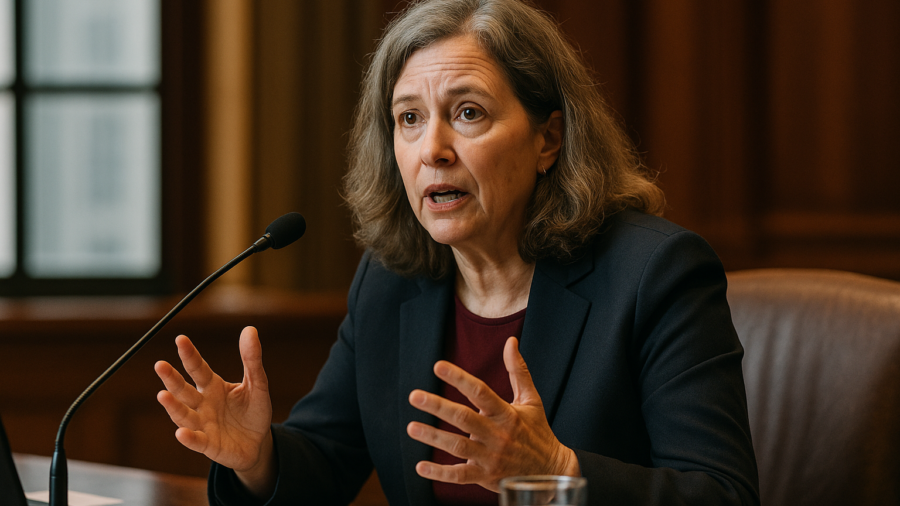
Cleveland Federal Reserve President Beth Hammack issued a pointed warning on Monday that the accelerating wave of artificial intelligence investment could generate inflationary pressures significant enough to warrant interest rate increases, a striking departure from the prevailing market assumption that the Fed’s next policy move will be a cut. Speaking at an event in Cleveland, Hammack argued that the scale and speed of AI-related capital expenditure represents a structural demand shock that monetary policymakers cannot afford to overlook, according to a CNBC report published on June 30, 2026.
Hammack, who holds a voting seat on the Federal Open Market Committee this year, stopped short of calling for an immediate tightening of policy but made clear that higher rates remain a live option if price pressures re-accelerate. Her comments come at a sensitive moment for the central bank, which has held the federal funds rate steady in a target range of 4.25 to 4.50 percent since late 2025 as it waits for inflation to make further progress toward its 2 percent objective. Core personal consumption expenditures inflation, the Fed’s preferred gauge, was running at approximately 2.6 percent in the most recent data available, still above target.
AI Spending Boom Raises Supply-Side Concerns
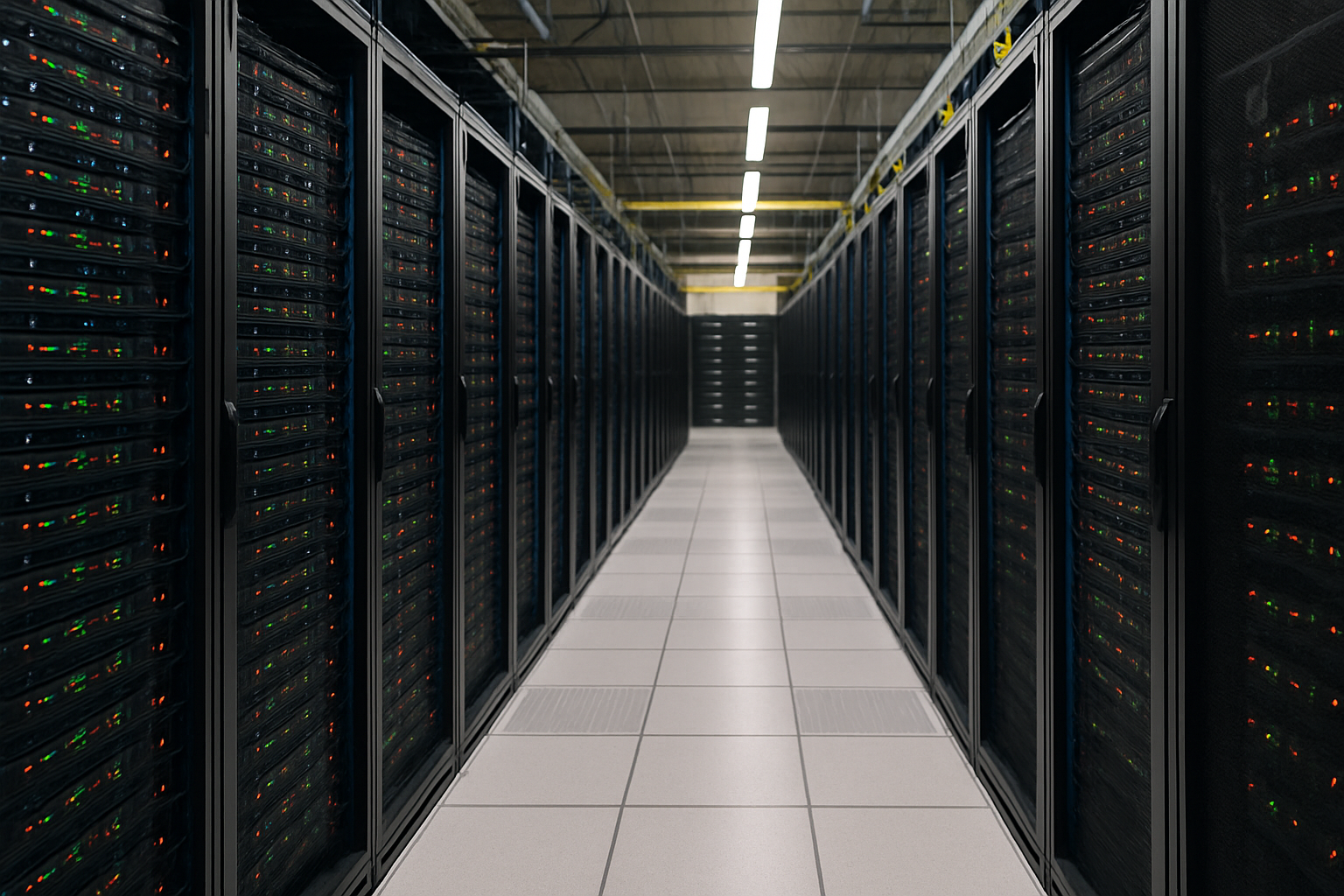
Hammack’s concern centers on the enormous infrastructure buildout underpinning the AI industry. Hyperscalers and technology companies have collectively announced capital expenditure plans exceeding 300 billion dollars for 2026, with a substantial portion directed toward data centers, specialised semiconductors, and the energy infrastructure needed to power them. That spending, Hammack suggested, could tighten labor markets in specific sectors, drive up the cost of construction materials, and put upward pressure on commercial electricity prices — all factors that feed into broader price indices over time.
The Cleveland Fed president acknowledged that AI could also deliver meaningful productivity gains, which would theoretically be disinflationary over the longer run. However, she cautioned that the timeline for those productivity benefits to materialise remains uncertain, while the inflationary demand effects are already visible in input costs across several industries. That asymmetry, she indicated, is what keeps rate hikes on the table. Markets reacted modestly to her remarks, with rate-sensitive two-year Treasury yields ticking up roughly three basis points intraday before partially retracing the move.
Markets Weigh Policy Shift Against AI Optimism
Hammack’s warning arrives as equity markets have largely embraced AI enthusiasm as a bullish catalyst. Major indices have posted strong gains through the first half of 2026, driven in significant part by technology stocks levered to artificial intelligence themes. As US stocks data from the Economic Times indicates, AI-related sentiment has repeatedly helped equity benchmarks shrug off geopolitical headwinds, including elevated tensions in the Middle East.
That divergence between equity market optimism and the Fed’s cautionary tone underscores a growing tension in financial markets. Investors have priced in roughly two quarter-point rate cuts before the end of 2026, an expectation that sits uncomfortably alongside the possibility, however contingent, of an actual rate increase. If Hammack’s view gains traction among other FOMC members, a meaningful repricing of rate expectations could ripple across asset classes, from credit spreads to real estate valuations.
The broader geopolitical dimension of AI competition also adds complexity to the Fed’s calculus. The intensifying rivalry between the United States and China over artificial intelligence dominance has prompted substantial government-backed investment commitments on both sides, a dynamic explored in depth in The Fiscalist’s coverage of AI competition tensions. That state-level spending layer compounds the private sector demand already coursing through the economy.
Fed Independence and the Path Forward
Hammack’s remarks also carry implicit significance for the Federal Reserve’s broader communications strategy. With political pressure on the central bank intensifying from multiple directions in Washington, her willingness to raise the prospect of rate hikes — rather than simply defending the current pause — signals that at least some regional Fed presidents are intent on maintaining a data-driven posture irrespective of market preferences or political sentiment. Several analysts noted that Hammack has historically leaned toward the hawkish end of the FOMC spectrum, making her comments consistent with prior positioning but still notable given the current macro backdrop.
Looking ahead, the FOMC’s next scheduled meeting is set for late July, at which point policymakers will have access to additional inflation readings, employment data for June, and an updated picture of consumer spending. Hammack gave no indication that she is currently advocating for a rate increase at that specific meeting, but her framing left little doubt that the committee’s deliberations will need to grapple seriously with AI-driven demand dynamics as a structural input into the inflation outlook — not merely a passing cyclical footnote. The Fed’s credibility on price stability, she implied, depends on remaining open to all policy outcomes rather than presuming cuts are the only direction of travel. Investors and policymakers alike would do well to take that signal seriously, as The Fiscalist’s recent reporting on dollar strength has highlighted the currency market’s sensitivity to shifting Fed expectations.