
President Donald Trump has pledged to work with state governors to reduce the cost of electricity supplied to data centers, framing the commitment as a cornerstone of his administration’s strategy to maintain American dominance in artificial intelligence infrastructure. Yet the announcement has drawn swift skepticism from energy economists and industry analysts, who warn that the costs of powering the next generation of AI computing facilities could ultimately be transferred to ordinary consumers rather than absorbed by the technology sector. For investors tracking the AI concentration risk building across major indices, the policy ambiguity adds a further layer of uncertainty to an already complex landscape.
According to reporting by Calcalist Tech, Trump’s pledge was delivered during a meeting with governors and was described by participants as aspirational rather than binding in legal or regulatory terms. The White House has not published a formal mechanism through which power costs would be reduced, leaving utilities regulators, grid operators, and state energy commissions without specific guidance on implementation.

A Non-Binding Promise in a High-Stakes Energy Market
The scale of electricity demand coming from data centers is not in dispute. AI model training and inference workloads require extraordinary amounts of continuous power, and major technology companies including Microsoft, Google, and Amazon have announced cumulative capital expenditure plans exceeding $300 billion over the next several years to expand their data center footprints across the United States. Grid operators in Virginia, Texas, and the Pacific Northwest have already flagged capacity constraints as the buildout accelerates.
What remains deeply contested is who bears the financial burden of meeting that demand. A Fortune analysis found that analysts project household electricity bills could increase by as much as 40% if grid infrastructure upgrades required to serve data center loads are socialised across the broader ratepayer base, as is common under existing utility cost-recovery frameworks in most states. That figure would represent a significant regressive transfer, with lower-income households spending a disproportionately large share of their income on energy.
Energy regulators in several states have already begun proceedings to determine how new large-load customers — a category that now largely means data centers — should be classified and charged. In some jurisdictions, legislation has been introduced to require hyperscale operators to fund dedicated grid connection infrastructure independently, rather than drawing on shared ratepayer capital pools. The outcome of those proceedings will materially shape the economics of data center investment for years to come.
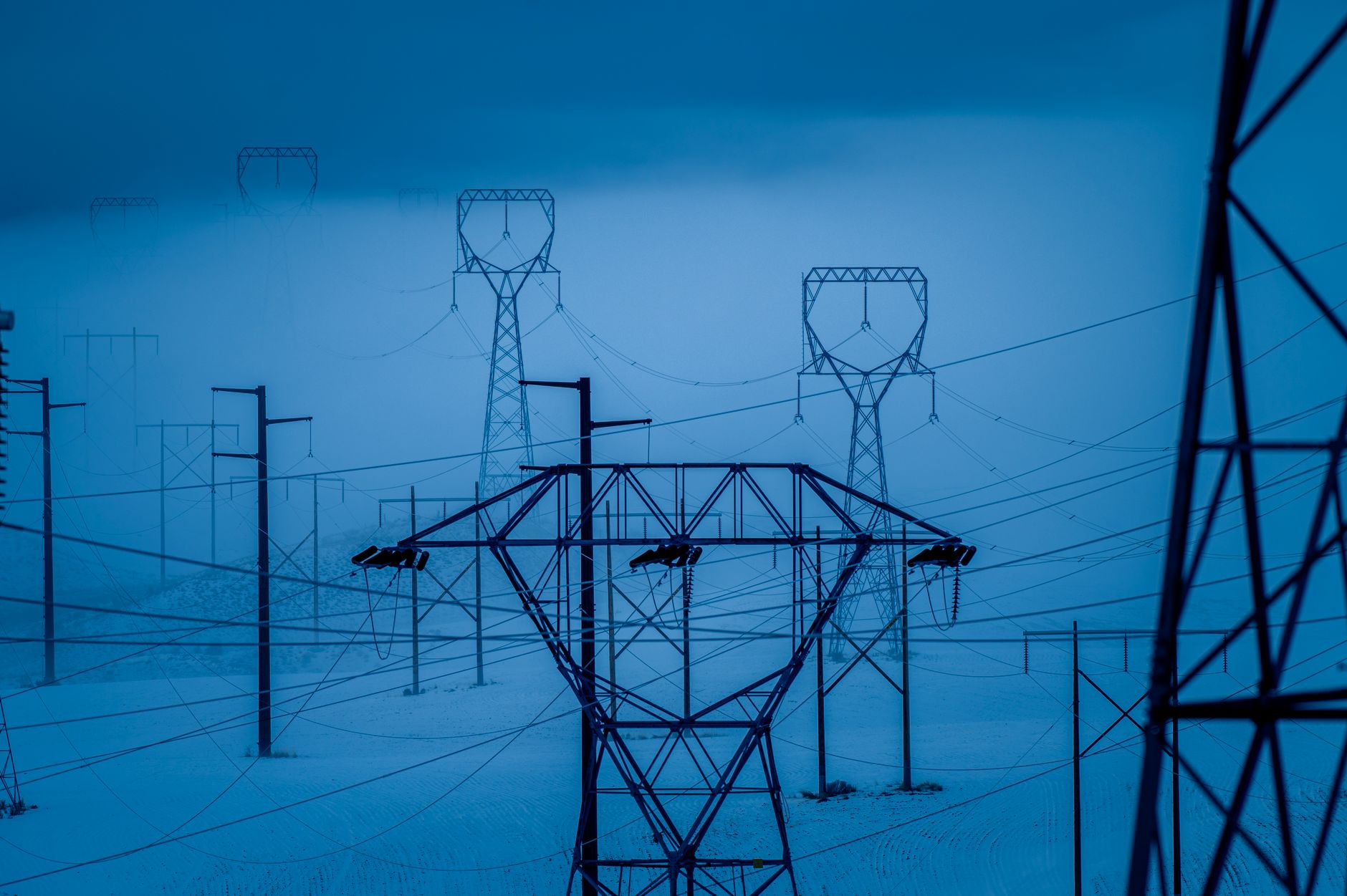
Political Ambition Meets Grid Reality
The Trump administration has positioned aggressive AI infrastructure expansion as both an economic and national security priority, arguing that the United States must outpace China in computing capacity. Yet energy policy in the United States is largely governed at the state level, and federal officials have limited direct authority over retail electricity pricing or utility rate structures. Governors attending the meeting reportedly welcomed the administration’s interest but provided no firm commitments on rate adjustments, underscoring the non-binding nature of the exchange.
Critics argue that the pledge conflates federal enthusiasm with federal capability. Reducing power costs for industrial consumers within a regulated utility framework typically requires either regulatory intervention by state public utility commissions, negotiated special contracts with explicit cost-allocation methodologies, or significant new generation capacity that lowers wholesale prices over time. None of those pathways is swift, and all carry political risk for the elected officials who would need to implement them.
For financial markets, the policy uncertainty compounds existing questions about the timeline and returns on AI capital expenditure. Technology sector valuations have in part been sustained by expectations of monetisation at scale, but escalating infrastructure costs — whether borne by operators directly or passed through indirectly via higher energy prices affecting consumer spending — represent a structural headwind that investors are only beginning to price fully. The debate over data center energy costs is, in that sense, no longer merely an engineering problem. It has become a central variable in the financial model underpinning the AI investment cycle.