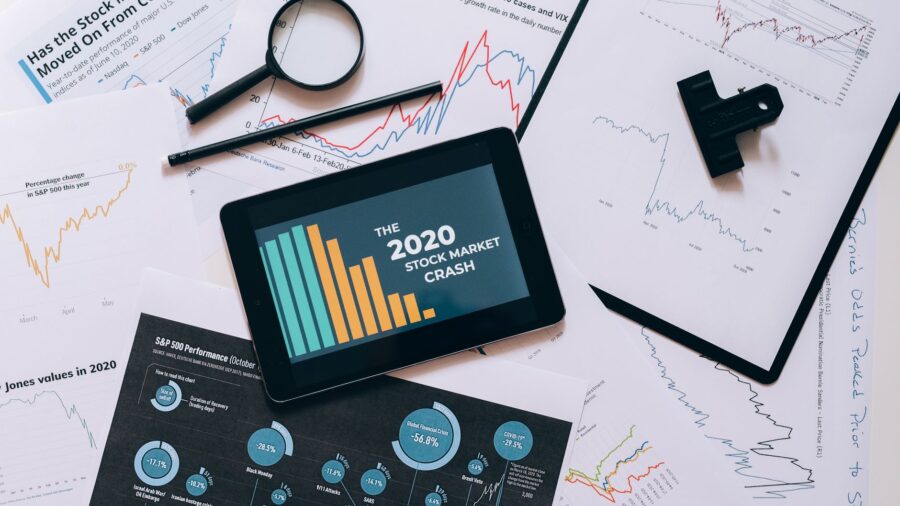
Jamie Dimon, chief executive of JPMorgan Chase, the largest bank in the United States by assets, has delivered one of his starkest assessments yet of financial market conditions, warning that equity and bond markets are materially underestimating the risks embedded in the global economic outlook. Speaking publicly this week, Dimon said he would personally avoid buying either stocks or Treasury securities at their current prices, a signal that carries considerable weight given his institution’s unrivalled vantage point across global capital flows. For investors already navigating AI spending scrutiny and a packed earnings calendar, the remarks add a significant note of caution from one of finance’s most closely watched voices.
Dimon pointed to a confluence of structural pressures — including persistent inflation, geopolitical instability, ballooning fiscal deficits, and the lingering effects of quantitative tightening — as forces that markets appear to be discounting too aggressively. He suggested that asset prices across the board reflect an optimism that is difficult to justify against that backdrop, and that investors are behaving as though a soft landing is all but guaranteed when the evidence remains far more ambiguous.
Valuations Stretched Against a Deteriorating Macro Backdrop
At the core of Dimon’s concern is the valuation of US equities, which by several conventional measures remain elevated relative to historical norms. The S&P 500 has traded at forward price-to-earnings multiples well above its 20-year average for much of 2025 and into 2026, a dynamic that analysts have scrutinised closely even as corporate earnings have held up. Dimon argued that these multiples leave little margin for error, particularly if the Federal Reserve is forced to keep interest rates higher for longer than the market currently prices in. The federal funds rate, which the Fed has held in a restrictive range, continues to suppress credit demand and squeeze refinancing conditions for leveraged borrowers.
On the fixed income side, Dimon’s reluctance to buy Treasurys reflects a view that the term premium — the extra yield investors demand for holding longer-duration debt — remains inadequate given the scale of US government borrowing. The Congressional Budget Office has projected federal deficits running at roughly 6 percent of gross domestic product over the medium term, a level that historically coincides with upward pressure on long-term yields. Dimon has previously flagged his concern that 10-year Treasury yields could move significantly higher, potentially toward 6 percent or beyond, a scenario that would reprice risk assets broadly. Those valuation concerns echo the analysis in valuation pressure coverage this publication has tracked across the technology sector.
Systemic Risks the Consensus Is Choosing to Ignore
Beyond domestic market mechanics, Dimon identified a range of geopolitical and macroeconomic tail risks he believes are being systematically underpriced. These include the trajectory of the war in Ukraine, tensions in the Middle East, the risk of a sharper-than-expected slowdown in China, and the potential for renewed inflationary supply shocks stemming from commodity markets or trade disruption. He argued that financial markets have a structural tendency to normalise uncertainty over time, pricing risk lower simply because adverse events have not yet materialised — a form of complacency he views as particularly dangerous at current valuation levels.
Dimon also touched on the resilience of the US consumer, which has been a key pillar of the economic expansion since the pandemic. While consumer spending data has remained reasonably robust, he cautioned that excess savings accumulated during the stimulus era have largely been depleted, credit card delinquency rates are rising across lower-income cohorts, and the cumulative effect of elevated borrowing costs is beginning to show up in household balance sheets. He stopped short of predicting a recession but made clear that the risk of a harder economic landing than the consensus expects is not trivial. According to the CNBC report, Dimon’s remarks represent some of his most direct public commentary on asset pricing in recent memory.
What the Warning Means for Investors and Policy
The practical implication of Dimon’s position is not that a market crash is imminent, but rather that the risk-reward trade-off for broad equity and Treasury exposure has deteriorated materially. For institutional investors, that framing raises questions about portfolio construction, particularly regarding duration risk in bond portfolios and the concentration of returns within a narrow band of mega-cap technology stocks that have driven index-level gains. Fund managers who have benchmarked against the S&P 500 may find it increasingly difficult to justify the risk they are implicitly carrying.
From a policy perspective, Dimon’s comments arrive at a sensitive moment for both the Federal Reserve and the Treasury Department. The Fed faces a difficult balancing act between its price stability mandate and the growing signs of stress in rate-sensitive sectors of the economy. Meanwhile, the Treasury must continue to refinance a historically large stock of government debt into a market where foreign demand, particularly from Japan and China, has become less predictable. Whether policymakers share Dimon’s sober assessment privately, even if they cannot voice it publicly, may ultimately be the more consequential question for markets in the months ahead.