Germany’s manufacturing sector showed tentative signs of stabilisation in June, with the country’s flash Purchasing Managers’ Index climbing to a four-month high of 43.2, according to data released Monday by S&P Global. MarketWatch reported the figure under the headline “Germany flash manufacturing PMI rises to 4-month high of 43.2,” noting the reading represented an improvement from May’s 45.4 — though still firmly below the 50-point threshold that separates expansion from contraction.
The result, while still deeply contractionary, marks the least severe reading since February and offers a modest degree of encouragement for policymakers and investors monitoring the health of Europe’s largest economy. Economists had broadly anticipated a reading in the 44-range, making the 43.2 print a mild miss on consensus expectations, though the directional improvement was welcomed by analysts tracking German industrial output.
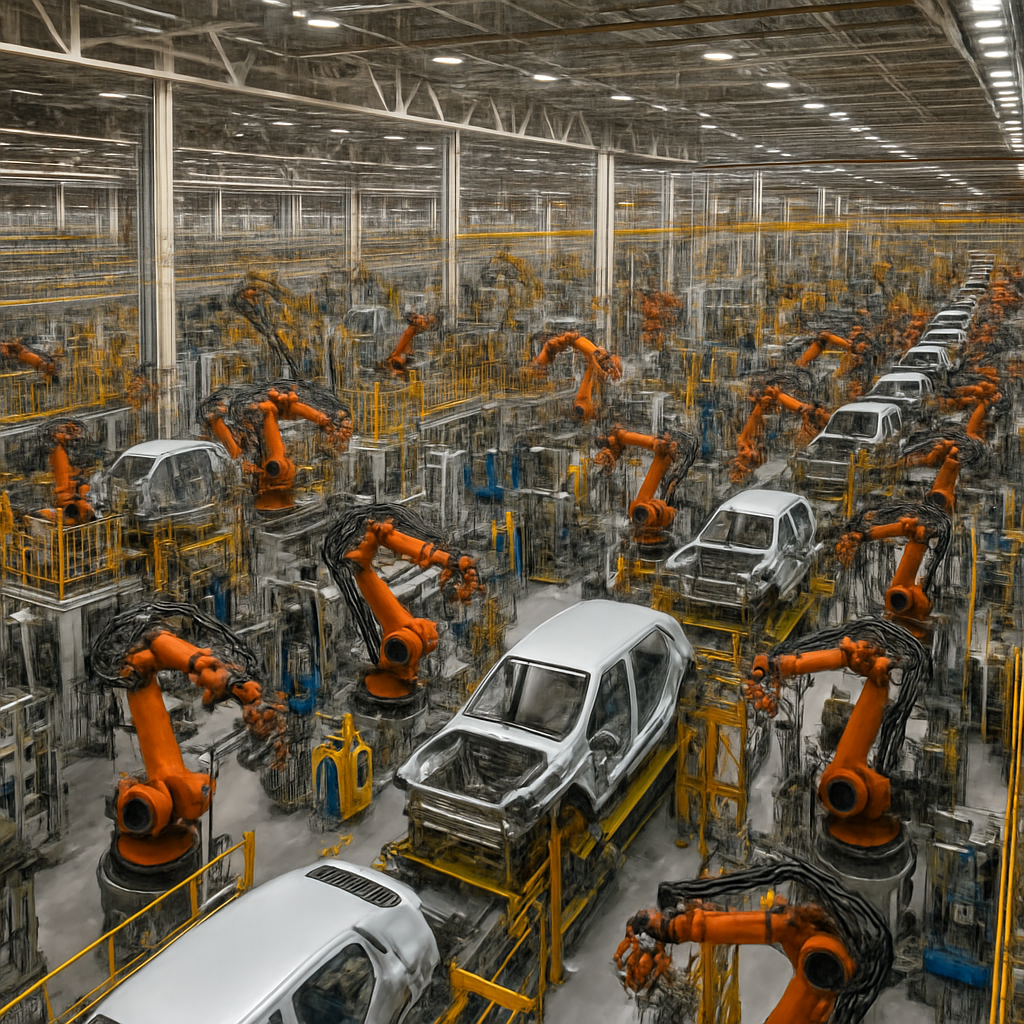
Germany’s manufacturing industry has been battered by a prolonged combination of weak global demand, elevated energy costs, and structural competitive pressures — particularly in the automotive sector, which accounts for a significant share of the country’s industrial base. Output, new orders, and employment sub-indices all remained in contraction territory in June, though the pace of deterioration eased across all three measures compared with the prior month. New export orders, a bellwether for Germany’s trade-exposed manufacturers, also contracted at a slightly slower rate, offering a cautious signal that external demand headwinds may be beginning to moderate.
The data arrive at a sensitive moment for the European Central Bank, which has been carefully calibrating its monetary policy stance amid softening inflation and a fragile growth outlook across the eurozone. Germany’s industrial malaise has been a persistent drag on broader eurozone activity. The euro fell to a one-year low earlier this year as oil price declines reduced inflationary pressure and opened the door to further ECB easing — a dynamic that continues to shape the policy backdrop for Frankfurt’s manufacturers.
Analysts caution against reading too much into a single month’s improvement. A PMI of 43.2 still implies a meaningful rate of contraction, and Germany’s manufacturing sector has now remained below the expansion threshold for over two years. Structural challenges — including the energy transition, declining competitiveness in electric vehicles against Chinese rivals, and subdued Chinese consumer demand — are unlikely to resolve in the near term. Bloomberg also noted that the broader eurozone composite PMI remained sluggish, suggesting Germany’s relative improvement has yet to translate into a regional recovery.
Investors watching fixed-income markets for clues about the interest rate trajectory may find further context in recent surged bond ETF flows, which some strategists interpret as a signal that markets are positioning for a prolonged low-growth environment in Europe. For now, the marginal uptick in Germany’s PMI is best characterised as a slowing of decline rather than a turning point — a distinction that economists and central bankers alike will be watching carefully in the months ahead.