
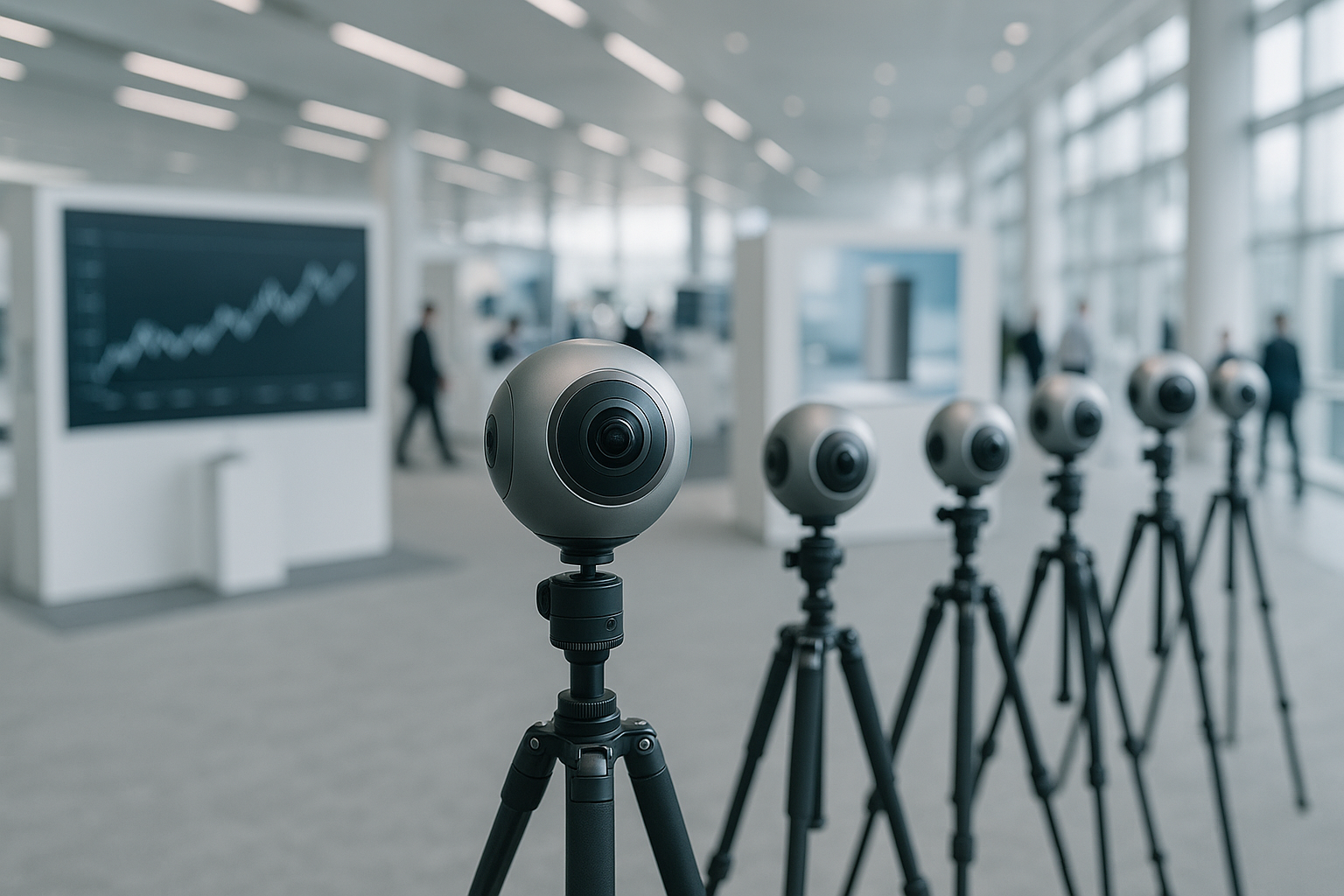
The global market for 360-degree cameras is poised for substantial expansion over the next decade, with new research projecting the sector will grow from its current valuation to approximately USD 4.2 billion by 2033, advancing at a compound annual growth rate of 12.3 percent. The findings, published by Verified Market Reports and covered by Newswire research data, highlight accelerating demand across consumer electronics, automotive safety systems, live event broadcasting, and enterprise surveillance applications.
The trajectory reflects a broader structural shift in how businesses and individuals capture and consume spatial content. Rising adoption of virtual reality platforms, the proliferation of social media content formats that reward immersive video, and expanding use cases in real estate virtual tours have collectively broadened the addressable market well beyond early adopters. Industry analysts note that hardware cost reductions have been a meaningful catalyst, bringing professional-grade 360-degree capture within reach of prosumers and small business operators who previously could not justify the investment.
Automotive and Enterprise Sectors Emerge as High-Value Growth Engines
Among the fastest-growing application segments identified in the report are automotive and transportation, where 360-degree imaging systems are increasingly embedded in advanced driver assistance systems and fleet management platforms. Regulatory momentum in key markets, including updated vehicle safety standards in the European Union and North America, has accelerated original equipment manufacturer procurement of multi-lens camera arrays designed to eliminate blind spots and support semi-autonomous navigation. This institutional demand provides a degree of revenue stability that consumer-facing segments alone cannot guarantee.
Enterprise surveillance and security represent another pillar of structural growth. Corporate campuses, logistics warehouses, and public infrastructure operators are deploying panoramic camera networks as a cost-efficient alternative to multi-camera rigs, reducing both hardware expenditure and the complexity of video management systems. The convergence of 360-degree optics with artificial intelligence-driven analytics has further elevated the category’s value proposition. This trend sits within a wider intelligent imaging narrative: smart camera market research from GlobeNewswire projects the neural processing unit-enabled camera segment alone will reach USD 29.06 billion by 2030 at a 20.8 percent CAGR, underscoring how deeply AI integration is reshaping imaging hardware economics across the board.

Regional Dynamics and Investment Implications for Market Participants
Geographically, the Asia-Pacific region is expected to account for a disproportionate share of volume growth through the forecast period, driven by consumer electronics manufacturing ecosystems in China, South Korea, and Japan, combined with rising middle-class demand for action and travel cameras across Southeast Asia. North America is projected to maintain its lead in enterprise and automotive deployment value, given deeper penetration of fleet telematics platforms and a mature regulatory environment that rewards advanced safety hardware adoption.
For investors assessing exposure to this market, the competitive landscape remains fragmented. Established consumer electronics brands compete alongside specialized imaging firms and a growing cohort of component suppliers focused on lens arrays and image-stitching processors. Margin dynamics are likely to remain under pressure at the consumer end of the market as hardware commoditizes, while enterprise and automotive segments offer higher per-unit economics and stickier customer relationships. Companies capable of bundling hardware with proprietary software platforms or cloud-based video management services are best positioned to capture value as the market matures. Investors monitoring adjacent growth opportunities in technology hardware may also find relevant context in coverage of S&P 500 sectors where technology and industrial convergence is generating outsized earnings potential heading into the back half of the decade.
The 12.3 percent CAGR underpinning Verified Market Reports’ projection places the 360-degree camera industry among the more compelling mid-cap technology growth stories of the current investment cycle. Whether that momentum is sustained will depend in large part on the pace of autonomous vehicle rollout, the durability of immersive content consumption trends, and the speed at which AI-enhanced imaging capabilities translate into measurable enterprise return on investment. Analysts and portfolio managers tracking the broader compliance technology and hardware expansion themes would do well to monitor procurement signals from automotive OEMs and large-scale infrastructure operators as leading indicators for the sector’s next inflection point.